


swamp lawyer Care (Rubus australis)

swamp lawyer

About swamp lawyer

Swamp lawyer (Rubus australis) is a scrambling, thorny vine native to damp forests and coastal scrub in New Zealand. It belongs to the blackberry and raspberry group. The plant has slender, arching canes with hooked prickles and small, glossy leaves, often forming dense tangles that climb over shrubs and trees. In season it produces small white flowers, followed by edible berries that are attractive to birds. It prefers moist, cool conditions with some shelter from harsh sun and wind. Understanding how to care for swamp lawyer starts with giving it space to climb and controlling its vigorous, sometimes invasive growth habit.

Main Plant Requirements

Care Difficulty

Moderate Care

Light Preference

Partial Shade

Water Requirements

Moderate Water

Temperature Preference

Warm Climate

Hardiness Zone

9–11

Soil Texture

Loamy, Sandy, Organic-rich

Soil pH

Acidic (5.5–6.5), Slightly acidic (6.5–7.0)

Soil Drainage

Moist but well-drained

Fertilization

Minimal (feed rarely)

Get Personalized Care Plan

Scan your plant to receive care tips personalized for your specific plant

Available on iOS and Android

How to Care for the swamp lawyer

This native climber prefers bright, indirect conditions similar to a lightly shaded forest edge.

  • Provide 2–4 hours of gentle morning sun with dappled or filtered light the rest of the day to mimic its natural understory habitat.
  • Allow partial to full shade at midday; direct afternoon sun, especially in summer, can scorch tender swamp lawyer foliage and dry soils too quickly.
  • In cooler seasons, slightly higher light is helpful, but avoid suddenly moving plants from deep shade into strong sun to prevent leaf burn.

This species prefers consistently moist but not saturated soil, reflecting its natural damp forest and streamside habitats.

  • Irrigate when the top 2–4 cm of soil feels just barely dry, aiming for soil that stays evenly moist down in the root zone.
  • Ensure free-draining soil with added organic matter so water moves through; persistent puddling or a sour smell signals overwatering and low oxygen around roots.
  • In hot, dry periods increase checks for wilting, dull leaves, or curling tips; in cool, wet seasons reduce watering to avoid root rot in Rubus australis.

This scrambling climber grows best in mild, frost-protected conditions.

  • Target 55–75°F (13–24°C) for steady growth, which matches the cool, moist environments it occupies in nature.
  • Short dips to about 30–32°F (-1–0°C) may be survived, but repeated or hard frosts can damage young shoots and canes.
  • During hot spells above 82–86°F (28–30°C), provide shade and mulch to keep roots cool and reduce heat stress, leaf scorch, and moisture loss.

This species prefers moderately moist air but usually adapts to typical indoor humidity.

  • Aim for 50–70% humidity to reduce leaf edge browning and support steady shoot growth.
  • It tolerates short spells of drier air, but persistent humidity below 40% can cause crisp tips and slower growth.
  • Increase humidity by grouping plants, placing the pot on a pebble-and-water tray, or running a small nearby humidifier for swamp lawyer.

This scrambling shrub prefers moist, airy, organic-rich soil with consistent drainage.

  • Use a loose mix of roughly 2 parts compost or leaf mold, 1 part fine bark, and 1 part coarse sand or perlite for Rubus australis.
  • Aim for slightly acidic to neutral pH, around 5.5–7.0, to support nutrient uptake and healthy root development.
  • Ensure excess water drains freely and the mix never stays waterlogged, which quickly leads to root decline and stem dieback.
  • Avoid heavy clay, compacted ground, or pure sand; improve structure by incorporating organic matter and a coarse mineral component.

This species can grow in containers if the pot supports its scrambling, sometimes heavy growth.

  • Choose a deep, wide container to give the root system lateral space and prevent the plant from becoming root-bound too quickly.
  • Select a heavy or weighted pot so the arching or climbing canes do not tip the container in wind or when trellised.
  • Use a container material that matches your climate, such as thicker terracotta or double-walled plastic, to moderate moisture swings in the root zone.

Rubus australis benefits from modest feeding when grown in containers or poor soils, but established plants in fertile ground often manage with minimal input.

  • Use a balanced, slow-release fertilizer or compost in spring at the start of active growth for caring for swamp lawyer in pots or lean soil.
  • Apply at 1/2–3/4 label strength to avoid excessive, weak growth and salt buildup in the root zone.
  • Feed every 6–8 weeks during the growing season only if growth appears weak or leaves pale.
  • Stop feeding in late summer and avoid fertilizing through fall and winter to allow wood to harden and prevent tender, frost-susceptible shoots.

Pruning Rubus australis helps manage its scrambling habit, maintain access, and encourage healthy new growth.

  • Carry out main pruning in late winter or very early spring before vigorous new shoots emerge.
  • Remove dead, damaged, or diseased stems first, then thin congested, crossing canes to improve light and air movement.
  • Shorten overly long stems to control spread and guide the plant along wires, fences, or supports.
  • Use clean, sharp bypass pruners and make angled cuts just above a healthy bud to reduce infection risk.

This scrambling shrub is more often transplanted in the landscape than repotted, but container-grown plants also need periodic attention to root space.

  • Plan major transplanting or any potting-on for late winter to early spring, before rapid growth begins.
  • Look for roots circling the container drainage holes, slow growth, or quick drying soil as signs more space is needed.
  • Move up 1 pot size only, tease out circling roots gently, and set the plant at the same soil level in well-drained, organic-rich mix.
  • Water thoroughly after transplanting, shade from strong sun for 3–5 days, and keep soil evenly moist to limit root stress while it re-establishes.

Rubus australis is commonly propagated vegetatively, making it straightforward to produce genetically identical plants.

  • Use semi-ripe stem cuttings in late summer, placing 8–12 cm pieces in moist, free-draining mix under high humidity and bright, indirect light.
  • Try simple layering in spring by pegging a flexible stem to the soil, then sever and transplant once roots form.
  • Sow fresh seed in autumn or after a cold stratification period, as this improves germination of many Rubus species.
  • Label and space new plants well, maintaining even moisture but not waterlogging until strong new growth confirms successful establishment.

Rubus australis is moderately cold tolerant in mild-winter regions and usually needs only basic winter care in the ground.

  • In areas prone to hard frost, apply a 5–8 cm mulch around the root zone, keeping it just clear of stems.
  • Leave most structural stems over winter, removing only obviously dead or diseased wood.
  • For container plants, move pots into a sheltered, frost-free spot such as an unheated garage or porch.

Care Tips

Install sturdy support

Provide a strong trellis, wire, or fence and loosely tie new canes with soft ties so the scrambling stems can climb without kinking or snapping at the base.

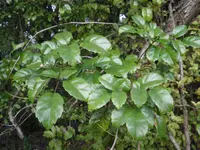
Layering for propagation

To propagate, pin a flexible, healthy stem to the soil surface and lightly cover a section with moist mix until roots form, then cut and transplant the new plant once it is growing steadily.

Undergrowth management

Regularly remove dense groundcover and tall weeds around the base so air can move through the lower stems and reduce fungal problems while making pruning and harvesting easier.

Targeted cane selection

Once established, select a few strong, well-placed canes each season and remove very weak, crossing, or damaged ones so the plant directs energy into a manageable, healthy framework.

Wildlife-friendly netting

If birds strip the fruit, use fine, soft netting pulled taut over the support structure, checking it often to keep it clear of entangled wildlife while still allowing airflow for healthy growth when growing swamp lawyer.

Common Pests and Diseases

Raspberry bud moth

This pest feeds on young shoots, leaves, and flower buds, often webbing them together and causing distorted growth or dieback of tips.

Solution

Prune out and destroy infested shoot tips and webbed buds, then monitor new growth in spring and summer; encourage birds and beneficial insects, and if needed use a targeted Bacillus thuringiensis (Bt) spray on young larvae, following label directions and avoiding spraying during bloom to protect pollinators.

Scale insects

These insects attach to stems and older canes, sucking sap and leading to reduced vigor, yellowing, and sooty mold on honeydew deposits.

Solution

Wipe or gently scrub affected stems with a cloth dipped in soapy water, remove heavily infested canes, and improve plant vigor with proper watering and light; for persistent problems, apply a horticultural oil spray during the plant’s dormant or least-active growth phase to smother remaining scale.

Botrytis cane and leaf blight

This disease causes brown lesions on canes and leaves, often with grey, fuzzy mold in humid or shaded sites, leading to dieback of canes and defoliation.

Solution

Remove and dispose of infected canes and fallen leaves, improve airflow by thinning tangled stems, and avoid overhead watering; in persistently wet climates, a preventive fungicide labeled for botrytis on caneberries can be used during extended wet periods, combined with good sanitation as the primary control.

Cane spot

This disease produces small purple to brown spots on canes that can expand and girdle stems, reducing vigor and predisposing canes to breakage.

Solution

Cut out and destroy badly spotted canes during dry weather, avoid wounding stems during pruning, and maintain an open, well-aerated tangle; in sites with a history of disease, apply a registered caneberry fungicide at bud break to protect new season growth and repeat as label directions suggest.

Leaf rust

Symptoms include yellow to orange spots on the upper leaf surface and powdery pustules on the underside, which can lead to premature leaf drop and reduced growth of the vine.

Solution

Remove and discard affected leaves as soon as symptoms appear, keep the canopy open to reduce humidity, and avoid wetting foliage when irrigating; in severe or recurrent cases, use a rust-labeled fungicide early in the season on young leaves, rotating products if needed to reduce resistance risk while following precise label instructions for Rubus australis care.

Interesting Facts

Hooked climbing stems

This species has long, wiry stems armed with small backward-facing hooks that allow it to climb over shrubs and trees rather than support itself upright, forming dense, tangled thickets in its native forests.

New Zealand endemic bramble

Rubus australis occurs naturally only in New Zealand, where it is part of the indigenous forest understorey and commonly inhabits coastal to lowland forests, often in moist, sheltered sites.

Distinct shiny leaflets

The plant typically bears glossy, often thick-textured leaflets that can vary in shape and number on each leaf, giving it a more leathery and evergreen appearance compared with many northern-hemisphere bramble species.

Botan icon

Did you know?

Traditional Māori knowledge records the small, dark fruits of Rubus australis as seasonally eaten, and the plant is known by names such as tāpapa and tātaramoa, reflecting its long-standing role in local cultural and ecological landscapes.

FAQs about swamp lawyer

This species is a scrambling, climbing vine that uses hooked prickles to latch onto nearby shrubs, trees, or trellis structures. Without support it forms a tangled, arching thicket rather than staying neatly bushy or ground-hugging.

Grow Healthy Plants with Botan Care

Keep your plants happy and healthy with plant identification, disease detection, and easy care guidance.

Botan plant care app — identify plants on mobile









