Himalayan blackberry Care (Rubus armeniacus)

Also known as: Armenian Blackberry, Himalayan Giant Bramble
Himalayan blackberry

About Himalayan blackberry

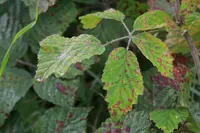
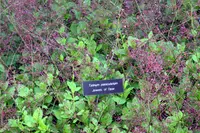
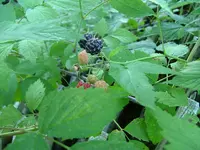
Himalayan blackberry, Rubus armeniacus, is a vigorous, thorny bramble known for forming dense, arching thickets and producing sweet, dark purple-black fruits. It is deciduous, with compound leaves and robust, often reddish canes that can root where they touch the ground.

Native to western Europe and introduced widely in North America, it is common along roadsides, riverbanks, and disturbed soils, especially in mild, moist climates. Its strong growth and tolerance of poor soils make it easy to establish but difficult to control once mature.

Gardeners who want to care for Himalayan blackberry should allow plenty of space, use well-drained soil, and provide full sun with steady, moderate moisture for best fruiting.

Main Plant Requirements

Care Difficulty

Easy Care

Light Preference

Full Sun

Water Requirements

Regular Water

Temperature Preference

Cold Hardy

Hardiness Zone

5–9

Soil Texture

Sandy, Loamy, Clay

Soil pH

Acidic (5.5–6.5), Slightly acidic (6.5–7.0)

Soil Drainage

Moist but well-drained

Fertilization

Minimal (feed rarely)

Get Personalized Care Plan

Scan your plant to receive care tips personalized for your specific plant

Available on iOS and Android

How to Care for the Himalayan blackberry

This vigorous bramble thrives in full sun but tolerates some shade, especially in hotter regions.

  • Provide 6–8 hours of direct sun daily for strong flowering and fruiting; 4–6 hours with bright open shade still produces acceptable crops.
  • Favor morning sun with light afternoon shade in hot climates to reduce leaf scorch and fruit shrivel on Himalayan blackberry canes.
  • Avoid dense shade, which leads to weak, spindly growth and poor fruit set, and watch winter shade patterns that may limit spring light levels.

Rubus armeniacus prefers consistently moist but not saturated soil, especially during active growth and fruiting.

  • Irrigate when the top 3–5 cm of soil feel dry, applying a deep soak rather than light sprinkling to encourage deeper roots.
  • Reduce watering in fall and winter, focusing on natural rainfall; increase during flowering and fruiting if rain is scarce and soil dries faster.
  • Watch for yellowing, limp leaves and soggy soil as signs of overwatering, and for wilted, crisp leaves and small berries as signs of underwatering; ensure free-draining soil.

This hardy blackberry tolerates a wide temperature range but performs best in mild conditions.

  • Active growth and fruiting are strongest at 60–80°F (16–27°C), with good cane development and balanced shoot growth in this range.
  • Dormant plants tolerate winter lows near 0°F (-18°C) once fully established, but young canes benefit from protection from sudden hard freezes.
  • In summer, plants endure short periods up to 90–95°F (32–35°C) if soil moisture is maintained; prolonged extreme heat can reduce fruit quality and increase stress.

Rubus armeniacus handles a wide humidity range and usually does not need special humidity management outdoors.

Rubus armeniacus prefers deep, moist, well‑aerated soil that drains freely yet does not dry out too fast.

  • Use loamy soil enriched with 25–40% compost to provide structure, organic matter, and moisture retention.
  • Aim for slightly acidic to neutral pH, around 6.0–7.0, which supports nutrient availability and healthy root growth.
  • Improve drainage and aeration by blending coarse sand or fine bark into heavy or compacted native soil before planting.
  • Avoid waterlogged clay pockets, heavily compacted ground, or very shallow, stony spots that restrict root spread and cause root rot.

This species can be grown in containers but requires careful management of size, support, and moisture to perform well.

  • Choose a heavy, wide container at least 40–50 cm deep to prevent tipping from vigorous top and cane growth.
  • Use a sturdy trellis or wires anchored to the pot so climbing canes do not pull or destabilize the container.
  • Select a thick-walled pot material, such as wood or heavy ceramic, to buffer rapid moisture loss and temperature swings in full sun.

Rubus armeniacus benefits from modest feeding in poor soils but often fruits well without heavy fertilization.

  • Use a balanced granular or slow-release NPK fertilizer or well-rotted compost at the start of spring growth.
  • Feed every 6–8 weeks during the growing season if soil is low in organic matter or plants show pale foliage.
  • Apply fertilizers at half the label strength, keeping granules away from direct stem contact.
  • Stop feeding in late summer so canes harden off before winter dormancy.

Rubus armeniacus responds strongly to structured pruning that manages vigor and supports high fruiting.

  • Carry out main pruning in late winter to early spring before new growth starts.
  • Cut out dead, diseased, and weak canes at ground level to reduce disease pressure.
  • Remove 2-year-old fruited canes and keep a limited number of strong 1-year-old canes for next season’s crop.
  • Use sharp bypass pruners, making clean cuts, and thin crowded growth to improve light and airflow.

Himalayan blackberry is usually grown in the ground and is moved mainly to control spread or improve spacing.

  • Transplant during late fall or early spring while plants are dormant and soil is workable.
  • Look for signs such as dense thickets, poor access, or weak fruiting, then lift and thin canes and roots.
  • Dig widely around the root mass, keep roots shaded and moist, and replant at the same depth.
  • Water thoroughly after transplanting and keep soil evenly moist for several weeks to reduce transplant shock.

Rubus armeniacus is widely spread by simple vegetative methods that root new plants from existing canes.

  • Use tip layering in late summer by bending a low cane so its tip contacts moist soil until rooted.
  • Take semi-ripe stem cuttings in late spring to summer and root in a free-draining, slightly moist medium.
  • Divide young clumps in early spring or fall, keeping large root sections with several healthy buds.
  • Seeds are less common; stratify in cool, moist conditions, then sow shallowly in a gritty seed mix.

Rubus armeniacus is cold hardy in most temperate climates and usually needs minimal winter care.

  • Tolerates typical winter frosts once canes are mature and fully hardened.
  • Apply a 5–8 cm layer of organic mulch around the root zone in late fall, keeping it off stems.
  • In colder areas, tie canes to sturdy supports to limit breakage from snow and wind.
  • Move container-grown plants into a sheltered, unheated but frost-sheltered spot if roots freeze solid.

Care Tips

Install strong supports

Use heavy-duty T-posts or sturdy wooden end posts with high-tensile wire (2–3 strands) to carry the weight of long, fruit-laden canes and keep plants off the ground for cleaner fruit and easier harvest.

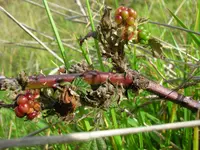
Summer tip-layering control

In late summer, check for cane tips rooting where they touch soil and either prune them off or transplant the new plantlets to a controlled row to prevent unwanted spread while still using this natural propagation method to grow Rubus armeniacus.

Cane selection and tying

After harvest, remove spent floricanes at the base and tie only 4–6 of the strongest new primocanes per plant to the wires, spacing and fanning them out so light and air reach all sides of the canopy.

Targeted bird protection

As fruit colors, cover only the fruiting zone with breathable netting secured at the base, leaving vegetative growth outside the net for pollinators and easier access to monitor cane health.

Mulch for cane hygiene

Maintain a 5–8 cm layer of clean organic mulch in the row to keep canes and fruit from contacting bare soil, which reduces rot risk and makes caring for Himalayan blackberry more efficient during wet periods.

Common Pests and Diseases

Raspberry crown borer

This pest is a clearwing moth whose larvae tunnel into canes and crowns, causing wilting and dieback of whole shoots. Symptoms include weak, stunted canes, poor fruiting, and swollen or cracked lower stems near soil level.

Solution

Remove and destroy infested canes and crowns as soon as they are found to break the life cycle. Keep plantings vigorous with proper spacing and soil drainage, and in larger plantings consider a targeted soil drench or trunk-directed biological insecticide labeled for caneberries in late summer to early fall when young larvae are most vulnerable.

Spotted wing drosophila

These insects are small vinegar flies whose females pierce healthy fruit to lay eggs, leading to soft, collapsing berries with tiny white maggots inside. Symptoms include rapid fruit breakdown and increased fruit drop close to harvest.

Solution

Harvest fruit frequently, remove and destroy overripe or infested berries, and avoid leaving fallen fruit on the ground to reduce breeding sites. Use fine-mesh netting over plants where practical, combine with clean harvest practices, and if pressure is high, apply an appropriate berry-safe insecticide following local recommendations and timing it just before and during ripening.

Orange rust

This disease is a systemic fungal infection that causes new shoots to be spindly with narrow, yellowing leaves that later develop bright orange spore masses on the undersides. Symptoms include poor vigor, failure to fruit, and a gradual decline of entire crowns.

Solution

Dig out and completely destroy infected plants, including roots, because the fungus lives systemically and does not cure once established. Inspect nearby plants each spring for early symptoms, maintain good spacing for airflow, and avoid moving suspect planting material or tools between sites without cleaning.

Anthracnose cane and leaf spot

This disease causes small purple spots on young canes and leaves that enlarge into sunken gray lesions, often girdling canes and reducing yield. Symptoms include rough, scabby patches on stems, premature leaf drop, and weakened canes that winter-kill easily.

Solution

Prune out and discard heavily infected canes during dormant season and again after harvest, and keep plant rows narrow to increase air movement and quicker drying. Avoid overhead watering, apply mulch to reduce splash, and in high-pressure areas follow regional Rubus armeniacus care instructions for timing of preventive fungicide sprays at bud break and during early shoot growth.

Botrytis gray mold

This disease affects flowers and ripening berries, which turn brown, soften, and develop a fuzzy gray mold, especially in cool, wet weather. Symptoms include clusters of berries rotting in place and mummified fruit that remains on the canes as a source of spores.

Solution

Improve airflow by thinning canes and keeping plant spacing generous, and remove senescent flowers and rotted fruit from plants and the ground. Avoid wetting flowers and fruit with irrigation, and in areas with frequent spring rain, consider labeled bloom-time fungicide sprays targeted to gray mold on caneberries if cultural methods are not sufficient.

Interesting Facts

Highly invasive bramble

This species is one of the most aggressive invasive shrubs in the Pacific Northwest, forming dense, nearly impenetrable thickets that outcompete many native plants and alter understory structure.

Bird‑driven spread

Birds readily eat the large, sugar-rich berries and disperse the seeds over long distances in their droppings, which is a major reason this plant colonizes new sites so quickly.

Arching cane strategy

Its long, arching canes can root where they touch the ground, a process called tip layering, allowing a single plant to expand into large clonal patches without seed production.

Botan icon

Did you know?

The species was introduced from Europe to North America in the late 1800s for its large, flavorful fruit and quickly escaped cultivation, becoming one of the most economically costly invasive plants to control along many streams, roadsides, and disturbed lands in western North America.

FAQs about Himalayan blackberry

This species spreads very aggressively by long arching canes and root suckers. Birds disperse the seeds widely. In many regions it is listed as invasive and needs firm containment, regular pruning, or removal to prevent takeover.

Grow Healthy Plants with Botan Care

Keep your plants happy and healthy with plant identification, disease detection, and easy care guidance.

Botan plant care app — identify plants on mobile

Explore More Plants