Contain Spreading Runners
Install shallow edging 5–8 cm deep or sink bottomless nursery pots into the soil to physically limit runner spread and keep patches from overtaking nearby beds or lawn.

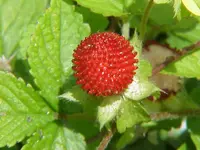
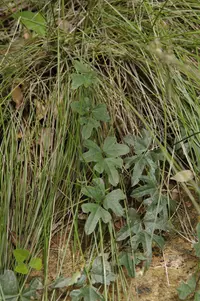
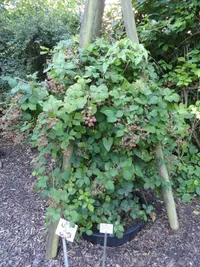
Mock strawberry, Potentilla indica, is a low-growing perennial groundcover in the rose family. It spreads by runners, forming dense mats of foliage close to the soil surface. The plant has three-part leaves and small yellow flowers, followed by red, bumpy fruits that resemble true strawberries but taste bland. It is native to parts of Asia and has naturalized widely in lawns, borders, and open woodland edges in many regions. This species is tough, adaptable, and often behaves like a weed, which makes it easy to establish but harder to control. It generally prefers sun to light shade, moderate moisture, and well-drained soil, and learning how to care for mock strawberry mainly involves managing its spread.

Care Difficulty
Easy Care

Light Preference
Partial Shade

Water Requirements
Moderate Water

Temperature Preference
Cold Hardy

Hardiness Zone
5–9

Soil Texture
Sandy, Loamy, Organic-rich

Soil pH
Acidic (5.5–6.5), Slightly acidic (6.5–7.0)

Soil Drainage
Moist but well-drained

Fertilization
Minimal (feed rarely)
Scan your plant to receive care tips personalized for your specific plant
Available on iOS and Android
This groundcover prefers moderate sun exposure and adapts to many garden light conditions.
This species favors consistently moist but not saturated soil throughout the growing season.
This hardy perennial tolerates a wide range of outdoor temperatures once established.
This species tolerates typical outdoor humidity and does not have strict humidity requirements.
Potentilla indica prefers loose, moist but well-drained soil that does not stay waterlogged.
This species is suitable for shallow containers and hanging baskets, especially where spreading growth is desired.
Potentilla indica grows vigorously with minimal feeding but responds to light nutrition in poor soils.
Potentilla indica benefits from simple cleanup pruning to control spread and keep groundcover dense.
This species is usually grown as a groundcover, so transplanting runners is more common than true repotting.
Potentilla indica spreads aggressively, and propagation is straightforward using its natural runners.
This groundcover is quite hardy in most temperate climates and usually needs little winter care outdoors.

Plant Health Check
Not sure what's wrong with your plant? Check your plant's health inside the app.
This species has small yellow, five-petaled flowers that resemble true wild strawberries, but it belongs to a different genus and does not produce the same aromatic compounds that give Fragaria fruits their strong scent.
The red berries look like wild strawberries but are typically dry and nearly tasteless because they contain less sugar and fewer volatile flavor compounds than true strawberries.
The plant spreads mainly through stolons, which are above-ground runners that root at the nodes, allowing a single individual to form dense, genetically uniform patches over time.

Genetic and morphological studies have shown that this species fits better within the genus Potentilla than Fragaria, which is why its scientific name was changed from Duchesnea indica to Potentilla indica, reflecting its closer evolutionary relationship to cinquefoils than to true strawberries.
This species spreads quickly by rooting runners and can form dense mats that crowd low plants and lawn grass. Containment borders, regular runner trimming, or growing it in pots help limit spread in small or managed spaces.
Keep your plants happy and healthy with plant identification, disease detection, and easy care guidance.