Install sturdy support
Use tensioned wire on posts or a strong fence and tie new canes loosely with soft ties to keep them off the ground, improve air movement, and make harvesting and pruning safer and easier.

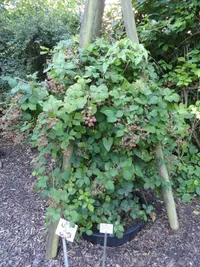
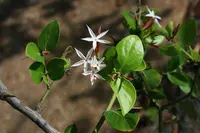
Purple-glandular bramble (Rubus rudis) is a deciduous, shrubby bramble in the rose family, related to cultivated blackberries. It forms arching, thorny canes with small glands that can feel slightly sticky, and produces white to pinkish flowers followed by dark aggregate fruits. This species is native to parts of Europe and has naturalized in some temperate regions, often along woodland edges, hedgerows, and disturbed ground. It spreads readily by vigorous shoots and can quickly form dense thickets, which makes it robust but sometimes challenging to contain in gardens. Those who care for Purple-glandular Bramble should allow space, provide sun to light shade, and use reasonably moist, well-drained soil.

Care Difficulty
Easy Care

Light Preference
Full Sun

Water Requirements
Moderate Water

Temperature Preference
Cold Hardy

Hardiness Zone
4–8

Soil Texture
Sandy, Loamy, Clay

Soil pH
Acidic (5.5–6.5), Slightly acidic (6.5–7.0)

Soil Drainage
Moist but well-drained

Fertilization
Minimal (feed rarely)
Scan your plant to receive care tips personalized for your specific plant
Available on iOS and Android
This bramble prefers bright conditions with several hours of direct sun for strong canes and high fruit yield.
This species prefers consistently moist but not saturated soil, supported by good drainage.
This bramble is a hardy, cool- to warm-temperate shrub that tolerates substantial winter cold.
This bramble tolerates a wide humidity range and usually does not need special humidity management outdoors.
Rubus rudis grows best in deep, loose, well‑drained loam with steady moisture retention.
This species can be grown in large containers if given enough root volume and structural support.
Rubus rudis responds well to modest feeding when grown in garden or orchard settings.
Rubus rudis benefits from structured pruning to maintain productivity and manage vigor.
This bramble is usually grown in the ground, so focus on thoughtful transplanting rather than frequent repotting.
Rubus rudis is commonly propagated vegetatively to maintain desirable traits.
This bramble is generally cold hardy and needs only modest winter care in most temperate climates.

Plant Health Check
Not sure what's wrong with your plant? Check your plant's health inside the app.
Rubus rudis is a blackberry species native to eastern and central North America, where it occurs in thickets, woodland edges, and disturbed sites rather than being a European introduction like some other brambles.
This species typically has strongly angled, arching canes with stout, often recurved prickles, a combination that taxonomists use to distinguish it from closely related Rubus species in the same region.
Rubus rudis belongs to a taxonomically difficult group where many species hybridize and show variable morphology, so specialists often rely on detailed characters such as leaflet shape, prickle density, and inflorescence structure for reliable identification.
This species spreads by arching canes that root where they touch soil and by bird-dispersed seed. In open ground it can form dense thickets, so plan containment with edging, regular pruning, or mowing of unwanted shoots.
Keep your plants happy and healthy with plant identification, disease detection, and easy care guidance.