Use sturdy support
Install strong posts and tensioned wires before planting so new canes can be tied in horizontally or at a shallow angle, which increases light penetration and fruiting along the stems.

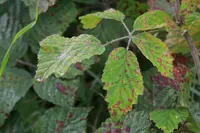
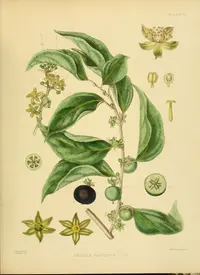
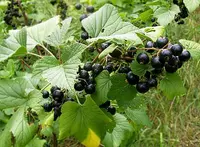
Rubus bartonii is a wild blackberry relative, forming arching, often prickly canes with compound leaves and small white flowers followed by clustered fruits. It is typically found in specific, localized habitats, often in open or lightly shaded sites with good drainage.
This species behaves like other brambles, spreading by canes and sometimes by rooting where stems touch the ground, so it can occupy space quickly if conditions suit it. It is generally hardy but may be harder to source and identify than common blackberry types.
Those who care for Rubus bartonii should know it favors sun to light shade, moderately moist but well-drained soils, and space for its canes to grow without crowding other plants.

Care Difficulty
Moderate Care

Light Preference
Partial Sun

Water Requirements
Moderate Water

Temperature Preference
Cool Climate

Hardiness Zone
Unknown

Soil Texture
Loamy, Sandy, Organic-rich

Soil pH
Acidic (5.5–6.5), Slightly acidic (6.5–7.0)

Soil Drainage
Moist but well-drained

Fertilization
Minimal (feed rarely)
Scan your plant to receive care tips personalized for your specific plant
Available on iOS and Android
This shrub thrives in bright outdoor conditions with several hours of direct sun for strong growth and fruiting.
This bramble prefers consistently moist, well-drained soil rather than extremes of drought or saturation.
This hardy shrub tolerates a wide temperature range but performs best in moderate, temperate climates.
This shrub is tolerant of a broad humidity range and usually does not need special humidity management outdoors.
Rubus bartonii prefers moist, well-aerated, loamy soil with reliable drainage to support strong cane and root development.
This species can be grown in containers if the pot is large, stable, and drains freely.
This native bramble generally needs minimal feeding, especially in reasonable garden soil.
Pruning helps maintain structure, manage spread, and support healthy cane renewal.
This species is usually grown in the ground, so focus on thoughtful transplanting rather than frequent repotting.
Rubus bartonii can be propagated using several straightforward vegetative and seed methods.
This hardy bramble usually needs only basic winter preparation in most temperate climates.

Plant Health Check
Not sure what's wrong with your plant? Check your plant's health inside the app.
Rubus bartonii is a rare bramble known only from a small number of sites in New England, mainly in Maine and New Hampshire, where it occurs in scattered, localized populations rather than across a broad region.
This species typically grows on open rocky ledges and outcrops, often in upland settings, showing a preference for thin, well-drained soils and high light compared with many woodland Rubus species.
Rubus bartonii belongs to a notoriously complex genus where many species hybridize and show apomixis (seed formation without fertilization), and it was described as a distinct species only after detailed morphological and regional studies clarified its consistent traits.
This bramble can spread by arching canes and suckering roots, forming thickets over time. In small gardens, use root barriers, regular pruning, and remove unwanted shoots each season to prevent it from becoming overly dominant.
Keep your plants happy and healthy with plant identification, disease detection, and easy care guidance.