Wind-hardening young plants
Expose new plants to gradually stronger wind over 1–2 weeks after planting so their stems flex and thicken, which helps prevent breakage in storms later on.

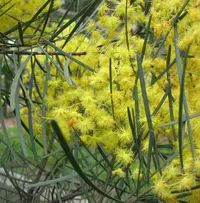
Bower wattle, Acacia cognata, is a fine-leaved evergreen shrub or small tree valued for its soft, weeping foliage and compact form. It often forms dense mounds or cascading shapes, depending on the cultivar.
This species is native to southeastern Australia, where it grows in open forests and along rocky slopes. Many gardeners choose it for low-maintenance landscapes because it is generally hardy once established.
Acacia cognata prefers sunny positions, well-drained soil, and moderate moisture, and it tolerates short dry periods. Understanding how to care for bower wattle focuses mainly on providing good drainage and avoiding prolonged waterlogging.

Care Difficulty
Moderate Care

Light Preference
Full Sun

Water Requirements
Low Water

Temperature Preference
Warm Climate

Hardiness Zone
9–11

Soil Texture
Sandy, Loamy, Rocky

Soil pH
Acidic (5.5–6.5), Slightly acidic (6.5–7.0)

Soil Drainage
Well-drained

Fertilization
Minimal (feed rarely)
Scan your plant to receive care tips personalized for your specific plant
Available on iOS and Android
Acacia cognata prefers bright conditions with protection from harsh extremes.
This species prefers deep, infrequent watering once established, with time for the soil to dry between soakings.
This wattle prefers mild conditions and tolerates a range of outdoor temperatures once established.
This species tolerates a wide humidity range and usually does not need special humidity management.
Acacia cognata prefers freely draining, slightly lean soil that never stays waterlogged.
This species can grow successfully in containers when the pot is set up to prevent waterlogging and instability.
Acacia cognata is adapted to low‑nutrient soils, so use light feeding only when growth is clearly weak.
Pruning Acacia cognata is mainly used to maintain size, shape, and plant health.
This species is usually grown in the ground; focus on careful transplanting or occasional container up‑potting.
Acacia cognata is most often propagated from semi‑hardwood cuttings or seeds under controlled conditions.
Acacia cognata is suited to mild winters and benefits from some protection in colder regions.

Plant Health Check
Not sure what's wrong with your plant? Check your plant's health inside the app.
Acacia cognata develops long, pendulous branchlets with very narrow, drooping phyllodes that give the shrub a distinctive cascading or fountain-like form, quite unlike many upright Australian wattles.
What look like leaves on A. cognata are actually phyllodes, which are flattened leaf stalks that take over the role of leaves, an adaptation common in Australian acacias that helps reduce water loss in dry environments.
In the wild, A. cognata occurs naturally in a relatively small area of southeastern Australia, mainly in New South Wales and eastern Victoria, often on sandstone-derived or nutrient-poor soils in open forest and woodland.

Many ornamental forms sold under cultivar names such as 'Lime Magik', 'Limelight', or 'Green Mist' are all selections of Acacia cognata, chosen from wild or seedling variation for their especially fine-textured foliage and compact, highly weeping growth, which makes them stand out among ornamental wattles.
Poor flowering often comes from pruning at the wrong time, nutrient imbalance, or stress. Avoid heavy pruning in late winter, prevent waterlogging, and use a low-phosphorus, balanced fertilizer to support bud formation and regular seasonal blooming.
Keep your plants happy and healthy with plant identification, disease detection, and easy care guidance.