Wind-firm training
In the first 2–3 years, selectively tip-prune long, whippy shoots and keep a single dominant leader so the young tree builds a sturdy, wind-resistant framework rather than a tangle of weak branches.

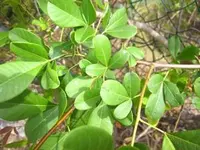
Longstalk currantrhus (Searsia longipes) is a small to medium tree or large shrub from the Anacardiaceae family, native to southern Africa. It usually has a rounded crown, fine branching, and small, leathery, trifoliate leaves that give it a light, airy look.
In the landscape it is often used as a hardy screening or shade plant, and in suitable climates it can be grown in larger containers. It is generally resilient once established, tolerating seasonal dryness and a range of soils, which makes it relatively straightforward to care for Longstalk Currantrhus.
It prefers sunny to lightly shaded positions and well-drained soil, performing best with moderate but not constant moisture during active growth.

Care Difficulty
Easy Care

Light Preference
Full Sun

Water Requirements
Low Water

Temperature Preference
Warm Climate

Hardiness Zone
9–11

Soil Texture
Sandy, Loamy, Rocky

Soil pH
Slightly acidic (6.5–7.0), Neutral (7.0)

Soil Drainage
Well-drained

Fertilization
Minimal (feed rarely)
Scan your plant to receive care tips personalized for your specific plant
Available on iOS and Android
This sun-loving shrub or small tree thrives in bright outdoor conditions with modest shade tolerance.
This drought-tolerant species prefers deep, infrequent watering once established.
This species prefers warm, mild climates and tolerates short periods of heat and light cold.
Humidity is a minor factor for Searsia longipes, which adapts well to typical indoor and outdoor air conditions, making caring for Longstalk Currantrhus straightforward regarding moisture in the air.
Searsia longipes grows best in well-aerated, freely draining mineral-based soil that does not stay wet for long.
This species can be grown in containers if the pot is chosen to manage both strong roots and eventual height.
This drought-tolerant shrub or small tree usually needs only modest feeding in average garden soil.
Searsia longipes responds well to thoughtful pruning that maintains a strong framework and natural form.
This species is usually grown in the ground, so focus on careful transplanting of young plants rather than frequent repotting.
New Searsia longipes plants are most often raised from seed, with semi-hardwood cuttings as an option for experienced growers.
This shrub is generally cold hardy in mild to moderate climates and usually needs only basic winter care in the ground.

Plant Health Check
Not sure what's wrong with your plant? Check your plant's health inside the app.
This species is typically found as an evergreen shrub or small tree along rivers and in moist woodland margins in parts of southern Africa, showing a clear preference for sheltered, relatively humid microhabitats compared with many other Searsia species that favor drier slopes.
The species name longipes refers to its unusually long petioles, the stalks that attach the leaflets to the stem, which make the compound leaves look more widely spaced and delicate than in many related Searsia species.
Its small, typically dark fruits are eaten by a range of birds and small mammals in its native range, contributing to local food webs and aiding seed dispersal along river corridors.
This species can be grown in large, deep containers with good drainage. Use a gritty, well-drained mix and allow space for its root system. Container plants need more frequent watering checks and periodic root pruning as they mature.
Keep your plants happy and healthy with plant identification, disease detection, and easy care guidance.