Encourage Bushy Shape
Pinch soft shoot tips in late winter or very early spring to encourage dense branching and reduce legginess before the main growth flush starts.

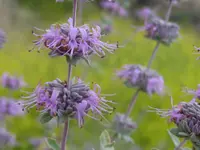
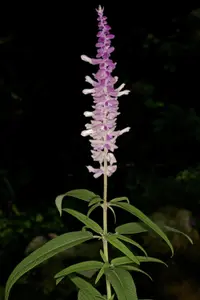
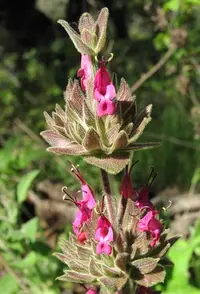
San Luis purple sage (Salvia leucophylla) is an aromatic evergreen shrub native to coastal hills and canyons of California and northern Baja California. It belongs to the mint family and is widely used in dry gardens and habitat plantings.
Plants form rounded, somewhat open mounds with silvery, softly textured leaves and whorls of pale to deep purple flowers on arching stems. The foliage has a strong scent and attracts many pollinators.
This species is adapted to hot, dry summers and mild, wetter winters, which makes it relatively easy in low-water, well-drained sites. Understanding how to care for San Luis purple sage starts with providing full sun, low to moderate moisture, and lean, fast-draining soil.

Care Difficulty
Easy Care

Light Preference
Full Sun

Water Requirements
Low Water

Temperature Preference
Warm Climate

Hardiness Zone
8–10

Soil Texture
Sandy, Loamy, Rocky

Soil pH
Slightly acidic (6.5–7.0), Slightly alkaline (7.0–7.5)

Soil Drainage
Well-drained

Fertilization
Minimal (feed rarely)
Scan your plant to receive care tips personalized for your specific plant
Available on iOS and Android
This sun-loving coastal sage grows best with strong light and open exposure.
This drought-adapted shrub prefers infrequent, deep watering and fast-draining soil.
This California coastal sage thrives in mild, dry climates with moderate seasonal shifts.
This shrub prefers dry air and does not need extra humidity indoors or outdoors.
This drought-adapted sage needs very fast-draining, lean soil to prevent root rot.
This species can grow well in containers if drainage and root space are carefully managed.
This drought-adapted shrub needs very modest feeding, so focus on lean, well-drained soil rather than heavy fertilization when caring for San Luis purple sage.
Pruning Salvia leucophylla is mainly done to maintain a compact shape and encourage fresh flowering wood.
This species is most often grown in the ground, so focus on careful transplanting rather than frequent repotting.
Salvia leucophylla is commonly propagated from semi-ripe cuttings and, less often, from seed for landscape use.
This coastal sage is hardy in mild-winter climates and usually needs minimal winter care in much of its suitable range.

Plant Health Check
Not sure what's wrong with your plant? Check your plant's health inside the app.
This coastal sagebrush species releases volatile compounds from its leaves that can suppress germination and growth of nearby plants, an example of allelopathy that helps it compete in dry, nutrient-poor habitats.
Its nectar-rich, tubular flowers are an important resource for native solitary bees and bumblebees in coastal southern California, some of which show a clear preference for this shrub over other flowering species.
The small, pale, hairy leaves reflect sunlight and reduce water loss, while also helping the plant capture moisture from coastal fog, a key adaptation in its native chaparral and coastal sage scrub communities.

This species is one of the signature shrubs of the coastal sage scrub ecosystem in California, and changes in its abundance are often used by ecologists as an indicator of habitat quality and long-term shifts in this threatened plant community.
Poor flowering usually comes from too little light, excess nitrogen fertilizer, or pruning at the wrong time, which removes flower buds. Allow some older wood to remain, avoid heavy feeding, and ensure the plant receives full, unshaded exposure.
Keep your plants happy and healthy with plant identification, disease detection, and easy care guidance.