Manage spreading rhizomes
Install a shallow root barrier or periodically slice and remove outer clumps with a sharp spade to keep this strong rhizome spreader from overtaking nearby perennials or pathways.

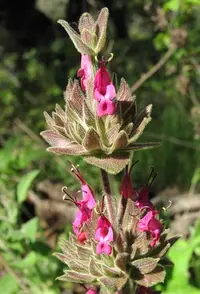
Hummingbird sage, Salvia spathacea, is a fragrant, clumping perennial native to coastal and foothill areas of California. It often grows beneath oaks and in light shade. The plant forms low, spreading mats of softly textured, aromatic leaves and sends up upright flower spikes with showy magenta to reddish blooms that attract hummingbirds and other pollinators. It is adapted to dry summers and mild, wet winters, which makes it well suited to water-wise gardens. Once established, it is considered relatively easy to grow if given well-drained soil and partial sun. Understanding how to care for hummingbird sage starts with matching these natural conditions as closely as possible.

Care Difficulty
Easy Care

Light Preference
Partial Sun

Water Requirements
Low Water

Temperature Preference
Warm Climate

Hardiness Zone
8–11

Soil Texture
Sandy, Loamy, Organic-rich

Soil pH
Acidic (5.5–6.5), Slightly acidic (6.5–7.0)

Soil Drainage
Well-drained

Fertilization
Minimal (feed rarely)
Scan your plant to receive care tips personalized for your specific plant
Available on iOS and Android
This California native thrives in bright, mild conditions with protection from harsh extremes.
This drought-tolerant perennial prefers deep, infrequent watering once established.
This species is adapted to mild, Mediterranean-type climates with cool, wet winters and warm, dry summers.
This species tolerates a wide humidity range and rarely needs special humidity management.
Salvia spathacea prefers loose, fast-draining, slightly coarse soil that mimics its native coastal habitats.
This species can grow successfully in containers when provided with a very free-draining setup and enough root space.
This California native needs modest feeding, especially in poor soils, to support steady growth and flowering.
Thoughtful pruning keeps Salvia spathacea dense, tidy, and flowering well.
This species is more often transplanted in the landscape than kept as a long-term container plant.
Salvia spathacea is commonly propagated to expand groundcover patches or share plants.
In mild Mediterranean climates, this sage is largely winter-hardy and needs little special care.

Plant Health Check
Not sure what's wrong with your plant? Check your plant's health inside the app.
This species is native and restricted to California, where it naturally occurs in coastal sage scrub, chaparral, and open oak woodland on well-drained slopes and canyons.
Its leaves and stems are covered with glandular hairs that release a strong, resinous fragrance when touched, a trait that helps deter some herbivores and may reduce water loss.
The plant’s deep magenta tubular flowers, produced on upright spikes, are shaped and positioned to transfer pollen efficiently onto the heads and bills of visiting hummingbirds, which act as its primary pollinators.

This species spreads by thick underground rhizomes, allowing it to form extensive colonies over time that can stabilize slopes and create dense patches of nectar-rich habitat for hummingbirds and other wildlife.
Lack of blooms often comes from too much shade, excessive nitrogen fertilizer, or very young plants. Older, congested clumps may also flower less and benefit from division and light pruning after the main flowering period.
Keep your plants happy and healthy with plant identification, disease detection, and easy care guidance.