feverfew Care (Tanacetum parthenium)

feverfew

About feverfew

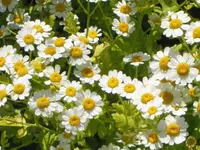
Feverfew, Tanacetum parthenium, is a compact, bushy perennial from the daisy family. It is often grown as a short-lived perennial or reseeding annual in gardens. Plants form mounded clumps of finely divided, aromatic green leaves topped with many small, daisy-like white flowers.

Feverfew originates from southeastern Europe and western Asia but is now naturalized in many temperate regions, including North America. It has a reputation for self-seeding, which can make it persistent and sometimes mildly weedy in favorable conditions.

This plant is generally undemanding and suits beginners who want to learn how to care for feverfew. It prefers full sun, well-drained soil, and moderate moisture, making it suitable for borders, cottage gardens, and herb beds.

Main Plant Requirements

Care Difficulty

Easy Care

Light Preference

Full Sun

Water Requirements

Moderate Water

Temperature Preference

Cool Climate

Hardiness Zone

5–9

Soil Texture

Sandy, Loamy, Organic-rich

Soil pH

Slightly acidic (6.5–7.0), Neutral (7.0)

Soil Drainage

Well-drained

Fertilization

Minimal (feed rarely)

Get Personalized Care Plan

Scan your plant to receive care tips personalized for your specific plant

Available on iOS and Android

How to Care for the feverfew

Tanacetum parthenium grows best in sites with strong, direct light for most of the day.

  • Aim for 6–8 hours of direct sun, ideally with gentle morning sun and some protection from intense late-afternoon summer sun in hotter regions.
  • Plant feverfew in an open, unshaded spot outdoors; it tolerates light partial shade but flowering and compact growth decline below about 4–5 hours of sun.
  • Watch for pale, lanky stems as a sign of insufficient light, and for crisped leaf edges in very hot climates, which signal need for slight afternoon shade.

Tanacetum parthenium prefers evenly moist but not saturated soil, especially during active growth.

  • Outdoors in the ground, water when the top 3–5 cm of soil feels dry, then soak the root zone thoroughly and allow excess to drain away.
  • Use well-drained soil with added grit or compost; persistent wetness, sour smell, or blackened roots indicate overwatering and poor drainage.
  • In cooler seasons reduce frequency, relying on rainfall where possible; in hot, dry weather leaf droop and dry, crumbly soil signal the need for a deep watering.

This species is a cool- to warm-temperate perennial that tolerates a range of outdoor conditions.

  • Optimal growth occurs around 60–75°F (16–24°C), with strong vegetative growth in mild spring and early summer conditions.
  • Plants withstand light frost down to about 25°F (−4°C); in colder zones they may die back to the crown and resprout if roots are insulated by mulch.
  • In summer, plants tolerate up to about 86–90°F (30–32°C) if soil moisture is maintained; prolonged extreme heat and drought reduce flowering and can cause leaf scorch.

Humidity is rarely critical for feverfew, which adapts well to typical indoor and outdoor air levels.

Tanacetum parthenium performs best in light, well-drained soil that does not stay waterlogged after rain or watering.

  • Use a loamy or sandy mix with moderate organic matter, so roots get both nutrients and air.
  • Aim for slightly acidic to neutral pH around 6.0–7.0, which supports nutrient uptake and steady growth.
  • For pots or raised beds, combine 2 parts all-purpose potting mix with 1 part coarse sand or fine grit to sharpen drainage.
  • Avoid heavy clay or compacted substrates; mix in compost and coarse material to reduce waterlogging and improve aeration.

This species grows reliably in containers when drainage and root space are managed carefully.

  • Choose a pot at least 20–25 cm wide so the plant can form a broad, bushy clump without crowding the root zone.
  • Use a relatively light container material if the pot will be moved often, but ensure the base is stable against wind.
  • Raise pots slightly on feet or bricks so drainage holes stay clear and excess water escapes instead of pooling under the container.

This herbaceous perennial grows well in modest soils, so fertilizing feverfew should be light and targeted.

  • Use a balanced, diluted liquid fertilizer (around 10-10-10 at 1/2 strength) or a thin layer of compost in spring.
  • Feed every 4–6 weeks during active growth if soil is poor; skip feeding in rich garden beds.
  • Avoid high-nitrogen products, which push leafy growth at the expense of flowers.
  • Stop fertilizing in late summer and do not feed in winter dormancy.

Thoughtful pruning keeps Tanacetum parthenium compact, tidy, and flowering well.

  • Shear back spent flower stems in mid to late summer to encourage a second flush of blooms.
  • Remove dead, damaged, or crossing stems at the base with clean hand pruners to improve airflow.
  • Lightly shape plants by trimming outer growth, maintaining a low, bushy mound.
  • Deadhead individual faded blooms during peak season to prolong flowering.

This species is more often transplanted in beds than kept long term in containers.

  • Plan transplanting for early spring or early fall when temperatures are mild and soil is workable.
  • Move plants when growth stalls, clumps crowd each other, or roots circle inside a small pot.
  • Lift with a generous root ball, disturb roots minimally, and replant at the same depth in well-drained soil.
  • Water thoroughly after transplanting, then keep soil evenly moist for 1–2 weeks to limit transplant shock.

Tanacetum parthenium is commonly propagated from seed and by division of mature clumps.

  • Sow seeds in late winter to early spring on the surface of moist seed mix, as light aids germination.
  • Maintain 65–70°F and gentle light; seedlings usually appear within 10–21 days.
  • Divide established plants in early spring, splitting healthy clumps into pieces with several shoots each.
  • Replant divisions promptly, firm soil around roots, and water well until new growth resumes.

This hardy perennial tolerates moderate frost and usually needs minimal winter care in garden beds.

  • In zones with cold winters, apply a light mulch layer around the crown after the ground cools, not touching stems.
  • Cut back dead, mushy, or diseased top growth in late fall, leaving low basal foliage if still healthy.
  • For container plants in colder regions, move pots to a sheltered, unheated but frost-sheltered area.

Care Tips

Encourage Bushy Form

Pinch out the top 2–3 cm of young stems several times in spring to promote a compact, bushy habit and produce more flowering shoots for harvest.

Timed Flower Harvest

Cut flower stems early in the morning just as the first flowers open, using clean sharp shears, to extend vase life and encourage the plant to send up new flushes of blooms.

Self-Seeding Control

Deadhead spent flower heads before seeds mature if you do not want extensive self-seeding, and allocate a small area where a few heads are left to drop seed for a controlled renewal patch.

Powdery Mildew Prevention

Space plants to allow good air flow, water at soil level, and remove the most crowded inner stems in early summer to reduce humidity around foliage and limit powdery mildew outbreaks.

Winter Clump Management

In cold regions, leave some top growth over winter for crown protection, then cut back and gently lift, divide, and replant crowded clumps every 2–3 years in early spring to maintain vigorous, healthy plants when growing feverfew.

Common Pests and Diseases

Powdery mildew

This disease appears as white, powdery patches on leaves, stems, and sometimes flower buds, often in warm days and cool, humid nights. Symptoms include distorted new growth and premature leaf yellowing or drop.

Solution

Improve air circulation around plants, avoid overhead watering, and thin crowded clumps to reduce humidity. Remove and discard heavily infected leaves and, if needed, apply a sulfur or potassium bicarbonate fungicide labeled for ornamentals, following label directions carefully as part of general Tanacetum parthenium care instructions.

Leaf spot

This disease causes small brown to black spots on leaves, sometimes with yellow halos, which can merge into larger blotches in prolonged wet conditions. Symptoms include thinning foliage and reduced vigor in dense plantings.

Solution

Remove and discard affected leaves and any fallen debris to reduce reinfection. Water at the base in the morning, space plants to dry quickly, and if spots continue to spread, use a copper-based fungicide labeled for ornamental leaf spots, applying during dry weather for best effect.

Aphids

These insects cluster on tender stems, buds, and leaf undersides, sucking sap and excreting sticky honeydew. This pest causes curling or distorted growth and can attract sooty mold on the honeydew.

Solution

Dislodge colonies by spraying plants with a firm stream of water, repeating every few days. For persistent infestations, treat with insecticidal soap or neem oil, coating all leaf surfaces, and encourage natural predators such as lady beetles by avoiding broad-spectrum insecticides nearby.

Spider mites

These pests are tiny and often hard to see, but symptoms include fine webbing, stippled or speckled leaves, and a dull, gray-green appearance, especially in hot, dry weather. Leaves may dry, crisp, and drop when populations are high.

Solution

Increase humidity around the plants, rinse foliage thoroughly with water, and prune out heavily infested stems. If needed, apply horticultural oil or insecticidal soap to the undersides of leaves at 5–7 day intervals until new growth appears clean.

Botrytis blight

This disease produces gray, fuzzy mold on fading flowers, stems, and sometimes leaves, especially during cool, damp weather. Symptoms include browning flower heads and soft, water-soaked spots on stems that may collapse.

Solution

Remove spent flower heads promptly and discard any infected plant material, including fallen debris. Improve airflow by thinning and avoid wetting the foliage; in severe or recurring cases, use a labeled fungicide for Botrytis on ornamentals during prolonged wet periods.

Interesting Facts

Sesquiterpene lactone content

The leaves contain the sesquiterpene lactone parthenolide, a bitter compound that has been widely studied in pharmacology for its anti-inflammatory and platelet-modulating properties in laboratory settings.

Self-seeding short-lived perennial

Although botanically a perennial, this species often behaves as a short-lived plant in gardens, maintaining populations mainly through prolific self-seeding around the parent plant.

Pungent, resinous foliage

Its finely divided leaves release a strong, resinous scent when crushed, which is due to a complex mixture of volatile oils concentrated in glandular trichomes on the leaf surface.

Botan icon

Did you know?

In parts of Europe since at least the Middle Ages, this species was commonly grown in physic gardens and was sometimes planted along house walls or paths specifically so fresh leaves and flower heads could be harvested quickly for inclusion in herbal preparations for recurrent headache disorders, a traditional use that later prompted modern clinical research into standardized feverfew extracts.

FAQs about feverfew

Lack of flowers often comes from too much shade, excess nitrogen fertilizer, or cutting stems too late in the season. Older clumps may need division. Deadhead spent blooms regularly to direct energy into forming new buds.

Grow Healthy Plants with Botan Care

Keep your plants happy and healthy with plant identification, disease detection, and easy care guidance.

Botan plant care app — identify plants on mobile

Explore More Plants