Java waterdropwort Care (Oenanthe javanica)

Also known as: Water Dropwort
Java waterdropwort

About Java waterdropwort

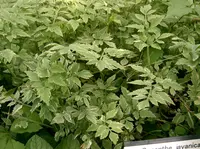
Java waterdropwort, Oenanthe javanica, is a semi-aquatic perennial herb often grown in ponds, water gardens, and moist edges. It spreads by creeping stems that root easily at the nodes, forming dense, low patches of fresh green foliage. Leaves are finely divided and soft-looking, giving the plant a delicate appearance despite its vigorous growth. In suitable conditions it can produce small white flower clusters held above the foliage. This species is native to East Asia and commonly used as an edible and ornamental water plant. It usually grows best in consistently wet or shallowly submerged soil with good light. Understanding how to care for Java waterdropwort starts with providing stable moisture and preventing unwanted spreading into natural waterways.

Main Plant Requirements

Care Difficulty

Moderate Care

Light Preference

Partial Sun

Water Requirements

Aquatic

Temperature Preference

Cool Climate

Hardiness Zone

5–10

Soil Texture

Loamy, Silty, Organic-rich

Soil pH

Slightly acidic (6.5–7.0), Neutral (7.0)

Soil Drainage

Waterlogged tolerant

Fertilization

Light (every 4–6 weeks)

Get Personalized Care Plan

Scan your plant to receive care tips personalized for your specific plant

Available on iOS and Android

How to Care for the Java waterdropwort

This moisture-loving perennial prefers bright conditions but not harsh, drying sun.

  • Provide 4–6 hours of light daily with morning sun and afternoon shade; dappled or filtered light suits Java waterdropwort very well.
  • In hot summers, protect from direct sun after 11 a.m. to reduce leaf scorch, pale foliage, and rapid moisture loss from soil and shallow water.
  • In cooler months or cloudy climates, allow a bit more direct sun to maintain compact growth and strong color, especially in variegated forms.

This semi-aquatic plant thrives in consistently wet conditions and does not like drying out.

  • Maintain soil or substrate constantly saturated; in garden beds the surface should never dry fully, and in ponds the crown can sit just at or below shallow water level.
  • Increase water supply in hot, windy weather if foliage wilts, leaf edges crisp, or soil surface lightens and cracks.
  • Reduce standing depth slightly in cool seasons to limit rot; signs of overwatering in heavy soils include yellowing, limp stems, and sour or anaerobic-smelling substrate around Oenanthe javanica roots.

This species prefers mild, cool to warm conditions and tolerates brief cold better than intense heat.

  • Aim for active growth in 60–77°F (16–25°C); growth slows above 82°F (28°C) and may stall in prolonged heat waves without ample water.
  • The plant survives light frost down to about 23–25°F (-5 to -4°C) once established, though top growth can die back and re-sprout from hardy crowns or rhizomes.
  • In regions with hotter summers above 86°F (30°C), provide partial shade and abundant moisture; in colder climates, mulch crowns in fall to buffer freeze–thaw cycles.

This semi-aquatic herb prefers very moist air and constant surface moisture.

  • Aim for 60–80% humidity, keeping stems and roots consistently wet rather than relying on air moisture alone.
  • Dry indoor air causes dull, limp foliage and browning leaf edges in Java waterdropwort.
  • Increase humidity by standing the pot in a shallow tray of water or using a wide water reservoir around the container.

This plant grows best in saturated, organic-rich soil that mimics a pond margin or bog.

  • Use heavy loam mixed with plenty of compost to hold water while supplying nutrients.
  • Choose soil that stays waterlogged or at least constantly wet; avoid fast-draining sandy mixes that dry between waterings.
  • A pH around 6.0–7.0 suits Oenanthe javanica; avoid very alkaline or salty substrates that restrict nutrient uptake.
  • For container culture, pack soil firmly and avoid coarse perlite or bark that create air pockets and reduce standing moisture.

This species is suitable for containers when the setup supports its preference for saturated conditions.

  • Select a deep, wide pot to allow lateral runner spread and stable anchoring of the soft, water-heavy stems.
  • Place the container inside a larger outer tub or cachepot that can be kept partly filled with water to maintain a constant saturated zone.
  • Use a rigid, heavier material such as ceramic to prevent tipping when the upper growth becomes dense and water laden.

Nutrient-rich, wet conditions usually support Java waterdropwort well, but light feeding improves vigor in containers or poor soils.

  • Use a balanced liquid fertilizer (such as 10-10-10) at 1/4–1/2 strength every 2–4 weeks during spring–summer growth.
  • In ponds or very wet pots, prefer slow-release aquatic tablets or lightly worked-in compost to avoid nutrient spikes.
  • Rinse fertilizer from foliage to reduce burn risk, especially in full sun or shallow water setups.
  • Stop or reduce feeding to once every 6–8 weeks in fall–winter, when growth slows.

Thoughtful pruning keeps Oenanthe javanica dense, productive, and within bounds in the garden or container.

  • Trim stems with clean scissors or hand pruners from spring through late summer to control spread and maintain shape.
  • Remove yellowing, damaged, or weak shoots at the base to reduce disease risk and improve air flow.
  • Lightly shear or pinch young tips to encourage bushier growth and more harvestable foliage.
  • Cut back overcrowded patches after flowering to renew growth and limit invasive creeping.

This plant is more often transplanted than repotted, as it spreads quickly in boggy beds and pond margins.

  • Transplant in spring or early summer when new growth is strong and temperatures are mild.
  • Move clumps when the patch becomes crowded, centers thin out, or growth slows despite good moisture.
  • Lift clumps with a trowel or fork, keeping roots and surrounding soil or mud intact to limit shock.
  • Replant divisions at the same depth, water or flood well, and shade lightly for a few days while roots reestablish.

New Oenanthe javanica plants are most often produced by division, though cuttings and seeds are also possible.

  • Divide established clumps in spring, separating rooted sections with several shoots and replanting immediately in wet soil.
  • Take 8–10 cm soft stem cuttings in late spring–summer, insert into very moist substrate, and keep consistently wet.
  • Sow fresh seed on the surface of damp soil, barely cover, and maintain cool, bright, and evenly moist conditions.
  • Label vigorous selections when dividing to maintain desirable flavor, color, or growth habit.

This species is moderately cold hardy and often survives typical winters with minimal input in many temperate areas.

  • In regions with freezes, allow top growth to die back naturally while keeping the root zone moist, not waterlogged ice.
  • Apply a 5–8 cm mulch layer over soil-grown crowns in colder climates to buffer freeze–thaw cycles.
  • Move containers into a cold, frost-free area or sink pots into the ground to insulate roots in winter.

Care Tips

Containment In Ponds

Plant in heavy plastic pond baskets or perforated containers lined with fabric to limit spreading while still allowing roots to stay submerged and nutrient-rich water to circulate.

Regular Thinning Harvest

Cut and remove whole stems from the outer edges every 1–2 weeks during the growing season to keep growth open, reduce rot in dense mats, and provide steady edible harvests.

Water Flow Management

Position plants where there is gentle water movement rather than stagnant corners to reduce algae buildup and lower the risk of fungal and bacterial problems on stems and roots.

Division For Renewal

Lift and divide congested clumps every 1–2 years, discarding any black or mushy roots and replanting only firm, pale sections to maintain vigorous, disease-resistant growth when caring for Java waterdropwort.

Edge Escape Control

Inspect pond margins and nearby soil monthly and promptly pull any stems that have rooted outside the intended area to prevent this plant from naturalizing where it is not wanted.

Common Pests and Diseases

Leaf spot

This disease causes small, water-soaked or brown lesions on leaves that can merge into larger dead patches, especially on older foliage. Symptoms include yellowing around spots and premature leaf drop in warm, wet conditions.

Solution

Remove affected leaves promptly and avoid overhead watering to keep foliage drier. Thin crowded clumps, increase water movement in ponds or containers, and if the problem persists, apply a copper-based or chlorothalonil fungicide labeled for edible herbs or aquatic marginals, following label directions carefully.

Bacterial blight

This disease produces dark, water-soaked streaks or patches on leaves and stems that may turn black and soft, often starting at leaf tips or edges. Symptoms include rapid collapse of young shoots in hot, humid or stagnant water conditions.

Solution

Cut back and discard all visibly infected stems and leaves, disinfecting tools between cuts. Improve water circulation, avoid splashing contaminated water onto foliage, and start new plantings from healthy divisions if infection is severe; do not compost diseased material.

Aphids

These insects cluster on tender shoot tips and undersides of leaves, sucking sap and causing curling, distortion, and sticky honeydew deposits that can attract sooty mold. This pest is more common on plants grown in nutrient-rich, slow-moving or container setups.

Solution

Rinse colonies off with a strong but controlled stream of water, repeating every few days as needed. Encourage or introduce natural predators such as lady beetles, and use insecticidal soap or a light horticultural oil labeled for herbs, applying in the early morning or evening to avoid leaf burn.

Spider mites

This pest thrives on plants grown in warm, dry air or under lights, causing fine stippling, dull or bronzed leaves, and very fine webbing between leaf stalks. Symptoms include reduced vigor and premature leaf drop if infestations are heavy.

Solution

Increase humidity around emergent foliage, and regularly hose down leaves, focusing on undersides to knock mites off. For persistent issues, use insecticidal soap or a miticide labeled for use on herbs, applied in several rounds 5–7 days apart to catch hatching eggs.

Powdery mildew

This disease forms white or gray, powdery patches on upper leaf surfaces and stems, which can lead to yellowing, distortion, and reduced growth in dense or poorly ventilated clumps. Symptoms include increased susceptibility to other stress factors due to reduced photosynthesis.

Solution

Thin crowded stands to improve airflow and remove heavily infected leaves to reduce spore load. Avoid overhead watering of emergent foliage, and if needed apply a sulfur-based or potassium bicarbonate fungicide suitable for edible herbs, following label instructions and reapplying during long humid periods.

Interesting Facts

Edible aquatic vegetable

This species is widely cultivated in East Asia as an edible aquatic vegetable, especially in China, Japan, and Korea, where its crisp, hollow stems and tender leaves are eaten fresh or cooked.

Strong clonal spreader

The plant spreads aggressively through long, creeping stolons that root at the nodes, allowing it to form dense colonies along stream banks, rice paddies, and wet ditches.

Variegated ornamental forms

In addition to green forms, horticulture has selected variegated cultivars such as Oenanthe javanica 'Flamingo' and 'Chameleon', which have pink, cream, and green marbled foliage valued in water gardens.

Botan icon

Did you know?

In several regions outside its native range, including parts of the United States, this species has naturalized and is considered invasive in wetlands because its dense growth can outcompete native aquatic plants and alter habitat structure.

FAQs about Java waterdropwort

This species spreads quickly by creeping stems and root fragments, especially in consistently wet soil. In suitable climates it can become difficult to control, so use barriers, containers, or frequent trimming to keep growth contained.

Grow Healthy Plants with Botan Care

Keep your plants happy and healthy with plant identification, disease detection, and easy care guidance.

Botan plant care app — identify plants on mobile

Explore More Plants