dwarf saltwort Care (Salicornia bigelovii)

Also known as: Dwarf Glasswort, Bigelow's Pickleweed
dwarf saltwort

About dwarf saltwort

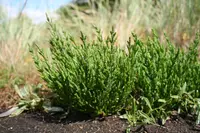
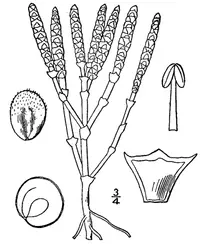
Dwarf saltwort (Salicornia bigelovii) is a small, fleshy halophyte, meaning it naturally thrives in salty environments. It forms low, jointed, leafless stems that look like tiny green cacti without spines, often turning reddish as they age.

This species grows along coastal salt marshes and tidal flats, especially in warm, arid and subtropical regions. It is adapted to high salinity and periodic flooding, which influences how to care for dwarf saltwort in cultivation.

Plants prefer full sun, very well-drained sandy or gritty substrates, and consistently moist conditions with added salt. Its strong stress tolerance makes it interesting but a bit specialized for home growers.

Main Plant Requirements

Care Difficulty

Hard Care

Light Preference

Full Sun

Water Requirements

Aquatic

Temperature Preference

Warm Climate

Hardiness Zone

8–11

Soil Texture

Sandy, Silty

Soil pH

Slightly alkaline (7.0–7.5), Alkaline (7.5–8.5)

Soil Drainage

Waterlogged tolerant

Fertilization

Minimal (feed rarely)

Get Personalized Care Plan

Scan your plant to receive care tips personalized for your specific plant

Available on iOS and Android

How to Care for the dwarf saltwort

This coastal halophyte thrives in strong sun but tolerates some seasonal variation.

  • Provide 6–8 hours of direct sun daily; full, open exposure suits dwarf saltwort best, especially in coastal or open field sites.
  • Accepts light partial shade, especially with morning sun and light afternoon shade, but dense shade leads to weak, elongated growth and paler stems.
  • In very hot inland summers, protect from intense late-afternoon sun to reduce scorching, while in winter ensure the site stays as open and unobstructed as possible.

This salt marsh species prefers constantly moist, even wet, conditions rather than intermittent drying.

  • Keep soil consistently saturated or very moist; do not allow the top 2–3 cm to dry out in active growth, especially in warm, windy weather.
  • Choose soil or a bed with excellent drainage into brackish or salty water; standing stagnant fresh water encourages root rot and sulfur-like odors.
  • In cooler seasons reduce water slightly so the surface is damp, not flooded, and watch for shriveling tips as an underwatering sign or mushy stems as overwatering.

This warm-coastal annual prefers mild to hot conditions and is sensitive to hard frost.

  • Aim for 70–90°F (21–32°C) during active growth; germination and strong branching occur best once soils warm in late spring.
  • Tolerates brief drops to about 35–40°F (2–4°C) but foliage is damaged or killed by hard frost, so sow or plant after the last expected freeze.
  • Handles short heat spikes up to 100–104°F (38–40°C) if soil stays wet and salty; in extreme inland heat, higher temperatures shorten the life cycle.

Humidity choice is not critical for this coastal halophyte, which tolerates a wide range of air moisture levels.

This halophyte needs very fast-draining, saline, sandy substrate rather than typical potting soil.

  • Use a mix of 60–80% coarse sand with 20–40% inert grit such as fine gravel or perlite to maintain sharp drainage.
  • Keep pH slightly alkaline to neutral (pH 7.0–8.0) by avoiding acidic peat-based mixes and using mineral components instead.
  • Irrigate with saline water or dissolve non-iodized salt into irrigation water to mimic natural coastal conditions for Salicornia bigelovii.
  • Avoid dense, clay-heavy, or organic-rich mixes that hold water and cause root suffocation or rot in this salt-adapted species.

This species can be grown in containers if the setup prevents waterlogging and supports its sprawling growth habit.

  • Choose a wide, shallow pot to match the relatively shallow root system and allow stems to spread without crowding.
  • Use a heavy, stable container material so the pot does not tip when the plant becomes bushy and top-weighted.
  • Raise the container slightly off the ground so drainage holes clear quickly and salty runoff does not accumulate under the pot.

Salicornia bigelovii typically grows in nutrient-poor coastal habitats and needs only light feeding in cultivation.

  • Use a low-dose, balanced liquid fertilizer at 1⁄4 strength during active growth in spring–summer if growth appears weak.
  • Apply no more than every 4–6 weeks, as excess nutrients reduce salt tolerance and can cause soft, weak tissue.
  • Avoid fertilizing in fall–winter when growth slows or plants are dormant.
  • For container plants, a very light, slow-release granular fertilizer can be mixed into the top layer of the mix once per season.

Salicornia bigelovii needs minimal pruning, mainly to keep plants tidy and healthy.

  • Perform light pruning in late winter or very early spring before new growth starts.
  • Remove dead, damaged, or discolored stems with clean, sharp scissors or small snips.
  • Thin crowded shoots to improve air flow and maintain a compact, even mat or clump.
  • Avoid cutting into the base too hard; leave healthy green segments to support regrowth.

This coastal halophyte is usually grown in the ground or shallow trays, with transplanting done sparingly to avoid stress.

  • Transplant in spring once frost risk has passed and plants show active new growth.
  • Move plants when roots circle the container, drainage is poor, or growth slows despite good light and water.
  • Use a wide, shallow pot or bed with very free-draining, sandy, saline substrate to mimic natural conditions.
  • Minimize root disturbance, water lightly with saline water after moving, and shade from strong sun for 2–3 days to reduce transplant shock.

Most growers multiply Salicornia bigelovii from seed under warm, bright conditions.

  • Sow fresh seeds in late winter–spring on the surface of a sandy, well-drained, saline mix; press in lightly without deep covering.
  • Maintain 65–75°F, strong light, and consistently moist but not waterlogged substrate for better germination.
  • Provide moderate salinity in the water to match adult growing conditions and reduce damping-off (seedling rot).
  • For small-scale use, soft stem cuttings in late spring can root in a moist saline medium under high humidity and bright, indirect light.

In mild, frost-free coastal climates, Salicornia bigelovii usually needs little special winter care.

  • In regions with light frost, use a thin mulch of coarse sand or gravel around the base to buffer root temperature.
  • Move container-grown plants to an unheated but frost-free space with strong light if temperatures drop below 30°F.
  • Water sparingly in winter, keeping the substrate just slightly moist and saline to prevent root rot.

Care Tips

Salinity Management

Rotate between slightly different salt concentrations in irrigation water every few weeks to mimic natural tidal variability and reduce stress from constant high salinity.

Regular Tip Harvesting

Pinch or cut only the top 2–3 cm of stems every 1–2 weeks during active growth to encourage dense, branching new shoots and maintain tender edible growth.

Anti-Lodging Support

In windy or exposed sites, install low mesh or horizontal twine at 10–15 cm height so stems lean rather than snap, which keeps plants upright and easier to harvest.

Saline Mulch Use

Apply a thin layer of coarse sand or fine gravel rinsed in salty water as a surface mulch to reduce weed competition from non-halophytic species and maintain a more stable saline root zone.

Staggered Succession Planting

Sow or transplant in 2–3 small batches spaced 2–3 weeks apart so that harvesting windows overlap and caring for dwarf saltwort becomes a continuous, manageable process rather than a single large flush.

Common Pests and Diseases

Leaf spot

This disease causes small dark lesions on fleshy shoots and segments, sometimes with a yellow halo, and can spread in dense, wet stands. Symptoms include coalescing spots that weaken young growth and reduce vigor.

Solution

Remove and destroy heavily spotted stems to reduce inoculum, then improve spacing and airflow so foliage dries quickly after irrigation or tides. Use drip or low-level watering instead of overhead where possible, and keep salinity in the preferred high range, as this favors the plant over many leaf-spot fungi and bacteria.

Damping-off

This disease affects seedlings, causing them to collapse at the soil line and die shortly after emergence, especially in overly wet, low-oxygen substrates. Symptoms include water-soaked, constricted stems at the base and patchy gaps in trays or beds.

Solution

Use clean, well-drained, sandy media and avoid overwatering seed trays, keeping them moist but never waterlogged. Discard badly affected batches, improve hygiene of containers and tools, and provide strong light and good air movement around young plants to reduce fungal and oomycete activity.

Saltmarsh aphids

These insects cluster on young, tender shoots where they suck sap, causing distortion, sticky honeydew, and sometimes sooty mold growth on the succulent segments. This pest can weaken plants and slow growth if populations are high, particularly in lower-salinity culture.

Solution

Rinse colonies from stems with a firm stream of clean water and repeat as needed, avoiding prolonged fresh-water soaking of the rooting zone. For persistent infestations, introduce or encourage natural predators such as lady beetles where possible, and maintain moderately high salinity in irrigation within the plant’s tolerance, which tends to suppress many aphid species.

Spider mites

These insects are tiny sap-feeding arachnids that prefer hot, dry, and sheltered conditions and can occur on greenhouse or indoor plants grown at lower humidity. Symptoms include fine stippling on segments, very fine webbing, and gradual loss of vigor.

Solution

Increase humidity around plants, periodically hose down foliage, and isolate affected containers to prevent spread. For dwarf saltwort indoor care, regular rinsing of stems and the use of insecticidal soap or horticultural oil targeted to the undersides of segments helps bring populations down without damaging the succulent tissue.

Interesting Facts

Extreme salt tolerance

This coastal annual can complete its life cycle while growing in seawater-level salinity, storing excess salt in its succulent tissues and eventually shedding it as older segments die off.

Edible seaside vegetable

The young, tender shoots are harvested in some regions as a salty vegetable, sometimes called sea asparagus or sea beans, and used fresh or lightly cooked as a garnish for seafood dishes.

Biofuel research crop

Because it thrives on saline water and produces oil-rich seeds, this species has been studied as a potential bioenergy crop that could be irrigated with seawater on coastal lands unsuitable for conventional agriculture.

Botan icon

Did you know?

This plant can act as a natural bioremediator in coastal zones, helping remove excess nutrients such as nitrogen from saline soils and wastewater while building organic matter and stabilizing shorelines.

FAQs about dwarf saltwort

This halophytic species grows quickly under warm conditions and consistent moisture, often reaching usable size in 6–10 weeks from seed. Growth slows in cool temperatures, low light, or when salinity and nutrients are inadequate.

Grow Healthy Plants with Botan Care

Keep your plants happy and healthy with plant identification, disease detection, and easy care guidance.

Botan plant care app — identify plants on mobile

Explore More Plants