Wind hardening
About 10–14 days before planting outside, expose seedlings to light wind or a small fan for a few hours a day to build stronger stems and reduce transplant shock when growing star-mustard.

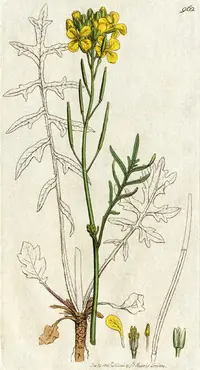
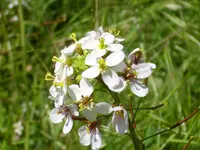
Star-mustard (Coincya monensis) is a short-lived herb in the cabbage family, typically growing as a low, branching plant with small yellow, four-petaled flowers. It often appears in sandy or coastal habitats, especially along disturbed dunes and roadsides in parts of western Europe and some introduced areas. The plant grows quickly from seed, sets seed freely, and can behave like a self-seeding annual, which makes it easy to establish but sometimes weedy. It prefers open, sunny sites with well-drained, moderately fertile soil and regular, light moisture. Gardeners who want to learn how to care for star-mustard usually focus on controlling its spread rather than keeping it alive.

Care Difficulty
Moderate Care

Light Preference
Full Sun

Water Requirements
Moderate Water

Temperature Preference
Warm Climate

Hardiness Zone
7–10

Soil Texture
Sandy, Loamy, Organic-rich

Soil pH
Slightly acidic (6.5–7.0), Neutral (7.0)

Soil Drainage
Well-drained

Fertilization
Minimal (feed rarely)
Scan your plant to receive care tips personalized for your specific plant
Available on iOS and Android
Coincya monensis prefers bright conditions similar to open coastal or field habitats.
This species prefers evenly moist, freely draining soil without prolonged saturation.
This cool-temperate species performs best in mild, non-extreme conditions.
Humidity is not a key factor for Coincya monensis, which adapts well to typical outdoor air levels.
This species prefers light, well-aerated soil that drains freely but still holds moderate moisture.
This species can be grown in containers if the pot is chosen and managed to mimic its free-draining, open-root conditions.
Coincya monensis is a light feeder that usually needs only modest nutrition, especially in reasonably fertile garden soil.
Pruning Coincya monensis is mainly about keeping plants tidy and encouraging fresh, compact growth.
This species is most often grown in the ground, so focus on careful transplanting rather than frequent repotting.
Coincya monensis is most commonly raised from seed, which suits its life cycle and natural growth habit.
In mild coastal or temperate climates, this species is fairly cold tolerant and usually needs only basic winter care.

Plant Health Check
Not sure what's wrong with your plant? Check your plant's health inside the app.
The subspecies Coincya monensis subsp. monensis is naturally restricted to the Isle of Man and nearby islets in the Irish Sea, making it a highly localized coastal plant with a very limited native range.
This species typically grows on maritime cliffs, sandy dunes, and coastal banks where salt spray, wind exposure, and shifting substrates limit competition from less adapted plants.
A separate subspecies, Coincya monensis subsp. recurvata, is thought to have originated from British coastal populations but now occurs mainly along roadsides and disturbed sites in parts of the central United States after accidental introduction.

Genetic and morphological studies have shown that the different subspecies of Coincya monensis, including the Manx populations, represent a classic example of how small, isolated coastal plant populations can diverge over time under strong local environmental pressures and limited gene flow.
This species self-seeds readily and can spread along disturbed ground, roadsides, and light soil. In mild climates it may behave invasive, so deadhead spent flowers and remove unwanted seedlings to limit spread and protect nearby habitats.
Keep your plants happy and healthy with plant identification, disease detection, and easy care guidance.