Staggered Succession Planting
Sow small batches every 2–3 weeks rather than all at once so heads mature in stages and you can harvest over a longer period instead of having all plants ready at the same time.

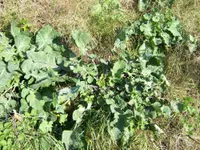
Broccoli is a cool-season vegetable grown for its dense green flower heads and thick, crisp stems. It belongs to Brassica oleracea, the same species as cabbage and kale.
Plants form sturdy, upright rosettes of bluish-green leaves, then produce a central head followed by smaller side shoots on branching stems. This growth habit allows repeated harvesting over a season.
Broccoli originated from Mediterranean coastal regions and is now widely grown in temperate climates. It prefers full sun, steady moisture, and fertile, well-drained soil, and it can be sensitive to heat stress.
Once established in suitable conditions, it is moderately easy to manage, especially if you understand how to care for broccoli in cooler parts of the growing season.

Care Difficulty
Moderate Care

Light Preference
Full Sun

Water Requirements
Regular Water

Temperature Preference
Cool Climate

Hardiness Zone
2–11

Soil Texture
Loamy, Sandy, Organic-rich

Soil pH
Acidic (5.5–6.5), Slightly acidic (6.5–7.0)

Soil Drainage
Moist but well-drained

Fertilization
Moderate (every 2–4 weeks)
Scan your plant to receive care tips personalized for your specific plant
Available on iOS and Android
Brassica oleracea grows best with cool conditions and consistent direct light.
Brassica oleracea needs steady soil moisture without staying waterlogged.
This cool-season crop prefers mild temperatures and struggles in strong heat.
Brassica oleracea, including broccoli, handles 40–60% humidity well and does not need special humidity control outdoors.
Brassica oleracea performs best in deep, moisture-retentive but well-drained soil with stable structure.
This species can be grown in containers if the pots are large, stable, and drain efficiently.
Brassica oleracea, including broccoli, responds well to moderate, steady nutrition for strong leafy growth and firm heads.
Pruning Brassica oleracea focuses on hygiene and harvest management rather than shaping long-term structure.
Most Brassica oleracea types are started in trays or small pots, then transplanted outdoors rather than kept long term in containers.
New Brassica oleracea plants are most commonly produced from seed for uniform, vigorous crops.
Most garden Brassica oleracea cultivars are cool-season crops with moderate frost tolerance but benefit from simple winter care in colder regions.

Plant Health Check
Not sure what's wrong with your plant? Check your plant's health inside the app.
Cabbage, kale, broccoli, cauliflower, Brussels sprouts, and kohlrabi all descend from the same species, Brassica oleracea, which was originally a coastal wild plant from western and southern Europe.
Through selective breeding, humans have redirected growth in this single species into very different organs: leaves (kale, collards), leaf buds (cabbage, Brussels sprouts), stems (kohlrabi), and flower buds (broccoli, cauliflower).
Wild Brassica oleracea typically grows on maritime cliffs and rocky coasts, showing notable tolerance to wind, salt spray, and thin, alkaline soils compared with many other crop species.

Genetic studies show that the major crop forms of Brassica oleracea diverged relatively recently in evolutionary terms, with distinct groups like cabbage, broccoli, and cauliflower arising primarily under intense human selection during the last few thousand years rather than over long geological timescales.
Yellowing leaves usually result from nitrogen deficiency, water stress, root damage, or natural aging of older foliage. Check for soggy or very dry soil, feed with a balanced fertilizer, and inspect roots and stems for pests or disease.
Keep your plants happy and healthy with plant identification, disease detection, and easy care guidance.