horseradish Care (Armoracia rusticana)

horseradish

About horseradish

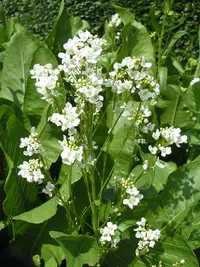
Horseradish, Armoracia rusticana, is a hardy perennial vegetable grown mainly for its thick, spicy roots used as a pungent condiment. It belongs to the cabbage family and forms large, coarse leaves in a loose clump, with deep roots that can spread and persist in the soil.

The plant is native to southeastern Europe and western Asia but is now widely cultivated in temperate regions, especially in home gardens and small farms. It is generally easy to grow, though its vigorous roots can become invasive if not contained.

Horseradish prefers full sun, consistent moisture, and loose, well-drained soil, which simplifies how to care for horseradish in many garden settings.

Main Plant Requirements

Care Difficulty

Easy Care

Light Preference

Full Sun

Water Requirements

Regular Water

Temperature Preference

Cold Hardy

Hardiness Zone

4–8

Soil Texture

Loamy, Silty, Organic-rich

Soil pH

Acidic (5.5–6.5), Slightly acidic (6.5–7.0)

Soil Drainage

Moist but well-drained

Fertilization

Minimal (feed rarely)

Get Personalized Care Plan

Scan your plant to receive care tips personalized for your specific plant

Available on iOS and Android

How to Care for the horseradish

This perennial root crop prefers bright outdoor exposure for strong leaf and root growth.

  • Provide 6–8 hours of direct sun daily, ideally with morning sun and light afternoon shade in hotter regions to protect leaves from scorch.
  • Plant horseradish in open beds that receive at least 4 hours of unobstructed light; in partial shade it will grow but produce thinner, less pungent roots.
  • In summer, monitor for leaf wilting or crisping from intense afternoon sun, and in autumn ensure plants still receive several hours of light for root storage buildup.

This species prefers evenly moist but never waterlogged soil for reliable root development.

  • Water when the top 3–5 cm of soil feels dry, applying a deep soak that reaches the root zone rather than frequent shallow splashes.
  • Use well-drained, loosened soil so water moves through easily; persistent puddling, yellowing foliage, or soft roots indicates overwatering and poor aeration.
  • In cool spring and fall conditions, reduce frequency as evaporation slows; in hot, windy weather, watch for drooping, dull leaves as a sign to water more often.

This hardy perennial tolerates a wide temperature range but has clear preferences for best root quality.

  • Active growth is strongest in cool conditions around 55–70°F (13–21°C), which favor thick, pungent roots and sturdy foliage.
  • Mature plants survive cold down to about 5°F (-15°C) in the ground, with top growth dying back while roots overwinter and resprout in spring.
  • In summer, growth slows above 80°F (27°C); provide mulch to keep soil cooler and prevent heat stress that can reduce root quality over time.

Humidity is not a significant factor for horseradish, which tolerates a wide range of ambient conditions.

Armoracia rusticana develops best in deep, loose, fertile soil that supports straight, fleshy root growth.

  • Use a loamy, crumbly soil with high organic matter, such as garden soil mixed with 30–50% compost.
  • Ensure drainage is moderate to fast; avoid compacted or waterlogged sites that cause root rot and misshapen roots.
  • Aim for slightly acidic to neutral pH, around 6.0–7.5, which supports nutrient availability and healthy growth.
  • Improve aeration and structure by working in coarse sand or fine grit where native soil is heavy clay.

This species can be grown in containers if the pot is large and deep enough for its long taproots.

  • Choose a container at least 30–40 cm deep to allow straight root development and easier harvest.
  • Select a heavy, stable pot so vigorous top growth does not tip the container in strong wind.
  • Use a free-draining potting mix and elevate the container slightly so drainage holes never sit in standing water.

Armoracia rusticana is a vigorous perennial that benefits from moderate feeding in poor or depleted soils.

  • Work in well-rotted compost or manure before planting to build long-term soil fertility.
  • During spring–mid summer, apply a balanced NPK fertilizer (around 10-10-10) every 4–6 weeks if growth is pale or weak.
  • Use fertilizer at 1/2 strength in moist soil to avoid root burn and nutrient waste.
  • Stop feeding in late summer so plants can harden off before winter dormancy.

Pruning Armoracia rusticana is mainly done to maintain plant health and manage spread, not for shaping.

  • Best time for light trimming is late spring through summer when plants are actively growing.
  • Remove yellowing, diseased, or damaged leaves at the base with clean, sharp scissors or hand pruners.
  • Thin crowded shoots to improve air flow and reduce foliar diseases such as leaf spot.
  • Cut flowering stems if seed spread is not desired, directing energy back to root development.

This root crop is usually grown in the ground, so focus on transplanting clumps rather than frequent repotting.

  • Transplant in early spring or fall when temperatures are mild and plants are not under heat stress.
  • Move plants when roots become crowded, growth slows, or many side shoots appear beyond the desired patch.
  • Lift the clump carefully with a spade, keeping as many thick storage roots intact as possible.
  • Replant roots at the same depth in loose, well-drained soil, water thoroughly, and shade briefly to limit transplant shock.

Armoracia rusticana is commonly propagated from root cuttings rather than from seed for consistent quality.

  • In late fall or very early spring, dig a healthy plant and select pencil-thick roots.
  • Cut roots into 10–15 cm sections, keeping track of which end was nearer the crown if possible.
  • Plant cuttings vertically or slightly slanted in loose, fertile soil, top end up, 5–7 cm deep.
  • Keep soil evenly moist and free of weeds while new shoots and roots establish over several weeks.

This hardy perennial tolerates freezing winters well and usually needs minimal winter care in the ground.

  • In cold regions, apply a 5–8 cm layer of straw or leaf mulch over the root zone after the first hard frost.
  • Mulch helps moderate soil temperature and moisture, protecting developing storage roots.
  • For container plants, move pots into an unheated garage or sheltered area to reduce freeze–thaw stress.

Care Tips

Root containment

Grow plants in a bottomless container or buried plastic tub to restrict lateral root spread and make harvest easier in small gardens.

Staggered harvesting

Harvest only the largest outer roots in late fall and leave smaller inner roots in place so the patch regenerates and provides a continuous supply.

Crown division timing

Lift and divide crowns every 2–3 years in early spring, replanting only healthy, pencil-thick side roots to maintain vigor and root quality.

Clean cultivation strip

Maintain a 15–30 cm weed-free strip around the row to reduce competition and improve air movement, which lowers the risk of foliar diseases when growing horseradish.

Post-harvest handling

Brush off soil without washing, store roots in perforated bags in the refrigerator or a cool cellar at high humidity, and only wash and peel right before use to preserve flavor and firmness.

Common Pests and Diseases

Horseradish leaf beetle

This pest feeds heavily on horseradish foliage, creating shot holes and skeletonized leaves, and can defoliate plants in severe infestations.

Solution

Hand-pick adults and larvae into soapy water, especially early in the season, and remove nearby weedy mustard relatives that host the beetles. For repeated damage, cover plants with insect netting in spring and use a labeled spinosad or pyrethrin spray directed to the foliage in the evening to protect pollinators.

Cabbage white caterpillar

These insects chew irregular holes in leaves and leave green droppings, reducing photosynthesis and overall vigor of the plant.

Solution

Inspect leaves regularly and hand-remove caterpillars and eggs from the undersides of leaves. Use floating row covers to exclude adult butterflies and, if pressure is high, apply Bacillus thuringiensis (Bt) kurstaki to the foliage, following the label and reapplying after rain.

Flea beetles

These insects create many tiny round holes in leaves and may stunt young plants when populations are high.

Solution

Use row covers to protect new plantings until foliage is well established and keep the area free of brassica weeds that harbor beetles. A light application of horticultural diatomaceous earth on dry foliage can deter feeding, and maintaining even soil moisture helps plants outgrow minor damage.

White rust

This disease causes pale yellow spots on upper leaf surfaces and white blister-like pustules on the undersides, which release spores that spread in cool, moist conditions.

Solution

Remove and discard infected leaves promptly and avoid overhead watering to keep foliage as dry as possible. Space plants for airflow, rotate away from brassica crops for at least 3 years, and in areas with a history of white rust, consider resistant or less susceptible relatives when growing horseradish long term.

Bacterial leaf spot

Symptoms include small, water-soaked dark spots that may enlarge and merge, giving leaves a ragged, scorched appearance, especially during warm, wet weather.

Solution

Reduce leaf wetness by watering at soil level and improving air circulation, and remove badly affected leaves to lower bacterial load. Practice strict crop rotation, avoid working among plants when leaves are wet, and sanitize tools between plants to limit spread.

Interesting Facts

Pungency from cell damage

The sharp taste develops only when the root cells are crushed, allowing the enzyme myrosinase to react with glucosinolates and form volatile isothiocyanates, the same sulfur-containing compounds that give mustard and wasabi their heat.

Brassicaceae family member

This species is a perennial relative of cabbages, broccoli, and mustard, all in the mustard family Brassicaceae, and it shares their characteristic sulfur-rich defense chemicals that deter many herbivores.

Invasive escape potential

Once planted outdoors, it can spread aggressively via thick, branching roots, and small leftover root fragments often resprout, which is why gardeners in many regions plant it in contained beds or dedicated corners of the garden when growing horseradish.

Botan icon

Did you know?

Horseradish has been cultivated in Europe for many centuries and was already recorded as a valued pungent root in ancient Greek and Roman texts, later becoming a traditional condiment in Central and Eastern European cuisines and in Jewish Passover meals.

FAQs about horseradish

This species spreads readily via thick, brittle roots that resprout from small pieces. In open ground it can become difficult to remove. Confine it to a dedicated bed or container and dig carefully when harvesting to limit spread.

Grow Healthy Plants with Botan Care

Keep your plants happy and healthy with plant identification, disease detection, and easy care guidance.

Botan plant care app — identify plants on mobile

Explore More Plants