Alexanders Care (Smyrnium olusatrum)

Also known as: Alisanders, Horse Parsley
Alexanders

About Alexanders

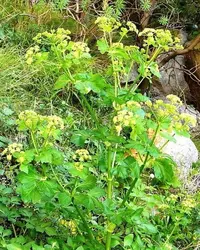
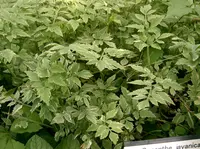
Alexanders, Smyrnium olusatrum, is a hardy biennial or short-lived perennial herb in the carrot family. It forms glossy, divided green leaves and thick, hollow stems. In spring it produces rounded clusters of small yellow-green flowers, followed by dark, aromatic seeds. The plant often reaches waist height and develops dense clumps over time. It is native to the Mediterranean region and naturalized along coasts and roadsides in parts of western Europe, including the UK and Ireland. Alexanders favors full sun to light shade, moist but well-drained soils, and can self-seed freely, which makes it easy to establish but sometimes persistent. Understanding how to care for Alexanders starts with allowing enough space and managing unwanted seedlings.

Main Plant Requirements

Care Difficulty

Easy Care

Light Preference

Partial Shade

Water Requirements

Moderate Water

Temperature Preference

Cool Climate

Hardiness Zone

6–9

Soil Texture

Loamy, Silty, Organic-rich

Soil pH

Slightly acidic (6.5–7.0), Neutral (7.0)

Soil Drainage

Moist but well-drained

Fertilization

Minimal (feed rarely)

Get Personalized Care Plan

Scan your plant to receive care tips personalized for your specific plant

Available on iOS and Android

How to Care for the Alexanders

This coastal biennial prefers bright, mild conditions rather than intense, all-day sun.

  • Provide 4–6 hours of sun, ideally morning or early evening, with dappled or light shade in the strongest midday period.
  • Alexanders grows well in open shade or along hedgerows where it receives broken light; dense shade reduces vigor and flowering.
  • In hot summers, protect from harsh afternoon sun to prevent leaf scorch, but avoid deeply shaded spots that produce tall, weak, floppy stems.

This species prefers consistently moist but not saturated soil, especially during active spring growth.

  • Water when the top 3–5 cm of soil feel dry, aiming for evenly moist soil that never stays soggy or bone dry for long periods.
  • In winter and cool, wet weather, reduce supplemental watering so Smyrnium olusatrum roots are not sitting in waterlogged ground.
  • Wilting, crisp leaf edges, and slow growth suggest underwatering, while yellowing lower leaves and soft, collapsing stems indicate chronic overwatering or poor drainage.

This hardy Mediterranean native tolerates cool conditions but grows best in mild, frost-free periods.

  • Optimal growth occurs around 50–68°F (10–20°C), typical of cool spring and early summer in many temperate coastal regions.
  • Established plants survive light frosts down to about 20–23°F (-6 to -5°C), though emerging shoots can be damaged by sudden late cold snaps.
  • Heat above 80°F (27°C), especially when dry, can cause bolting and dieback, so provide some shade and soil moisture during hotter spells.

This species grows well in typical outdoor humidity and rarely needs special adjustment.

This biennial herb prefers deep, moisture-retentive yet free-draining soil to support strong taproot development.

  • Aim for a loamy or clay-loam structure enriched with organic matter such as compost or well-rotted manure.
  • Ensure drainage by avoiding compacted sites and, in containers, blending garden soil with coarse sand or grit.
  • Target slightly alkaline to neutral pH around 7.0–7.5, similar to many coastal and chalky soils where Smyrnium olusatrum naturalizes.
  • Improve aeration by forking the soil deeply before sowing, breaking up clods but keeping some firmness for root anchorage.

This species can be grown in containers, but large, deep pots are needed for its strong taproot.

  • Choose a container at least 30–40 cm deep so the taproot can extend without curling tightly at the base.
  • Use a heavy, stable pot material such as thick terracotta to prevent tall flowering stems from tipping the container.
  • Fill the pot with a dense but free-draining loam-based mix, which holds moisture evenly and anchors the tall, bulky growth.

This coastal biennial herb grows reasonably well in average soil but benefits from light feeding in poor or heavily used sites.

  • Apply a balanced NPK fertilizer at half strength once a month during spring–early summer if growth is weak or foliage is pale.
  • Use a thin layer of well-rotted compost around the root zone in early spring to support steady growth.
  • Avoid high-nitrogen feeds that encourage soft, floppy stems; choose balanced or slow-release products instead.
  • Stop feeding by late summer and do not fertilize in winter dormancy to prevent soft, frost-prone growth.

Pruning needs for Smyrnium olusatrum are low and focus mainly on tidiness and seed control.

  • Cut spent flowering stems at or near the base after seeds mature if you want to limit self-seeding.
  • Remove dead, damaged, or diseased leaves whenever seen, using clean, sharp hand pruners or scissors.
  • Thin out crowded seedlings in spring to improve air flow and reduce competition for light and nutrients.
  • Light shaping cuts after flowering keep clumps compact without affecting the following season’s performance.

This plant is usually grown in the ground, where it resents frequent disturbance, so transplanting should be infrequent and deliberate.

  • Transplant only when clumps are overcrowded, growth is very slow, or a plant has outgrown a small bed or container.
  • Choose early spring or early autumn, when temperatures are mild and soil moisture is steady, to reduce stress.
  • Lift with a generous soil ball, disturbing the taproot as little as possible, and replant at the same depth in well-prepared soil.
  • Water thoroughly after moving, then keep soil evenly moist and shade lightly for 3–5 days to help roots re-establish.

New plants are most often raised from seed, as this biennial forms a taproot that does not divide well.

  • Sow fresh seeds in late summer–autumn outdoors; natural winter chilling improves germination for Smyrnium olusatrum.
  • Use a free-draining seed mix, sow shallowly, and keep the surface just moist until seedlings appear in spring.
  • Leave self-sown seedlings where they arise or transplant only the smallest ones before roots deepen.
  • For controlled sowing, cold-stratify seeds in a refrigerator for 6–8 weeks, then move to cool, bright conditions.

Established plants are generally hardy in temperate climates and need minimal winter attention once rooted in the ground.

  • Tolerates typical light frosts; foliage may die back, but roots survive and resprout in spring.
  • Apply a 3–5 cm mulch of leaf mold or compost in late autumn to buffer soil temperature and moisture.
  • Container-grown Alexanders benefit from moving to a sheltered, unheated spot to prevent root ball freezing and excess wet.

Care Tips

Manage Self-Seeding

Allow only selected flower heads to ripen and remove the rest before seed drop, so the plant does not overrun nearby beds or paths while you still keep a steady supply of new plants.

Timed Harvesting

Cut young shoots and leaves in late winter to early spring, before flower stems elongate, to maintain tender edible growth and prevent the plant from diverting energy into early flowering.

Deep Mulch Band

Apply a 5–8 cm ring of coarse organic mulch around, but not touching, the crowns to suppress weeds, conserve moisture, and protect the thick taproot from surface temperature swings.

Taproot-Aware Transplanting

If moving young plants, lift them with a deep, narrow spade and keep as much of the taproot intact as possible, then replant at the same depth and water in thoroughly to reduce transplant shock.

Beneficial Insect Support

Interplant with other umbellifers like fennel or dill to extend the flowering period for hoverflies and predatory wasps, which helps limit aphids naturally when growing Alexanders.

Common Pests and Diseases

Celery leaf miner

This pest is the larva of a small fly that tunnels inside leaves, creating pale, winding mines that reduce photosynthesis and spoil foliage for harvest. Symptoms include blotchy, distorted leaves with visible tracks and thin, papery mined areas.

Solution

Remove and destroy mined leaves promptly to break the life cycle, and keep the area free of plant debris where pupae can overwinter. Floating row covers placed early in the season, combined with yellow sticky traps nearby, help exclude the adult flies from Alexanders and reduce egg-laying on new growth.

Celery aphids

These insects cluster on tender stems and leaf undersides, sucking sap and causing curling, yellowing, and sticky honeydew that can lead to sooty mold. This pest often appears in mild, sheltered conditions, especially on lush spring growth.

Solution

Dislodge colonies by spraying plants with a firm jet of water and remove heavily infested shoot tips. Encouraging natural predators such as lady beetles, avoiding excess nitrogen fertiliser, and using insecticidal soap on leaf undersides will usually keep populations at manageable levels when caring for Alexanders.

Leaf spot

This disease causes small, water-soaked lesions that enlarge into brown or tan spots, sometimes with a yellow halo, leading to premature leaf drop in wet seasons. Symptoms include scattered spotting on older foliage first, often after prolonged leaf wetness or overcrowding.

Solution

Remove and dispose of affected leaves to reduce inoculum and avoid overhead watering so foliage dries quickly. Improve spacing and airflow around clumps, and if the problem recurs in the same site, rotate away from other Apiaceae and avoid leaving self-sown seedlings too dense.

Powdery mildew

This disease appears as white, dusty patches on upper leaf surfaces and stems, causing a dull, greyed look and in severe cases leaf distortion and reduced vigor. Symptoms include a talc-like coating that spreads rapidly in warm, dry conditions with poor air movement.

Solution

Thin congested growth and nearby vegetation to improve airflow and reduce humidity around foliage, and remove the worst affected leaves. Water at soil level, avoid high-nitrogen feeding late in the season, and if needed apply a sulfur or potassium bicarbonate-based fungicide early at the first sign of infection.

Interesting Facts

Ancient Roman vegetable

This species was a common pot herb and vegetable in Roman times and was widely cultivated around the Mediterranean and into western Europe before later being displaced by celery and parsley.

Coastal habitat specialist

It is strongly associated with coastal habitats in much of its current range, thriving on sea cliffs, hedge banks, and disturbed ground enriched by seabird droppings and other nutrients.

Early spring resource

The plant flowers very early in spring, providing one of the first abundant nectar and pollen sources for a range of insects, including hoverflies and early bees.

Botan icon

Did you know?

In many parts of western Europe, especially in Britain and Ireland, this species often marks sites of former medieval habitation such as monastery grounds and old coastal settlements, because it persisted long after people stopped deliberately cultivating it.

FAQs about Alexanders

All parts of this plant are edible when correctly identified and harvested from clean sites. Young shoots, leaves, flower buds, and roots are used like celery or parsley. Always avoid roadside or contaminated areas when foraging.

Grow Healthy Plants with Botan Care

Keep your plants happy and healthy with plant identification, disease detection, and easy care guidance.

Botan plant care app — identify plants on mobile

Explore More Plants