pale Mexican pricklypoppy Care (Argemone ochroleuca)

Also known as: Mexican Poppy, White-Flowered Mexican
pale Mexican pricklypoppy

About pale Mexican pricklypoppy

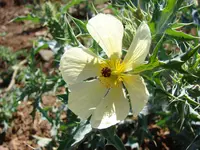
Pale Mexican pricklypoppy (Argemone ochroleuca) is an annual or short-lived perennial herb known for its pale yellow, poppy-like flowers and spiny, bluish-green foliage. It forms a clumping habit with branching stems and conspicuous thorny capsules.

This species is native to Mexico and parts of Central America but has naturalized in many warm, dry regions worldwide, often along roadsides and disturbed ground. It is drought tolerant and thrives in full sun and poor, well-drained soils, which makes it easy to establish but sometimes invasive.

Those who want to learn how to care for pale Mexican pricklypoppy should know it prefers dry conditions and does not tolerate waterlogged sites. Its spines and sap require careful handling.

Main Plant Requirements

Care Difficulty

Easy Care

Light Preference

Full Sun

Water Requirements

Low Water

Temperature Preference

Warm Climate

Hardiness Zone

7–11

Soil Texture

Sandy, Loamy, Rocky

Soil pH

Slightly acidic (6.5–7.0), Slightly alkaline (7.0–7.5)

Soil Drainage

Well-drained

Fertilization

Minimal (feed rarely)

Get Personalized Care Plan

Scan your plant to receive care tips personalized for your specific plant

Available on iOS and Android

How to Care for the pale Mexican pricklypoppy

Argemone ochroleuca thrives in strong, direct sun suited to dry, open sites.

  • Provide 6–10 hours of full sun daily; it performs best in open, unshaded ground with all-day exposure.
  • Tolerates light afternoon shade in very hot climates, but flowering of pale Mexican pricklypoppy may decrease if grown in more than 3–4 hours of shade.
  • In spring and fall, full sun promotes compact growth; in peak summer, monitor for leaf scorch on reflective surfaces and allow slight spacing from walls or pavement.

This drought-tolerant species prefers dry, fast-draining conditions with minimal supplemental watering.

  • Water only when the top 5–8 cm of soil are completely dry and the plant shows slight leaf droop, then soak the root zone and let it drain fully.
  • Choose sandy or gravelly soil with excellent drainage; standing water or heavy clay greatly increases root rot risk for Argemone ochroleuca.
  • Reduce or stop watering in cool seasons once plants are established; signs of overwatering include yellowing, soft stems, and moldy soil, while crisp, folding leaves indicate prolonged drought.

This species prefers warm, arid conditions and tolerates a wide temperature range once established.

  • Optimal growth occurs around 70–90°F (21–32°C), especially in sunny, low-humidity climates typical of many arid and semi-arid regions.
  • Mature plants tolerate brief drops to about 25°F (-4°C), but hard frost below this can damage foliage and kill young seedlings.
  • Handles intense summer heat up to 100–105°F (38–41°C) if soil is well drained; in cooler climates, treat it as a warm-season annual after frost danger has passed.

Humidity is rarely a limiting factor for pale Mexican pricklypoppy, which thrives in dry air.

This drought-adapted annual prefers lean, fast-draining soil that mimics arid, sandy habitats.

  • Use sandy or gritty loam with at least 40–60% coarse sand or small gravel to keep pores open.
  • Aim for slightly acidic to slightly alkaline pH 6.5–8.0, as Argemone ochroleuca tolerates calcareous and alkaline soils well.
  • In containers or amended beds, mix mineral topsoil with sand and a small amount of compost, avoiding rich, peat-heavy blends.
  • Avoid compacted clay, standing water, or thick mulch layers that trap moisture and reduce root aeration.

This species can be grown in containers outdoors if the pot is prepared for very sharp drainage.

  • Select a deep, heavy container that resists tipping, since tall, spiny stems can make the plant top-heavy in wind.
  • Fill the pot with a gritty, mineral-based mix and raise it on pot feet or bricks to speed runoff from drainage holes.
  • Choose unglazed clay if possible, as its porous walls allow faster moisture loss that suits the plant’s arid adaptation.

Argemone ochroleuca is adapted to poor soils and usually grows well without added fertilizer.

Argemone ochroleuca needs only light, functional pruning to stay tidy and safe.

  • Cut back spent flower stalks in late spring or summer to reduce self-seeding and keep plants compact.
  • Remove dead, diseased, or storm-damaged stems at ground level using sharp hand pruners or loppers.
  • Thin out heavily crowded stems to improve airflow and reduce fungal problems in humid climates.
  • Wear gloves and long sleeves, as the spines are sharp and sap can irritate skin.

This species is usually grown in the ground; transplanting young plants is more practical than frequent repotting.

  • Transplant seedlings or young plants in early spring when frost risk has passed and soil is workable.
  • Choose a full-sun site with very well-drained, poor to moderately fertile soil to reduce transplant shock.
  • Move plants only when small, disturbing the taproot as little as possible and keeping the rootball intact.
  • Water lightly after transplanting, then allow the soil to dry between waterings to prevent root rot.

Propagation of Argemone ochroleuca is most reliable from seed rather than vegetative methods.

  • Collect mature, dry seed pods and handle carefully, as this pale Mexican pricklypoppy species can self-seed aggressively.
  • Sow seeds in late winter to early spring on the soil surface, barely covering, in full sun and very well-drained soil.
  • Maintain moderate moisture until germination, then reduce watering to match this drought-tolerant plant’s needs.
  • Sow where plants are to flower, since the deep taproot makes later lifting and division impractical.

This warm-climate annual or short-lived perennial generally needs little winter care in mild regions.

  • In frost-prone areas, expect top growth to die back after hard freezes and treat plants as annuals.
  • Allow some seed heads to mature if natural reseeding is desired for next season’s display.
  • Container plants in cooler climates can be discarded after seed collection rather than overwintered indoors.

Care Tips

Safe handling routine

Wear sturdy gloves and long sleeves when handling plants or removing seedlings, and keep tools dedicated to this species so sap and seeds are not spread unintentionally around the garden.

Controlled self‑seeding

Leave only a few selected seed pods to mature and bag them with fine mesh or paper sleeves so you can collect seed for the next season without allowing uncontrolled spread into nearby beds or wild areas.

Weed barrier spacing

Install a permeable weed barrier fabric or a thick gravel mulch around planting zones to limit unwanted seedlings while still allowing the deep taproot to establish where you intentionally sowed seed.

Dry‑area companioning

Position plants with other drought‑tolerant, low‑fertility species in a dedicated dry border so irrigation systems and fertilizing routines for lusher beds do not accidentally overwater or overfeed this species.

Targeted stand renewal

Every 2–3 years, intentionally thin older, crowded plants at the end of the season and re‑sow collected seed in chosen gaps to keep stands vigorous and manageable when growing pale Mexican pricklypoppy in a designed landscape.

Common Pests and Diseases

Leaf-mining flies

This pest tunnels within the leaf tissue, creating winding pale galleries that can reduce photosynthesis and weaken seedlings. Symptoms include distorted, blotchy, or papery leaves, especially on young plants in disturbed sites or containers.

Solution

Remove and destroy heavily mined leaves to break the life cycle, and avoid over-fertilizing, which encourages lush, susceptible growth. For persistent problems, use yellow sticky traps to monitor adult flies and apply a neem-based or spinosad foliar spray targeted to young larvae, following local regulations for wild or invasive Argemone ochroleuca care.

Aphids

These insects cluster on young stems, buds, and the undersides of leaves, sucking sap and excreting sticky honeydew. Symptoms include curled or distorted new growth and possible sooty mold developing on the honeydew.

Solution

Prune or pinch off heavily infested tips, then use a firm stream of water to dislodge remaining aphids from stems and foliage. If needed, apply insecticidal soap or a light horticultural oil in the early morning, ensuring thorough coverage of leaf undersides, and repeat at 5–7 day intervals until populations decline.

Powdery mildew

This disease produces a white to gray powdery coating on leaves, especially in crowded stands or in humid but not overly wet conditions. Symptoms include reduced vigor, yellowing, and premature leaf drop when infections are severe.

Solution

Thin or space plants to improve air movement and avoid overhead watering, especially late in the day. Remove and dispose of heavily infected leaves, and if necessary apply a sulfur-based or potassium bicarbonate fungicide labeled for ornamental plants, beginning at the first sign of powdery spots.

Rust

This disease causes small yellow to orange pustules on the undersides of leaves, sometimes with corresponding pale spots on top surfaces. Symptoms include reduced vigor and early defoliation in heavily infected plants, particularly in moist or crowded conditions.

Solution

Promptly remove and discard affected leaves to reduce spore load, and avoid wetting the foliage when irrigating. Improve spacing and airflow, and in recurrent cases use a labeled systemic or protectant fungicide applied at the first appearance of pustules.

Seedling damping-off

This disease affects germinating seeds and very young seedlings, causing failure to emerge, stem constriction at soil level, and sudden collapse. Symptoms include water-soaked, thin, or darkened stem bases and rapid death of affected seedlings in trays or dense nursery beds.

Solution

Use a sterile, free-draining seed-starting mix and clean containers, and avoid overwatering or allowing seedlings to sit in soggy media. Improve air circulation around trays, remove any collapsed seedlings promptly, and consider a biological fungicide containing Trichoderma or Bacillus strains if damping-off has been a recurring issue when trying to grow Argemone ochroleuca.

Interesting Facts

Pale yellow latex

The plant exudes a pale yellow, milky latex when damaged, which contains isoquinoline alkaloids such as sanguinarine and berberine that help deter herbivores.

Weed of drylands

Native to Mexico and the southwestern United States, it has become an invasive weed in many arid and semi-arid regions worldwide, especially in Australia, southern Africa, and parts of Asia, where it competes strongly with pasture species.

Spiny capsule strategy

Its spherical, spiny seed capsules split open when mature and release many small, hard seeds that can persist in soil seed banks and are easily spread by water, machinery, and contaminated crop seed.

Botan icon

Did you know?

In some countries, seeds of pale Mexican pricklypoppy have been accidentally mixed with food and fodder grain, and their toxic alkaloids have caused documented poisoning incidents in livestock and humans, leading to strict regulations on contaminated grain lots.

FAQs about pale Mexican pricklypoppy

This species self-seeds heavily. Seed capsules release many seeds that germinate readily in disturbed, dry ground. In mild climates it can spread quickly and become weedy, so remove seed pods before they ripen if spread is a concern.

Grow Healthy Plants with Botan Care

Keep your plants happy and healthy with plant identification, disease detection, and easy care guidance.

Botan plant care app — identify plants on mobile

Explore More Plants