Mounting technique
Mount plants on cork or hardwood slabs with a thin layer of sphagnum only around the roots, then secure with soft plastic-coated wire or fishing line so the base is stable but roots are not strangled.

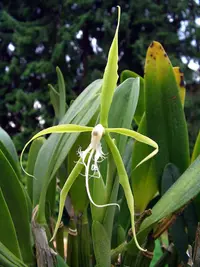
Epidendrum ciliare is an epiphytic orchid that usually grows on trees, forming clumps of slender pseudobulbs and narrow, leathery leaves. It produces star-shaped, pale green to creamy white flowers with a finely fringed lip and a light, pleasant fragrance at night.
In nature it occurs from Mexico and the Caribbean through northern South America, most often in warm, airy forests. It adapts reasonably well to cultivation and is considered a moderate orchid for growers who already manage basic orchid care.
It prefers bright, filtered light, good air movement, and a moist but fast-draining growing medium, which guides how to care for Epidendrum ciliare in home conditions.

Care Difficulty
Moderate Care

Light Preference
Partial Shade

Water Requirements
Moderate Water

Temperature Preference
Tropical / Frost Sensitive

Hardiness Zone
11–12

Soil Texture
Sandy, Rocky, Organic-rich

Soil pH
Acidic (5.5–6.5)

Soil Drainage
Well-drained

Fertilization
Light (every 4–6 weeks)
Scan your plant to receive care tips personalized for your specific plant
Available on iOS and Android
This orchid favors bright, filtered light similar to high tree canopies in the tropics.
Watering should balance consistent moisture with excellent aeration around the roots.
This species grows best with intermediate to warm temperatures and dislikes cold snaps.
This orchid prefers moderately humid air but tolerates typical indoor conditions if not overly dry.
This species grows best in a very open, airy medium that mimics epiphytic tree-bark conditions.
This orchid is well suited to container growing, including small hanging baskets.
Feeding supports steady growth and flowering of Epidendrum ciliare in active seasons.
Light pruning keeps Epidendrum ciliare tidy and directs energy to healthy growth and flowers.
Container-grown Epidendrum ciliare benefits from periodic repotting to keep the orchid medium fresh and aerated.
Division is the most practical method for multiplying Epidendrum ciliare in home collections.
This orchid is frost sensitive and needs protective winter care in most temperate climates.

Plant Health Check
Not sure what's wrong with your plant? Check your plant's health inside the app.
This species opens its long-lasting flowers in the evening and releases a strong nocturnal fragrance that attracts moth pollinators, especially hawk moths that are active after dark.
The deeply cut, fringed lip of the flower acts as a visual and tactile guide for pollinating moths, helping them position their bodies so that pollen is accurately transferred between flowers.
The species occurs naturally from Mexico through Central America and across many Caribbean islands, where it grows as an epiphyte on trees and sometimes on rocks in bright, breezy habitats.

Historical herbarium and field records show that this orchid has been collected and documented since at least the 18th century, making it one of the earlier New World orchids to be known to European botanists and contributing to foundational studies of epiphytic orchid diversity in the Caribbean.
Lack of flowers usually results from insufficient light, too-warm nights, or no slight seasonal rest. Provide bright conditions, modestly cooler nights, and a short drier period after growth matures to trigger flowering.
Keep your plants happy and healthy with plant identification, disease detection, and easy care guidance.