Post-bloom deadheading
As soon as flowers fade, cut the flower stalks down to the base while leaving all green leaves intact to push energy back into the bulbs for stronger flowering next year.

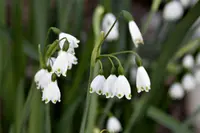
Summer snowflake, Leucojum aestivum, is a bulb-forming perennial known for its nodding, bell-shaped white flowers with green tips. It typically grows in relaxed clumps with upright, grass-like leaves.
This species is native to damp meadows, woodland edges, and riverbanks in parts of Europe and western Asia. In gardens it is valued for its reliability, naturalizing habit, and tolerance of cool, moist conditions.
It prefers rich, humus-based soil that stays evenly moist and light ranging from full sun in cooler climates to partial shade in warmer areas. These traits make it relatively easy to care for summer snowflake in many temperate gardens.

Care Difficulty
Easy Care

Light Preference
Partial Shade

Water Requirements
Regular Water

Temperature Preference
Cold Hardy

Hardiness Zone
4–8

Soil Texture
Loamy, Silty, Organic-rich

Soil pH
Acidic (5.5–6.5), Slightly acidic (6.5–7.0)

Soil Drainage
Moist but well-drained

Fertilization
Minimal (feed rarely)
Scan your plant to receive care tips personalized for your specific plant
Available on iOS and Android
Leucojum aestivum prefers bright, soft light conditions that mimic open woodland edges.
This bulb favors consistently moist soil but reacts poorly to standing water or complete drying.
This hardy bulb tolerates cool climates and prefers moderate seasonal temperature changes.
This bulb tolerates a wide humidity range and rarely needs special humidity management outdoors.
Soil preparation is important for healthy growth and flowering.
This species can be grown successfully in containers when moisture and depth are managed carefully.
This bulb forms well in ordinary garden soil and needs only light feeding to support flowering.
Leucojum aestivum needs only minimal pruning focused on spent flowers and declining foliage.
This bulb is usually grown in the ground and prefers infrequent disturbance once clumps establish.
Increasing Leucojum aestivum is most reliable by bulb division, with seed used mainly for long-term projects.
This hardy bulb tolerates typical winter conditions in much of the US and usually needs little special care.

Plant Health Check
Not sure what's wrong with your plant? Check your plant's health inside the app.
This species occurs naturally in damp meadows, river floodplains, and wet woodland edges across Europe, often forming dense drifts in seasonally flooded soils that many bulb species cannot tolerate.
Unlike many spring bulbs that peak in early spring, it typically flowers from mid to late spring, bridging the gap between early bulbs like snowdrops and later summer perennials in temperate gardens.
Each nodding white bell-shaped flower usually carries a single green mark near the tip of every tepal (petal-like segment), a consistent pattern that helps distinguish it from similar-looking snowdrops, which show different marking arrangements.

In parts of central and eastern Europe, wild populations of this species are legally protected because drainage of wetlands and collection of bulbs have reduced some natural stands, making it a regional conservation concern despite its popularity as a garden ornamental.
Lack of flowers usually comes from bulbs being too young, planted too shallow or deep, or overcrowded. Insufficient winter chill or heavy shade also reduces flowering. Allow foliage to die back naturally so bulbs can recharge for next season.
Keep your plants happy and healthy with plant identification, disease detection, and easy care guidance.