Summer Asphodel Care (Asphodelus aestivus)

Summer Asphodel

About Summer Asphodel

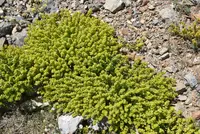
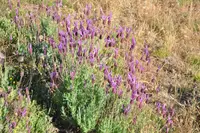
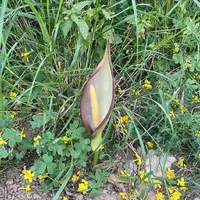
Summer asphodel (Asphodelus aestivus) is a clump-forming perennial from the Mediterranean region, often found in dry grasslands and rocky slopes. It grows from fleshy roots and sends up tall, leafless flower stalks above a tuft of narrow, grass-like leaves.

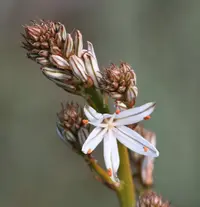
In spring, it produces many star-shaped white flowers with delicate brown or pinkish lines along the petals, giving an airy, architectural look. The plant is adapted to hot, dry summers and mild, wetter winters.

It suits low-maintenance, drought-tolerant plantings where soil drains well and competition from taller plants is limited. Understanding how to care for Summer Asphodel mainly involves providing sun, lean soil, and avoiding excess moisture around the roots.

Main Plant Requirements

Care Difficulty

Easy Care

Light Preference

Full Sun

Water Requirements

Low Water

Temperature Preference

Cold Hardy

Hardiness Zone

6–9

Soil Texture

Sandy, Loamy, Rocky

Soil pH

Slightly acidic (6.5–7.0), Slightly alkaline (7.0–7.5)

Soil Drainage

Well-drained

Fertilization

Minimal (feed rarely)

Get Personalized Care Plan

Scan your plant to receive care tips personalized for your specific plant

Available on iOS and Android

How to Care for the Summer Asphodel

This Mediterranean perennial needs plenty of direct sun to flower and stay compact.

  • Provide 6–8 hours of full sun daily; Summer Asphodel performs best in open, unshaded positions.
  • Accepts light partial shade for 2–3 hours, especially in very hot inland areas, but too much shade causes weak, floppy growth and fewer blooms.
  • In hot summers, aim for strong morning sun with some relief from harsh late-afternoon sun to limit leaf scorch, especially in very dry, reflective sites.

This species prefers infrequent, deep watering and dry intervals between soakings.

  • Water only when the top 5–7 cm of soil are completely dry; in most garden soils this means long gaps between waterings once established.
  • Use sharply drained, sandy or gravelly soil so water runs through quickly; Asphodelus aestivus is prone to root rot in heavy, waterlogged ground.
  • Reduce or stop supplemental watering in summer dormancy if foliage dies back; wrinkling leaves signal thirst, while yellowing, limp growth suggests overwatering.

This hardy geophyte handles cool, wet winters and hot, dry summers when drainage is good.

  • Ideal growth occurs around 55–75°F (13–24°C) in the active season, with flowering promoted by mild, bright spring conditions.
  • Tolerates winter lows down to about 15–20°F (-9 to -6°C) in well-drained soil; prolonged frozen, waterlogged ground greatly increases rot risk.
  • Handles dry heat up to 95–100°F (35–38°C) once established, but flowers may fade faster in extreme heat and benefit from slightly cooler night temperatures.

This species is adapted to dry Mediterranean climates and usually needs no special humidity control indoors.

  • Target 30–50% relative humidity, similar to typical heated or air-conditioned homes.
  • Low humidity is well tolerated; problems are more likely from excess moisture around the crown than from dry air.
  • If leaf tips brown while the soil is already dry and light, increase air movement rather than adding humidity.

This Mediterranean perennial prefers mineral, free-draining soil that prevents waterlogging around its fleshy roots.

  • Use a sandy or gritty loam with low to moderate organic matter, mimicking rocky, open habitats of Asphodelus aestivus.
  • Aim for slightly acidic to slightly alkaline pH, around 6.0–8.0, since the plant tolerates calcareous (lime-rich) soils.
  • Mix roughly 50–60% coarse sand or grit with 30–40% loam and 10–20% compost to balance drainage and nutrient supply.
  • Avoid heavy clay, compacted beds, or peat-heavy mixes; add sharp sand or fine gravel to improve aeration and prevent standing water.

This species can be grown in containers if the pot is deep and sharply drained to protect its fleshy root system.

  • Choose a tall, narrow container to give the taproot depth while limiting excess surface soil that can stay wet too long.
  • Use a heavy terracotta or ceramic pot to stabilize the tall flower stalks against wind on balconies or patios.
  • Raise the pot on feet or bricks so drainage holes stay free and runoff exits quickly after rain or watering, especially outdoors.

This drought-adapted perennial needs only light feeding in most garden soils when caring for Summer Asphodel.

  • Apply a balanced, slow-release fertilizer (around 10-10-10) at half strength once in early to mid spring.
  • In poor or sandy soils, supplement with a thin layer of well-rotted compost around the clump, avoiding direct crown contact.
  • Skip additional feeding through late summer; excess nutrients encourage weak, floppy growth rather than sturdy flowering stems.
  • Do not fertilize during summer dormancy or winter, as inactive roots cannot use nutrients effectively.

Pruning needs for Asphodelus aestivus are minimal and focus on cleanliness and flowering performance.

  • Cut spent flower stalks at the base after blooming to direct energy back to the roots.
  • Remove yellowing or dead basal leaves with clean, sharp scissors or hand pruners to reduce disease risk.
  • Carry out most pruning in late summer to autumn, once flowering has finished and foliage begins to decline.
  • Avoid cutting healthy green leaves heavily, as this can reduce stored reserves for the next season.

This species is usually grown in open ground, so focus on careful transplanting rather than frequent repotting.

  • Transplant clumps in late summer to early autumn when growth is slowing but soil is still warm.
  • Look for crowded fans, reduced flowering, or roots circling a pot as signs a plant needs more space.
  • Lift clumps gently with a fork, keeping as many roots intact as possible to limit transplant shock.
  • Replant in well-drained soil at the same depth, water thoroughly once, then keep only slightly moist until established.

Asphodelus aestivus is commonly propagated by seed or by dividing mature clumps.

  • Sow fresh seeds in autumn in a gritty, well-drained mix, then leave containers outdoors for natural winter chill to break dormancy.
  • Keep seed trays just moist and in bright light; germination may be slow and uneven in spring.
  • Divide established clumps in late summer or early autumn, ensuring each division has several shoots and healthy roots.
  • Replant divisions promptly at the same depth and water once to settle soil around roots.

This Mediterranean perennial has moderate frost tolerance and usually needs only basic winter care in mild climates.

  • In regions with frost, allow top growth to die back naturally, which helps insulate the crown.
  • Apply a light mulch (2–5 cm) of gravel or coarse organic material around, not over, the crown to shield roots from freeze–thaw cycles.
  • In very cold areas or for container plants, move pots to a sheltered, unheated but frost-free spot with good light.

Care Tips

Manage clump density

Lift and divide overcrowded clumps every 4–6 years in late summer after flowering to maintain flowering vigor and prevent the center of the clump from dying out.

Encourage seedling spread

If you want a naturalized look, leave some mature seed spikes on the plant until they dry, then shake them over nearby bare soil in autumn to encourage controlled self-seeding.

Support in windy sites

In exposed gardens, place low, discreet ring supports or short stakes around young clumps in early spring so tall flower spikes stay upright without snapping in strong winds.

Reduce summer competition

Keep the soil around the plant free of aggressive grasses and deep-rooting perennials, especially in late spring, so its roots can access limited moisture in dry conditions.

Adapt to poor soils

On very shallow or rocky soils, add a 3–5 cm gravel mulch around the crown to stabilize temperature, improve drainage, and protect the basal buds from heaving or mechanical damage when caring for Summer Asphodel.

Common Pests and Diseases

Rust

This disease causes yellow to orange-brown pustules on leaves and flowering stems, often leading to premature drying of foliage. Symptoms include weakened clumps and reduced flowering over time.

Solution

Remove and destroy affected leaves and spent stems as soon as pustules appear, and avoid overhead watering to keep foliage dry. Improve spacing and airflow around plants, and where rust is persistent, apply a labeled sulfur or copper-based fungicide at the first signs of infection, repeating as directed during humid periods.

Leaf spot

This disease produces small brown to dark purple spots on leaves that may merge into larger blotches, especially in dense clumps or in wet seasons. Symptoms include gradual yellowing and dieback of older foliage from the tips downward.

Solution

Cut and dispose of heavily spotted leaves to reduce inoculum, and water at soil level rather than on the foliage. Thin and divide congested clumps to improve airflow, and if needed, apply a broad-spectrum ornamental fungicide according to label directions during prolonged wet weather as part of broader Asphodelus aestivus care instructions.

Bulb and crown rot

This disease affects underground organs in poorly drained or compacted soils, leading to soft, discolored crowns and rotting storage roots. Symptoms include stunted growth, yellowing foliage, and plants that collapse or pull up easily.

Solution

Dig out and discard severely affected plants, including surrounding soil that feels sour or waterlogged, and avoid replanting in the same wet spot. Improve drainage by raising the bed, loosening soil, and reducing irrigation, and only replant healthy divisions into sharply drained, low-organic substrates.

Aphids

These insects cluster on young stems, buds, and scapes, sucking sap and excreting sticky honeydew that can attract sooty mold. Symptoms include curled or distorted new growth and reduced flower quality.

Solution

Dislodge colonies with a firm spray of water and remove heavily infested flowering stems. Encourage natural predators such as lady beetles and hoverflies, and if populations persist, treat tender growth with insecticidal soap or a light horticultural oil, applied in the early morning and repeated as needed.

Nematode damage

This pest involves microscopic roundworms in the soil that feed on roots, causing uneven growth, reduced vigor, and patchy decline in plantings. Symptoms include weak flowering, stunted clumps, and poor response to normal watering and fertilizing.

Solution

Remove and discard severely affected plants and avoid moving contaminated soil or divisions to clean areas. Improve soil structure with coarse mineral material to promote drainage, rotate with non-host plants where possible, and in high-value plantings consider using clean, certified propagation material and solarizing infested soil during the hottest part of summer.

Interesting Facts

Mediterranean summer grower

This species is adapted to the Mediterranean climate, producing most of its growth and flowering during the cool, moist season, then surviving the hot, dry summer through a thickened rootstock and partially dormant foliage.

Fire and grazing survivor

Its underground storage organs allow the plant to resprout after wildfires and heavy grazing, so populations often persist in repeatedly disturbed grasslands and rocky pastures.

Insect-pollinated star flowers

The white, star-shaped flowers with brownish midline stripes are mainly pollinated by bees and other insects that are attracted by both visual contrast and nectar rewards.

Botan icon

Did you know?

In traditional Mediterranean pastoral landscapes, dense stands of this species have often been used as informal markers of long-established grazing areas and old field boundaries, because the plant tends to persist for decades where the soil has been repeatedly disturbed by livestock.

FAQs about Summer Asphodel

Lack of flowering usually comes from insufficient light, soil that is too rich and moist, or plants that are still juvenile. It often blooms best after several years in lean, well-drained soil with a pronounced dry summer rest.

Grow Healthy Plants with Botan Care

Keep your plants happy and healthy with plant identification, disease detection, and easy care guidance.

Botan plant care app — identify plants on mobile

Explore More Plants