Elaborated Arum Care (Arum concinnatum)

About Elaborated Arum

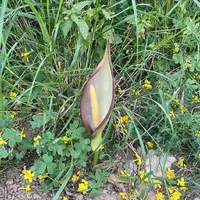
Arum concinnatum, sometimes called elaborated arum, is a tuberous perennial from the eastern Mediterranean. It belongs to the aroid family, the same group as many popular houseplants. The plant produces bold, arrow-shaped leaves and a tall flower structure with a hooded spathe around a central spadix. In the garden it forms small clumps that appear in the cooler seasons and often go dormant in summer.

It naturally occurs in rocky, well-drained habitats, so it dislikes heavy, waterlogged soils. Its growth cycle and preference for drainage make it moderately challenging, especially in wet climates. Understanding how to care for Elaborated Arum starts with providing bright light, good drainage, and steady but not excessive moisture.

Main Plant Requirements

Care Difficulty

Moderate Care

Light Preference

Partial Shade

Water Requirements

Moderate Water

Temperature Preference

Warm Climate

Hardiness Zone

8–10

Soil Texture

Loamy, Sandy, Organic-rich

Soil pH

Acidic (5.5–6.5), Slightly acidic (6.5–7.0)

Soil Drainage

Moist but well-drained

Fertilization

Minimal (feed rarely)

Get Personalized Care Plan

Scan your plant to receive care tips personalized for your specific plant

Available on iOS and Android

How to Care for the Elaborated Arum

This species prefers bright, indirect conditions with some protection from intense midday sun.

  • Provide 3–5 hours of gentle morning sun or filtered light under high tree canopy or shade cloth, avoiding harsh afternoon exposure.
  • Tolerates partial shade, but in very dim sites foliage becomes sparse and flower production in Elaborated Arum declines noticeably.
  • In hot summers, shift exposure toward dappled light to prevent leaf scorch; in cooler seasons, allow a bit more direct morning sun to support strong growth.

Arum concinnatum favors evenly moist, not waterlogged, soil during its active growth period.

  • Irrigate when the top 2–4 cm of soil feels slightly dry, allowing deeper soil to stay lightly moist, especially in spring and early summer.
  • Ensure free-draining but humus-rich soil so excess water runs off quickly, reducing risk of root rot and foul, sour-smelling soil.
  • Reduce watering noticeably when foliage yellows and dies back, watching for shriveling tubers as a sign of underwatering and limp, yellow leaves as a sign of excess moisture.

This plant grows best in mild, frost-free conditions with a cool winter rest for the tubers.

  • Aim for active growth temperatures around 60–75°F (16–24°C), which support steady leaf development and flower production.
  • Protect from hard frost; short dips to 28–32°F (-2–0°C) may be survived by dormant tubers if soil is well mulched, but repeated freezes increase loss risk.
  • In hotter climates, plants tolerate brief peaks up to 90°F (32°C) if soil is kept moist and roots are shaded, such as in a woodland-style site.

This species benefits from moderate, slightly moist air but does not demand extreme humidity control.

  • Aim for 40–60% humidity, similar to most temperate homes, to keep foliage and emerging shoots healthy.
  • It tolerates brief drier indoor air, but prolonged humidity below 30% can cause leaf edges to brown and curl.
  • Increase humidity by grouping pots, placing the container on a pebble tray with water below the pot base, or using a small humidifier near Elaborated Arum.

Arum concinnatum prefers loose, moisture-retentive but free-draining soil that mimics a humus-rich woodland floor.

  • Use a mix of 50–60% loam-based compost, 20–30% fine bark or leaf mold, and 10–20% perlite or coarse sand for structure and drainage.
  • Keep soil pH slightly acidic to neutral, around pH 6.0–7.0, avoiding strongly alkaline or chalky substrates that limit nutrient uptake.
  • Ensure the mix holds moisture without becoming waterlogged; add extra perlite or grit if water remains on the surface for many hours after watering.
  • Avoid heavy clay or pure peat that compacts easily; incorporate organic matter and coarse particles to maintain aeration around the tubers.

This species is suitable for container growing when the pot is prepared to manage both moisture retention and drainage.

  • Select a deep, stable pot so the tubers sit at least 5–8 cm below the surface and are protected from temperature swings.
  • Choose a slightly porous material such as terracotta if the planting mix tends to stay wet, as it allows gradual evaporation from the sides.
  • Elevate the container on feet or bricks to prevent drainage holes from sealing against the ground, allowing rapid escape of excess water after rain or watering.

This aroid grows from a tuber and benefits from light, targeted feeding during its active season.

  • Apply a balanced liquid fertilizer (around 10-10-10) at 1/2 strength every 4–6 weeks in spring and early summer.
  • Use a slow-release fertilizer or thin layer of compost at the start of growth for steady nutrients.
  • Stop feeding once foliage yellows and the plant enters dormancy in late summer or fall.
  • Ensure soil is moist before feeding Elaborated Arum to prevent root burn.

Arum concinnatum needs only light pruning focused on cleanliness rather than shaping.

  • In late summer or fall, remove yellowing or collapsed leaves at the base with clean, sharp scissors or pruners.
  • Cut away any diseased or damaged foliage promptly to reduce spread of rot or fungal problems.
  • Thin out crowded, smothering leaves if airflow is poor, but retain healthy foliage for photosynthesis.
  • Leave spent flower stalks until they wither, then cut at ground level if seed is not desired.

This tuberous aroid is usually grown in the ground, with transplanting done infrequently and with care.

  • Lift and transplant clumps in late summer to fall, after foliage dies back and the plant is fully dormant.
  • Look for crowded clumps, small flowering, or tubers pushing up to the surface as signs that division or moving is needed every 3–5 years.
  • Dig widely and deeply to keep tubers and roots intact, then replant at the same depth in well-drained soil.
  • Water gently after transplanting, then keep soil just slightly moist to limit shock and encourage new root growth.

Arum concinnatum is most commonly propagated by division of its tubers rather than from seed.

  • Divide dormant tubers in late summer or fall, when foliage has fully died back.
  • Use a clean, sharp knife to separate offsets, ensuring each piece has at least one healthy bud.
  • Replant divisions at the same depth in loose, well-drained soil and water lightly to settle soil around them.
  • If growing from seed, sow fresh seed in cool, moist conditions and expect slow, uneven germination.

This species is fairly cold hardy in suitable climates but still benefits from simple winter preparation.

  • In USDA zones roughly 7–9, tubers usually overwinter in the ground without lifting.
  • Apply a 5–8 cm layer of loose mulch over the root zone after the top growth dies back to buffer temperature swings.
  • In colder regions or exposed sites, lift tubers after dormancy and store them dry, cool, and frost-free.
  • Container-grown plants in marginal climates should be moved to a sheltered, frost-free area for winter.

Care Tips

Seasonal Dormancy Handling

Mark the spot where tubers are planted, then keep the area just barely moist and weed-free through summer dormancy so the underground storage organs are not damaged or dug up by mistake.

Rodent And Slug Protection

Place a fine wire mesh basket in the planting hole or use rigid collars and regular slug trapping around emerging shoots to protect the tubers and young growth from rodents and slugs that readily eat them.

Support For Flower Stalks

In windy or exposed sites, insert discreet short stakes and loosely tie taller flower stalks to prevent them snapping at the base, as the fleshy stems are easily damaged once the spathe opens.

Managed Naturalizing

If the plant sets heavy seed, remove some seed heads before they turn fully red or collect and replant berries in controlled spots so it naturalizes in a managed way instead of spreading into unwanted areas when growing Elaborated Arum.

Mulch Timing Strategy

Apply a thin, airy mulch in late autumn after the soil cools, then pull it slightly back from emerging shoots in late winter to protect tubers from temperature swings without encouraging rot at the crown.

Common Pests and Diseases

Arum mosaic virus

This disease causes yellow mottling, streaking, or mosaic patterns on leaves and can stunt growth in clumps of plants.

Solution

Remove and discard (do not compost) any plants that show clear mosaic patterns, control aphids that spread the virus, and avoid reusing contaminated tools or dividing infected clumps to limit further transmission when caring for Elaborated Arum.

Arum leaf spot

This disease produces small water-soaked lesions on leaves that expand into brown or tan spots, often with a darker edge and possible yellow halos.

Solution

Remove and destroy affected leaves, avoid overhead watering, space plants to improve airflow, and in persistent cases apply a copper-based fungicide during the main growing period to protect new foliage.

Bacterial soft rot

This disease causes corms or rhizomes to become soft, foul-smelling, and mushy, often leading to sudden collapse of foliage.

Solution

Discard any soft or foul-smelling storage organs, plant only firm and healthy corms, keep soil well-drained, and store lifted corms in a cool, dry, well-ventilated place to prevent spread.

Vine weevils

These insects damage plants in two stages: adults notch leaf edges, while larvae feed on roots and corms, leading to wilting or plant failure.

Solution

Inspect leaves at night and hand-pick adult beetles, use physical barriers on pots, and apply entomopathogenic nematodes to the soil in late summer or early autumn to reduce larvae feeding on corms.

Aphids

These insects cluster on young stems and undersides of leaves, sucking sap and causing distorted growth while leaving sticky honeydew that can lead to sooty mold.

Solution

Wash colonies off with a strong stream of water, pinch off heavily infested shoots, encourage natural predators such as lady beetles, and if needed use an insecticidal soap or horticultural oil, making sure to cover leaf undersides thoroughly.

Interesting Facts

Carrion-mimicking inflorescence

The inflorescence produces a strong carrion-like odor that, together with its dark, mottled spathe and spadix, visually and chemically mimics a decaying animal to attract fly and beetle pollinators.

Temporary insect trapping

The floral chamber can temporarily trap visiting insects using slippery internal surfaces and strategically placed bristles, releasing them only after they are dusted with pollen to enhance cross-pollination.

Mediterranean island endemic

Arum concinnatum is naturally restricted to parts of the eastern Mediterranean, especially several Aegean and Ionian islands, where it grows in rocky scrub, open woodland, and cultivated land margins.

Botan icon

Did you know?

Arum concinnatum has been noted to hybridize naturally with some closely related Arum species where their ranges overlap, creating intermediate plants that help botanists study evolutionary relationships within the genus.

FAQs about Elaborated Arum

Lack of flowering is usually due to insufficient winter dormancy, overly rich nitrogen fertilizer, or deep planting of the tuber. Provide a cool, fairly dry rest in winter and avoid heavy feeding to encourage flowers.

Grow Healthy Plants with Botan Care

Keep your plants happy and healthy with plant identification, disease detection, and easy care guidance.

Botan plant care app — identify plants on mobile

Explore More Plants