Lily Care (Lilium 'Black Beauty')

Also known as: Orienpet lily, Oriental/Trumpet Lily, OT Lily
Lily

About Lily

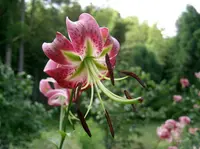
Lilium 'Black Beauty' is a hybrid lily grown from bulbs, valued for its tall stems and dramatic, downward-facing flowers with deep crimson petals and pale edges. It forms upright clumps and suits mixed borders, cottage-style gardens, and dedicated lily beds.

This cultivar traces its parentage to species from East Asia, bred for strong stems, large flowers, and reliable garden performance. It is moderately easy to grow if given well-drained soil and protection from waterlogging.

The plant prefers sun to light shade, regular moisture, and soil rich in organic matter. These traits make it rewarding for gardeners who want to learn how to care for Lily without managing a highly demanding species.

Main Plant Requirements

Care Difficulty

Moderate Care

Light Preference

Full Sun

Water Requirements

Regular Water

Temperature Preference

Cold Hardy

Hardiness Zone

4–9

Soil Texture

Loamy, Sandy, Organic-rich

Soil pH

Acidic (5.5–6.5), Slightly acidic (6.5–7.0)

Soil Drainage

Moist but well-drained

Fertilization

Light (every 4–6 weeks)

Get Personalized Care Plan

Scan your plant to receive care tips personalized for your specific plant

Available on iOS and Android

How to Care for the Lily

This hybrid lily prefers strong light outdoors to bloom well and stay sturdy.

  • Provide 6–8 hours of direct sun daily, with morning sun and light afternoon shade ideal in hot climates.
  • Tolerates bright partial shade (around 4–5 hours sun), but stems may stretch and flower counts can drop.
  • Protect from intense, reflected afternoon sun in summer to reduce leaf scorch and faded blooms, especially in dry, exposed beds.

This bulb prefers steady moisture in the root zone without staying saturated.

  • Water when the top 3–5 cm of soil feel dry, aiming for consistently moist but not soggy soil during active growth and flowering.
  • Use deep, infrequent soaking that drains through well, and improve heavy clay with compost or grit to prevent standing water around bulbs.
  • Reduce watering after foliage dies back, keeping soil just lightly moist; yellowing, limp leaves suggest overwatering, while crisp, drooping leaves suggest underwatering.

This lily is hardy outdoors and grows best in moderate, temperate conditions.

  • Optimal growth occurs around 65–80°F (18–27°C) during the day and slightly cooler nights.
  • Dormant bulbs tolerate winter down to about -20°F (-29°C) in the ground with mulch, but emerging shoots are sensitive to late frosts.
  • In summer, plants handle brief heat up to about 90°F (32°C) if soil moisture is maintained and roots are shaded by mulch or low groundcover.

This lily grows well in typical household humidity without special measures.

  • Target 40–60% humidity; levels common in most homes suit foliage and flower development.
  • Plants tolerate briefly drier air, but prolonged <30% humidity can cause brown, crispy leaf tips.
  • If air is very dry, place the pot on a pebble tray with water below the base or group plants to slightly raise local humidity.

Lilium 'Black Beauty' prefers deep, well-drained, organically enriched soil that stays evenly moist but never waterlogged.

  • Use a loose, loamy mix of garden soil, compost, and coarse sand or fine bark to balance moisture retention and drainage.
  • Aim for slightly acidic to neutral pH, around 6.0–7.0, which supports nutrient uptake and healthy bulb growth.
  • Improve aeration and drainage in heavy or clay soils by incorporating 30–50% coarse sand, grit, or perlite through the top 30–40 cm.
  • Avoid compacted, soggy, or consistently waterlogged sites, since poor drainage strongly increases risk of bulb and root rot.

This cultivar is suitable for container growing if the pot is deep and stable.

  • Choose a container at least 30–40 cm deep to allow vertical root and bulb development without crowding.
  • Select a heavy, wide-based pot to prevent tall flowering stems from tipping in wind or on balconies.
  • Ensure large, unobstructed drainage holes so excess water exits quickly, keeping the bulb zone from remaining saturated.

Lilium 'Black Beauty' responds well to moderate, consistent feeding during active growth.

  • Apply a balanced slow-release or liquid fertilizer (around 10-10-10) at half strength every 4–6 weeks from shoot emergence until 2 weeks after flowering.
  • Work a thin layer of compost into the soil surface each spring to improve structure and nutrient availability.
  • Avoid high-nitrogen products that promote weak, floppy stems instead of strong flowering.
  • Stop feeding once foliage begins yellowing in late season and do not fertilize dormant bulbs in winter.

Pruning needs for Lilium 'Black Beauty' are simple and focus on cleaning rather than reshaping.

  • Deadhead spent blooms in summer by cutting just below the flower, leaving as much green stem and foliage as possible.
  • Remove only dead, diseased, or badly damaged stems using clean, sharp pruners to limit disease spread.
  • Allow healthy foliage to yellow and die back naturally in late season before cutting it to ground level.
  • Avoid heavy cutting during active growth, as leaves are needed to recharge the bulb for next year’s flowers.

This lily is most often grown in garden beds, with transplanting focused on lifting and dividing mature clumps.

  • Consider transplanting when flowering declines, stems become crowded, or bulbs push toward the soil surface, usually every 3–5 years.
  • Lift and divide bulbs in fall after foliage has died back, or in very early spring before shoots emerge.
  • Gently loosen soil, dig widely around the clump, and handle bulbs by the base, not the stems, to limit damage.
  • Replant bulbs at 10–15 cm depth in well-drained soil, water thoroughly, and keep evenly moist until established.

Division of mature bulbs is the most reliable method for increasing Lilium 'Black Beauty' plants.

  • Divide clumps in fall after top growth has died back, when bulbs are dormant and easier to handle.
  • Lift the clump carefully, then separate offsets (smaller bulbs) from the main bulb by hand, keeping basal plates intact.
  • Replant divisions promptly at the original depth in loose, well-drained soil, spacing them 20–30 cm apart.
  • For slower multiplication, collect and sow ripe seeds in trays with moist, free-draining mix, then grow on in cool, bright conditions.

This lily is generally hardy in temperate climates but benefits from simple winter preparation.

  • After hard frost, cut dead stems to ground level and remove debris to reduce overwintering pests and diseases.
  • Apply a 5–8 cm layer of mulch over the root zone in late fall, keeping it slightly away from the stem base.
  • In very cold regions or exposed sites, add extra mulch or evergreen boughs for insulation during severe freezes.
  • Container-grown Lily plants are less insulated, so move pots into a cold but frost-free garage or porch where soil does not freeze solid.

Care Tips

Stake Tall Stems

Install sturdy stakes or a ring support when stems reach 20–30 cm to prevent wind damage and snapping once heavy flower clusters develop.

Mulch For Cool Roots

Apply a 5–7 cm layer of composted bark or leaf mold around the clump (not touching the stems) to keep the root zone cool, retain moisture, and reduce weed competition.

Rotate Blooming Clumps

Lift and divide crowded clumps every 3–4 years in early fall, then replant divisions at proper spacing to maintain strong flowering and reduce disease buildup in the soil.

Prevent Botrytis Spots

Space plants to allow good air movement, remove and dispose of any spotted leaves promptly, and avoid overhead watering to reduce the risk of botrytis, a common fungal leaf and flower disease when growing Lily outdoors.

Mark Planting Sites

Place durable labels or discreet markers where bulbs are planted so later digging, edging, or replanting nearby perennials does not accidentally damage dormant bulbs.

Everything About Lily

Common Pests and Diseases

Lily beetle

This pest feeds on leaves, stems, buds, and flowers, leaving ragged holes and black, sticky larval droppings on the plant. Severe infestations can quickly defoliate Lilium 'Black Beauty' and weaken bulbs over time.

Solution

Hand-pick adults and larvae daily and drop them into soapy water, then crush egg clusters on leaf undersides. In heavier infestations, use a targeted insecticide containing spinosad or pyrethrins, applied according to label directions and timed to early spring emergence for effective Lilium 'Black Beauty' plant care.

Aphids

These insects cluster on tender stems and buds, sucking sap and causing distorted growth, sticky honeydew, and sometimes sooty mold. Populations can build rapidly in warm, sheltered conditions.

Solution

Spray plants with a strong stream of water to dislodge colonies, then follow with insecticidal soap or neem oil, coating stems and leaf undersides. Encourage natural predators such as lady beetles and avoid high-nitrogen fertilizer, which promotes soft, aphid-prone growth.

Botrytis blight

This disease causes brown or gray spots on leaves and petals, often with a fuzzy gray mold in humid or wet weather. Symptoms include wilting flower buds and dieback of stems starting from infected tissue.

Solution

Remove and discard affected leaves, buds, and spent flowers promptly, and avoid overhead watering to keep foliage dry. Improve spacing and airflow, apply a mulch to reduce soil splash, and in areas with frequent outbreaks use a labeled fungicide preventively during prolonged wet periods.

Basal rot

This disease affects the bulb plate at the base, leading to yellowing foliage, stunted growth, and eventual collapse of the stem. Infected bulbs often show soft, brown, or dry rotted tissue starting at the base.

Solution

Dig and discard affected bulbs and any adjacent bulbs showing early softening, then replant only firm, healthy bulbs in well-drained soil or raised beds. Rotate planting sites, avoid overwatering and deep planting, and treat stored bulbs with a labeled fungicidal dust before replanting in clean ground.

Lily mosaic virus

This disease causes mottled, streaked, or distorted leaves and sometimes streaked flowers, with plants gradually weakening and producing fewer blooms. Symptoms include irregular light and dark green patterns that do not follow normal leaf veins.

Solution

Remove and destroy symptomatic plants, including bulbs, to prevent spread through sap. Control aphids and other sap-sucking insects that transmit the virus, disinfect cutting tools between plants, and avoid propagating from suspect bulbs or offsets.

Interesting Facts

Hybrid origin history

This cultivar was raised in the 1950s by American breeder Leslie Woodriff as one of the earliest successful crosses between an Asiatic hybrid and Lilium henryi, helping establish the modern group known as Orienpet (OT) lilies.

Distinctive recurved petals

Its dark reddish-maroon tepals curve strongly backward and are edged and speckled with white to pale pink, creating a bicolored, turk’s-cap form that is unusual among tall garden lilies.

Notable stem strength

Despite often reaching 150–200 cm in favorable conditions, it is known for relatively sturdy, self-supporting stems compared with many tall hybrid lilies that require staking.

Botan icon

Did you know?

Lilium 'Black Beauty' was one of the first widely grown Orienpet hybrids and is still used as a breeding parent today, contributing its distinctive dark coloration and vigorous growth to many modern large-flowered lily cultivars.

FAQs about Lily

Lack of flowers usually comes from insufficient sun, overcrowded bulbs, or nutrient depletion. Ensure full, direct light, avoid planting too deep, and divide congested clumps every 3–4 years to restore flowering performance.

Grow Healthy Plants with Botan Care

Keep your plants happy and healthy with plant identification, disease detection, and easy care guidance.

Botan plant care app — identify plants on mobile

Explore More Plants