Mark Dormant Sites
After flowers fade and foliage yellows, place small labels or stones where clumps are growing so you avoid disturbing the resting bulbs during summer digging or bed renovation.

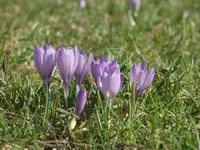
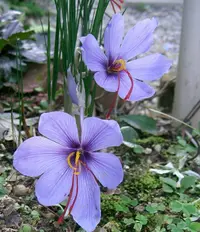
Dutch crocus (Crocus vernus) is a small spring-flowering bulb, valued for its early color after winter. It forms low clumps of grass-like leaves and cup-shaped blooms. Flowers usually appear in purple, white, or striped forms and naturalize easily, returning in drifts year after year when conditions suit it. In nature, it occurs in mountainous meadows and open woodlands of central and southern Europe. It is generally easy to grow, as long as the soil drains well and the bulbs stay relatively dry in summer. Understanding how to care for dutch crocus starts with providing bright light and avoiding waterlogged sites.

Care Difficulty
Easy Care

Light Preference
Full Sun

Water Requirements
Moderate Water

Temperature Preference
Cold Hardy

Hardiness Zone
3–8

Soil Texture
Sandy, Loamy, Organic-rich

Soil pH
Acidic (5.5–6.5), Slightly acidic (6.5–7.0)

Soil Drainage
Well-drained

Fertilization
Minimal (feed rarely)
Scan your plant to receive care tips personalized for your specific plant
Available on iOS and Android
Crocus vernus needs bright outdoor light to flower well in late winter and early spring.
Crocus vernus prefers evenly moist but not saturated soil during active growth and blooming.
This bulb is adapted to cool climates and naturally experiences cold winters and mild springs.
This bulb tolerates typical indoor humidity and seldom needs special moisture in the air.
Crocus vernus grows best in loose, fast-draining mineral-rich soil that does not stay wet after rain or watering.
This species is suitable for container growing outdoors, especially for seasonal displays.
Crocus vernus needs only light feeding because the bulbs store most of the energy for flowering.
Crocus vernus requires minimal pruning, mainly focused on post-flowering cleanup rather than shaping.
Transplanting Crocus vernus focuses on lifting and dividing crowded clumps rather than frequent repotting.
Crocus vernus is most commonly propagated by dividing bulbs rather than from seed for reliable flower color and size.
Crocus vernus is cold hardy in much of the US and usually needs little special winter care in the ground.

Plant Health Check
Not sure what's wrong with your plant? Check your plant's health inside the app.
This species naturally occurs in montane and subalpine meadows of the Alps, Pyrenees, and Carpathians, where it flowers soon after snowmelt and completes much of its life cycle before taller vegetation shades it out.
Its corms require a pronounced cold period, known as vernalization, to initiate proper flower development, which is why it performs best in climates with distinct, chilly winters.
The large, cup-shaped flowers open in cool weather and provide abundant pollen and nectar to early-flying bees and hoverflies, making the species an important resource at a time when few other blooms are available.

In several European regions, especially in the Alps and parts of Central Europe, dense naturalized populations form striking spring carpets of purple and white blooms that are treated as protected floral displays, with local authorities sometimes restricting trampling or picking to preserve these mass-flowering spectacles.
Lack of flowers often results from bulbs planted too shallow or deep, depleted bulbs that were not allowed to rebuild after last bloom, excessive shade, or very warm winters that do not provide enough chilling time.
Keep your plants happy and healthy with plant identification, disease detection, and easy care guidance.