Dormancy rest period
After flowering and leaf growth slow, reduce watering and keep the pot slightly cooler and drier for 8–10 weeks to allow a proper rest period that supports strong bulb and root health the following season.

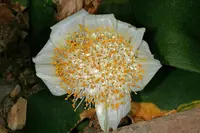
Haemanthus deformis, commonly called dwarf bloodlily, is a compact bulbous plant from South Africa, often grown as a small, unusual houseplant or greenhouse specimen. It forms short, thick, tongue-shaped leaves that lie close to the soil and produces a rounded cluster of white to cream flowers with prominent stamens.
In nature it grows in rocky, sheltered habitats, often among stones or in shallow soil pockets. Its slow growth, sensitivity to overwatering, and need for a dry rest period make it moderately challenging for beginners.
Those who want to learn how to care for Dwarf Bloodlily should know it prefers bright, indirect light, well-drained gritty soil, and cautious, infrequent watering.

Care Difficulty
Moderate Care

Light Preference
Partial Shade

Water Requirements
Moderate Water

Temperature Preference
Tropical / Frost Sensitive

Hardiness Zone
10–11

Soil Texture
Sandy, Loamy, Organic-rich

Soil pH
Slightly acidic (6.5–7.0), Neutral (7.0)

Soil Drainage
Well-drained

Fertilization
Light (every 4–6 weeks)
Scan your plant to receive care tips personalized for your specific plant
Available on iOS and Android
Haemanthus deformis prefers bright, indirect light with brief gentle direct sun.
This bulbous plant needs careful watering with a clear dry-to-moist cycle.
This species thrives in mild, frost-free conditions with moderate warmth.
This species handles typical indoor humidity but benefits from slightly moist air in heated homes.
Soil for Haemanthus deformis must drain rapidly while holding moderate moisture around the bulb roots.
This bulb is highly suitable for container growing, especially in climates with cool or frosty winters.
This slow-growing bulb benefits from modest, controlled feeding to support foliage and flower development in Dwarf Bloodlily.
Haemanthus deformis needs only light maintenance pruning to keep foliage clean and healthy.
This bulb prefers slightly crowded conditions, so repotting should be infrequent and gentle.
Haemanthus deformis is most practically propagated by division of offsets, with seed used mainly by specialists.
This species needs cool, frost-free winter conditions with drier soil to protect the bulb.

Plant Health Check
Not sure what's wrong with your plant? Check your plant's health inside the app.
In the wild, this species usually grows wedged in shallow soil pockets on shaded rock ledges and cliff faces in South Africa’s Eastern Cape and KwaZulu-Natal, rather than in deep forest soil or open grassland.
The bulb is naturally compressed and disc-like, allowing the plant to anchor firmly in narrow rock crevices and store water and nutrients efficiently in a very limited rooting zone.
Its short, dense flower cluster is surrounded by broad, fleshy, greenish to whitish bracts that act as a visual display structure, making the relatively small individual flowers more conspicuous to pollinators.

Haemanthus deformis was first described in the early 19th century from plants collected in South Africa and remains one of the less commonly encountered Haemanthus species in cultivation, valued by specialist growers for its compact, architectural form and unusual flattened bulbs.
Lack of flowers often comes from insufficient rest, overcrowded bulbs, or low light. Provide a cool, drier dormant period after foliage dies back, avoid frequent repotting, and give bright indirect light to support reliable flowering.
Keep your plants happy and healthy with plant identification, disease detection, and easy care guidance.