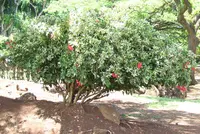
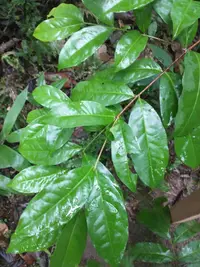
Athertonia Care (Athertonia diversifolia)

Also known as: Atherton oak, creamy silky oak, white oak
Athertonia

About Athertonia

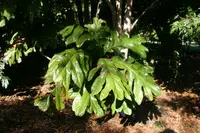
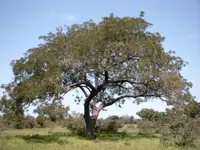
Athertonia diversifolia, commonly called Atherton oak, is an evergreen rainforest tree native to tropical Queensland, Australia. It is mainly grown for its ornamental foliage and edible nuts rather than as a houseplant. The tree develops a single upright trunk with a rounded crown and glossy, divided leaves that give it a tropical, fern-like look. In suitable climates it becomes a medium to large landscape tree, so it is not practical for small indoor spaces. Growth is relatively slow but steady when conditions stay warm, frost free, and consistently moist. It prefers well-drained, slightly acidic soil and sheltered, bright conditions. Gardeners who care for Athertonia usually focus on protecting it from cold and providing reliable moisture without waterlogging.


Main Plant Requirements

Care Difficulty

Moderate Care

Light Preference

Partial Shade

Water Requirements

Moderate Water

Temperature Preference

Tropical / Frost Sensitive

Hardiness Zone

10–12

Soil Texture

Sandy, Loamy, Organic-rich

Soil pH

Acidic (5.5–6.5)

Soil Drainage

Moist but well-drained

Fertilization

Minimal (feed rarely)

Get Personalized Care Plan

Scan your plant to receive care tips personalized for your specific plant

Available on iOS and Android

How to Care for the Athertonia

This species prefers bright, gentle light similar to open forest edges.

  • Provide 4–6 hours of morning sun with light shade or filtered light in the afternoon to prevent leaf scorch.
  • Young trees handle partial shade, but aim for at least 50–70% of full sun for strong growth and better flowering in mature Athertonia.
  • Monitor foliage: pale, sparse leaves indicate too little light, while brown, crispy leaf edges suggest excessive direct midday or afternoon sun.

This tree prefers steadily moist but not waterlogged soil.

  • Allow the top 3–5 cm of soil to dry before deep watering, ensuring moisture reaches the full root zone rather than just the surface.
  • Use well-drained, slightly organic soil; standing water longer than 1–2 hours after rain indicates poor drainage and high risk of root rot.
  • In warmer months increase watering frequency, while in cooler seasons reduce it; wilting, brittle leaves suggest underwatering, and yellowing, soft leaves suggest overwatering in Athertonia diversifolia.

This species is adapted to warm, frost-free climates with mild seasonal variation.

  • Aim for 65–85°F (18–29°C) for active growth, as sustained temperatures within this range support healthy foliage and root development.
  • Protect from cold: growth slows below 60°F (16°C), and damage is likely if exposed to 40°F (4°C) or lower, especially for young trees.
  • It tolerates short hot periods up to about 95°F (35°C) if soil moisture is adequate, but prolonged dry heat increases leaf scorch risk, so provide light shade and consistent watering in heatwaves.

This species benefits from moderately humid air but usually adapts to many garden and patio conditions.

  • Aim for 40–60% humidity to support steady growth and reduce leaf-edge browning.
  • It tolerates short dry spells, but prolonged very dry air can cause leaf tip scorch and subtle rolling.
  • Increase humidity outdoors with nearby mulched planting beds or a grouped pot display, and indoors with a small humidifier rather than misting.

Athertonia diversifolia grows best in deep, well-drained, organically enriched soil that still holds steady moisture.

  • Use a loamy, slightly sandy mix with high organic matter to support root development and water retention without waterlogging.
  • Aim for slightly acidic to neutral pH, about 6.0–7.0, to keep nutrients available and avoid leaf yellowing from imbalance.
  • Combine garden loam with compost, coarse sand, and fine bark or perlite to improve structure, aeration, and drainage around the root zone.
  • Avoid heavy, compacted clay or sites where water stands after rain, as poor oxygen levels around roots invite rot and decline.

This tree is challenging but possible to grow in large containers for several years when space or soil conditions are limiting.

  • Choose a very deep, heavy container to provide root volume and enough weight to stabilize the developing canopy in wind.
  • Use a sharply draining, bark-based potting mix so excess water moves quickly away from the deeper roots while the surface stays evenly moist.
  • Position the container where run-off can drain freely, and slightly elevate the base on feet or bricks to prevent saturated drainage holes.

This nutrient-efficient Australian tree generally needs modest feeding, especially when grown in the ground.

  • Use a light application of balanced slow-release fertilizer (around 10-10-10) in early spring for container or young Athertonia plants.
  • Supplement with a thin layer of well-rotted compost over the root zone once a year to support soil life and structure.
  • Feed during the warm growing season only, every 3–4 months for pots, at half the label strength to avoid salt buildup.
  • Stop feeding in late fall and winter when growth slows, and rely on existing soil reserves for established landscape trees.

Pruning Athertonia diversifolia is mainly about maintaining structure and removing weak growth rather than heavy shaping.

  • Carry out pruning in late winter or early spring before vigorous new growth begins.
  • Remove dead, diseased, crossing, or inward-growing branches to improve light penetration and air flow.
  • Use clean, sharp bypass pruners or a small pruning saw, cutting just outside the branch collar without leaving stubs.
  • Limit canopy reduction to minor thinning, as light, selective cuts preserve the tree’s natural form and long-term vigor.

This species is usually grown in the ground, so focus on careful transplanting of young trees rather than frequent repotting.

  • Transplant in late winter or early spring when temperatures are mild and growth is just starting, to reduce shock.
  • Look for signs such as roots circling the pot, dense root mats at drainage holes, or slowed top growth before shifting up a container size.
  • Move to a hole or pot only 1–2 sizes larger, keeping the root ball intact and backfilling with similar, well-drained soil.
  • Water thoroughly after planting, then keep soil evenly moist and shaded for 1–2 weeks to help roots re-establish with minimal stress.

Propagation of this tree is usually done from seed and can be slow, so it is not a routine home project for most growers.

  • Sow fresh, viable seeds in late spring in a deep tray or pot filled with free-draining, slightly acidic mix.
  • Provide warm conditions around 70–80°F and consistent, light moisture; avoid waterlogging to limit fungal issues.
  • Cover seeds lightly and maintain bright, indirect light; germination may be uneven and extended over several weeks.
  • Transplant seedlings carefully once they develop several true leaves, minimizing root disturbance and keeping the taproot straight.

This subtropical species is frost-sensitive and benefits from thoughtful winter care in cooler regions.

  • In ground, add 5–8 cm of organic mulch over the root zone in late fall, keeping it clear of the trunk.
  • Wrap young trunks with breathable frost cloth during expected light frosts to limit bark and cambium damage.
  • Move container plants indoors or into a bright, frost-free space when temperatures approach 32°F, reducing watering slightly.

Care Tips

Wind and stake training

In the first 2–3 years, expose young trees to light, steady air movement and use a single sturdy stake tied with soft, flexible ties to encourage a straight trunk while still allowing slight movement that strengthens the wood.

Mulch for root health

Maintain a 5–8 cm layer of coarse organic mulch over the root zone, keeping it 5–10 cm away from the trunk, to moderate soil temperature, reduce weed competition, and protect the shallow feeder roots from drying out.

Progressive root pruning

When container-grown trees become pot-bound, slice 3–4 vertical cuts, 1–2 cm deep, around the rootball and lightly tease out the roots before potting up to the next size to prevent circling roots that can later girdle the trunk.

Canopy shaping early

In the first years, select 3–5 well-spaced scaffold branches around the main stem and remove steep, crossing, or very low branches gradually to build a strong, evenly spaced canopy suited to the tree’s mature size.

Heat and drought acclimation

Before planting into a hotter or more exposed site, harden off nursery plants over 10–14 days by gradually increasing sun and reducing water frequency slightly, which helps reduce transplant shock when growing Athertonia in warm regions.

Common Pests and Diseases

Macadamia nut borer

This pest is a caterpillar that bores into developing nuts, causing premature nut drop and internal damage to the kernel.

Solution

Monitor developing nuts during the warm season and remove and destroy infested or prematurely dropped nuts to break the life cycle; in small plantings, bagging selected fruit clusters can reduce attack, and encouraging beneficial insects by maintaining plant diversity nearby can help keep populations lower.

Fruit spotting bug

This pest is a sap‑sucking insect that pierces young fruit and shoots, leading to deformed nuts, dark sunken lesions, and early fruit drop.

Solution

Regularly inspect young flushes and developing nuts, prune to maintain an open canopy for better visibility, and remove heavily damaged fruit; for larger trees, using trap plants (such as preferred alternative hosts at the orchard edge) plus targeted spot treatments on those traps can reduce pressure on Athertonia diversifolia.

Scale insects

These insects attach to leaves, twigs, and young stems and feed on sap, leading to leaf yellowing, reduced vigor, and sometimes sticky honeydew that encourages sooty mold growth.

Solution

For light infestations, wipe or gently scrub affected stems and leaves with a damp cloth or soft brush and a mild soapy water solution, then rinse; where populations are heavier, apply a horticultural oil spray to thoroughly coat infested surfaces, repeating as needed while improving airflow and light penetration through careful pruning.

Sooty mold

This disease is a superficial black fungal growth that develops on honeydew deposits from sap‑sucking insects, coating leaves and reducing photosynthesis.

Solution

Control underlying sap‑sucking pests such as scale or mealybugs, then wash affected foliage with a strong but gentle stream of water or a mild soapy solution to remove the mold layer; thinning dense canopy sections improves light and air movement, which helps leaves dry more quickly and limits new growth of the fungus.

Phytophthora collar canker

This disease affects the lower trunk and root collar in poorly drained or waterlogged soils, causing bark discoloration, sunken lesions, canopy thinning, and decline.

Solution

Improve drainage around the tree by correcting low spots, avoiding overwatering, and keeping mulch and soil away from direct contact with the trunk; remove loose, dead bark around active cankers to expose dry tissue and, in high‑value plantings, consider a registered phosphonate trunk or soil treatment according to local Athertonia diversifolia care guidelines to suppress Phytophthora activity.

Interesting Facts

Endemic rainforest nut tree

This species is a large, slow-growing tree native only to the wet tropical rainforests of northeastern Queensland, Australia, where it naturally occurs in a relatively restricted lowland to upland range.

Large woody seed pods

It produces hard, woody fruits that contain only 1–2 large edible nuts, enclosed in a thick shell that protects the seeds from many potential predators until they are fully mature.

Specialist rainforest habitat

In the wild it typically grows in well-developed, high-rainfall rainforest on deep, fertile soils, often forming part of the mid to upper canopy layer rather than existing as an understorey shrub.

Botan icon

Did you know?

The nuts of this species are part of the traditional food resources of some Aboriginal groups in northern Queensland, who historically processed them carefully before consumption due to their very hard shells and the need for proper preparation.

FAQs about Athertonia

Growth is moderate rather than rapid. Young trees usually add about 20–40 cm per year once established, increasing with warmth, moisture, and fertility. Cooler climates, poor soil, root disturbance, or drought stress can slow growth considerably when growing Athertonia.

Grow Healthy Plants with Botan Care

Keep your plants happy and healthy with plant identification, disease detection, and easy care guidance.

Botan plant care app — identify plants on mobile

Explore More Plants