Groundcover management
Allow plants to form a loose mat, then selectively thin congested patches every 2–3 years to maintain airflow and reduce fungal issues in dense groundcover plantings.

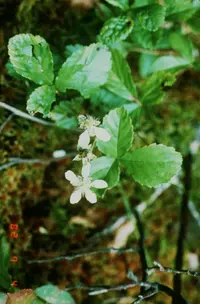
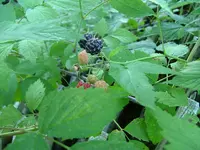
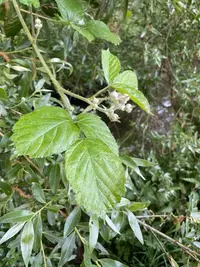
Swamp dewberry (Rubus hispidus) is a low, trailing bramble native to moist woods, bogs, and wetlands in eastern North America. It forms slender, ground-hugging stems that root as they creep, creating loose mats.
Plants carry small, glossy evergreen leaves and produce white flowers followed by small, dark berries that are eaten by wildlife. Its spreading habit makes it useful as a naturalistic groundcover in cool, consistently moist sites.
This species prefers acidic, humus-rich soil and partial sun to light shade, and it tolerates cold winters well. Gardeners who learn how to care for Swamp dewberry often value it for stabilizing soil in damp, semi-wild areas.

Care Difficulty
Moderate Care

Light Preference
Partial Shade

Water Requirements
Keep Soil Moist

Temperature Preference
Cold Hardy

Hardiness Zone
3–8

Soil Texture
Loamy, Peaty, Organic-rich

Soil pH
Strongly acidic (4.5–5.5), Acidic (5.5–6.5)

Soil Drainage
Moist but well-drained

Fertilization
Minimal (feed rarely)
Scan your plant to receive care tips personalized for your specific plant
Available on iOS and Android
This low, trailing bramble prefers bright conditions with some protection from intense midday sun.
This species is adapted to moist, acidic soils and does best with steady, not fluctuating, moisture.
This cold-hardy bramble thrives in temperate climates with cool to mild summers and cold winters.
This low-growing bramble handles a wide humidity range but prefers moderately moist air.
This species thrives in moist, acidic, organic-rich soil that still drains freely.
This species can be grown in containers, but only when moisture and root space are carefully managed.
This native bramble needs minimal feeding, especially when planted in reasonably rich, organic soil.
Rubus hispidus benefits from light, targeted pruning to maintain healthy, low, spreading growth.
This species is usually grown in the ground, so focus on careful transplanting rather than frequent repotting.
Rubus hispidus is commonly propagated by layering, division, or softwood cuttings rather than seed.
This low-growing bramble is cold hardy in much of its native range and usually needs only modest winter care outdoors.

Plant Health Check
Not sure what's wrong with your plant? Check your plant's health inside the app.
This species forms a low, trailing bramble that keeps its glossy compound leaves through winter in much of its range, unlike many related blackberries that are fully deciduous.
It naturally occurs in acidic, nutrient-poor habitats such as bogs, fens, and wet coniferous forests, often growing among sphagnum moss where few other shrubs can compete.
Its small, dark purple to nearly black berries are eaten by birds and small mammals, helping disperse the seeds and contributing to the structure of wetland food webs.
This species spreads by low, creeping stems that root where they touch moist soil. It can form dense mats over time, especially in consistently damp areas, so edging, mulching, and occasional pruning help keep it contained.
Keep your plants happy and healthy with plant identification, disease detection, and easy care guidance.

-200x150.webp)