Rock Red Currant Care (Ribes petraeum)

Also known as: currant
Rock Red Currant

About Rock Red Currant

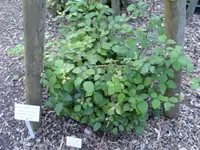
Rock red currant, Ribes petraeum, is a deciduous shrub valued for its bright red berries and neat, bushy habit. It typically grows with upright, branching stems and lobed green leaves that turn attractive shades in autumn.

This species is native to rocky slopes and montane forests in parts of Europe and western Asia, where it copes with cooler climates and well-drained, often stony soils. Its hardiness and tolerance of wind and cold usually make it straightforward to grow in temperate gardens.

Understanding how to care for Rock Red Currant starts with providing full sun to light shade, moderate moisture, and reasonably fertile, free-draining soil. Once established, it responds well to light pruning and regular renewal of older stems.

Main Plant Requirements

Care Difficulty

Moderate Care

Light Preference

Partial Shade

Water Requirements

Moderate Water

Temperature Preference

Cold Hardy

Hardiness Zone

4–7

Soil Texture

Loamy, Sandy, Rocky

Soil pH

Acidic (5.5–6.5), Slightly acidic (6.5–7.0)

Soil Drainage

Well-drained

Fertilization

Minimal (feed rarely)

Get Personalized Care Plan

Scan your plant to receive care tips personalized for your specific plant

Available on iOS and Android

How to Care for the Rock Red Currant

This deciduous shrub thrives in cool climates with moderate sun exposure.

  • Provide 4–6 hours of direct morning sun with light afternoon shade, especially in warmer regions, for reliable flowering and fruiting in Rock Red Currant.
  • Site in open, dappled or high bright shade where it still receives shifting sun patches; deep shade reduces bloom, fruit set, and overall vigor.
  • In hot summers, protect from strong afternoon sun to prevent leaf scorch and excessive moisture loss, but avoid dense shade that causes weak, elongated shoots.

This shrub prefers consistently moist but not saturated soil, especially during active growth.

  • Allow the top 3–5 cm of soil to dry slightly between waterings, then soak the root zone deeply so moisture reaches 15–20 cm down.
  • During spring and early summer, monitor weekly; in hot dry spells, increase frequency, while in cool or rainy periods, hold off if soil feels cool and damp to the touch.
  • Ribes petraeum shows underwatering through limp, dull leaves and dry, crumbly soil; overwatering leads to yellowing foliage, soft shoots, and a sour smell from poorly drained soil.

This hardy currant tolerates cold climates but grows best in moderate temperatures.

  • Optimal growing temperatures are about 55–70°F (13–21°C) during the main growing season, supporting steady shoot and flower development.
  • The shrub tolerates winter cold down to about 0°F (-18°C) once established, with dormant wood usually withstanding typical frosts in temperate regions.
  • Growth slows in heat above 80°F (27°C); provide mulch and soil moisture to buffer roots, and avoid planting in reflected heat sites that can exceed 90°F (32°C).

This shrub handles a wide humidity range and rarely needs special humidity management outdoors.

Ribes petraeum prefers cool, moist, well-structured mineral soil with consistent drainage.

  • Use a loamy, slightly rocky or sandy soil that holds moisture yet drains freely, avoiding compacted clay.
  • Aim for slightly acidic to neutral pH, around 6.0–7.0, to support balanced nutrient uptake.
  • Incorporate 20–30% compost into native soil to improve structure, water retention, and microbial activity.
  • Avoid waterlogged sites or hardpan layers; if drainage is slow, raise the planting area or create a shallow mound.

This species can be grown in containers, though it performs best long term in open ground.

  • Select a deep, heavy container that resists tipping as the shrub becomes woody and top-heavy.
  • Use a coarse, bark-based mix to keep the root zone cool and prevent fine roots from suffocating.
  • Position the pot where wind exposure is reduced so branches do not rock the root ball and loosen it.

This shrub is modest in its nutrient needs but responds well to light feeding on poor soils when caring for Rock Red Currant.

  • Apply a balanced slow-release fertilizer (around 10-10-10) at half label rate once in early spring as growth starts.
  • On richer soils, use a thin layer of compost around the root zone instead of granular fertilizer.
  • Avoid summer overfeeding, which encourages soft growth; skip high-nitrogen lawn products near the root area.
  • Do not fertilize during winter dormancy; stop feeding by late summer to allow wood to harden.

Ribes petraeum benefits from thoughtful pruning to maintain an open, healthy framework and good flowering.

  • Carry out main pruning in late winter to very early spring before bud break.
  • Remove dead, diseased, or rubbing branches first, then thin crowded shoots to improve light and air flow.
  • Shorten or remove some of the oldest stems at the base to encourage strong new growth and better fruiting.
  • Use clean, sharp hand pruners or loppers, making cuts just above outward-facing buds or down to a side shoot.

This species is usually grown in the ground, so focus on careful transplanting rather than frequent repotting.

  • Transplant in late fall or early spring when the plant is dormant and soil is workable.
  • Move shrubs only every several years, mainly if growth slows, roots circle a container, or the site becomes too shaded.
  • Dig a wide hole, keeping as much of the root ball intact as possible to limit shock.
  • Water thoroughly after planting, mulch 5–8 cm deep, and keep soil evenly moist until new growth confirms establishment.

Ribes petraeum is commonly propagated from cuttings or seed with simple, cool-climate techniques.

  • Take hardwood cuttings in late fall to winter, using 15–20 cm shoots with several buds, and insert into free-draining sand/compost mix.
  • Maintain cool, moist but not waterlogged conditions; cuttings usually root by late spring.
  • Sow cleaned seed in autumn outdoors or in trays, allowing natural winter chilling for reliable germination.
  • Label cultivars carefully, since seed-grown plants may vary from the parent in vigor and fruit quality.

This shrub is naturally cold hardy and usually needs minimal winter care in the ground.

  • Tolerates typical freezes in temperate climates once established, with dormant wood adapted to low temperatures.
  • Apply a 5–8 cm mulch layer over the root zone in late fall to stabilize soil temperature and moisture.
  • In very exposed sites, use a windbreak or shrub shelter to limit desiccation of young stems.
  • Container-grown plants are more vulnerable; move pots to a sheltered, unheated area and avoid waterlogged soil.

Care Tips

Early framework training

In the first 2–3 years, select 6–8 strong shoots as permanent framework branches and remove weak or crossing stems in late winter to build an open, bowl-shaped bush that fruits better and resists disease.

Mulch for root cooling

Apply a 5–7 cm layer of organic mulch around the root zone, keeping it 5 cm away from the stems, to keep roots cool, conserve moisture, and reduce weed competition that can lower yields.

Bird protection netting

Install fine, wildlife-safe netting over a simple post-and-cane frame just before berries start to color so birds cannot strip the crop while still allowing light and air movement.

Targeted pest scouting

From spring to midsummer, check the undersides of leaves and shoot tips weekly for aphids, sawfly larvae, and leaf spots, and remove or treat small infestations immediately to prevent serious defoliation and reduced fruiting.

Post-harvest nutrition boost

Right after harvest, give a balanced, slow-release fertilizer and light watering to help the shrub replenish its reserves, which supports stronger flowering and fruit set when growing Rock Red Currant the following season.

Common Pests and Diseases

Currant blister aphid

This pest causes yellow, red, or orange blister-like swellings on the upper leaf surface, with colonies of soft-bodied aphids hidden on the undersides. Symptoms include distorted leaves that may curl and lose vigor.

Solution

Prune and dispose of heavily distorted leaves early in the season, then regularly check the undersides of new growth. Wash colonies off with a strong stream of water or apply an insecticidal soap or horticultural oil targeting the leaf undersides before leaves curl tightly; encourage natural predators by avoiding broad-spectrum insecticides nearby.

Currant sawfly

These insects are greenish larvae that rapidly skeletonize leaves, often starting on lower branches and moving upward, leaving only leaf veins. Severe defoliation can weaken plants and reduce berry production.

Solution

Inspect plants frequently from spring onward and hand-pick or shake larvae onto a tarp for disposal when numbers are low. For heavier infestations, use a targeted product containing spinosad or a suitable contact insecticide labeled for currants, applying in the evening and ensuring good coverage of the lower foliage.

Currant clearwing borer

This pest is a moth whose larvae tunnel inside stems, causing wilting shoots, poor growth, and dieback of canes. Symptoms include weakened stems with frass (sawdust-like material) at entry points.

Solution

Cut out and destroy affected canes down to healthy wood in late winter or early spring to remove larvae. Maintain plant vigor with proper watering and fertilization, and consider using pheromone traps in areas where the pest is known to monitor adult flight and time any labeled controls.

American gooseberry powdery mildew

This disease causes white, powdery fungal growth on young leaves, shoot tips, and sometimes fruit, which may later turn brown and felt-like. Infected shoots can distort and harden, slowing overall growth.

Solution

Prune to open the shrub center and remove infected shoot tips during dry weather, disposing of them away from the garden. Improve air movement, avoid overhead watering, and in high-pressure areas consider using a sulfur or potassium bicarbonate fungicide labeled for currants, applied at the first sign of powdery growth according to label directions.

Leaf spot (Drepanopeziza spp.)

This disease produces small brown or purple spots on leaves that can merge, leading to yellowing and premature leaf drop, especially after wet periods. Heavy infections reduce photosynthesis and weaken the shrub over time.

Solution

Rake and destroy fallen leaves in autumn to reduce overwintering spores and avoid wetting the foliage during irrigation. If the problem recurs yearly, prune to improve airflow and use a copper-based or other labeled fungicide at bud break and after flowering, timed before extended wet weather, as part of broader Ribes petraeum care instructions.

Interesting Facts

Mountain stream specialist

This currant naturally occurs along cold mountain streams and rocky slopes in central and southern Europe, often at higher elevations than many other Ribes species, showing a particular adaptation to cool, moist, well-drained habitats.

Distinctive red racemes

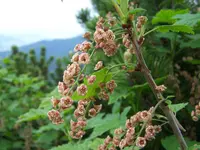
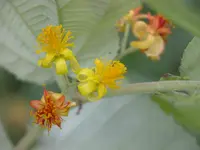
Unlike some related currants with drooping flower clusters, it produces relatively upright racemes of greenish to yellowish flowers that develop into bright red, translucent berries, which make the shrub conspicuous against its usually rocky background.

Genetic contact zones

In regions where its range overlaps with other wild currants, such as Ribes rubrum, it can form natural hybrid zones, which are of interest in studies of gene flow, species boundaries, and the evolution of European red currants.

Botan icon

Did you know?

In several European mountain regions, this species plays a niche role as an early-season food source for birds emerging from winter scarcity, since its fruits can persist into autumn and sometimes early winter on exposed rocky slopes where other fleshy fruits are already depleted.

FAQs about Rock Red Currant

Poor flowering often comes from excessive shade, heavy pruning at the wrong time, or nutrient imbalance with too much nitrogen. Check light exposure, avoid cutting stems that formed last year, and use a balanced fertilizer sparingly.

Grow Healthy Plants with Botan Care

Keep your plants happy and healthy with plant identification, disease detection, and easy care guidance.

Botan plant care app — identify plants on mobile

Explore More Plants