Cantharellus appalachiensis Care

Cantharellus appalachiensis

About Cantharellus appalachiensis

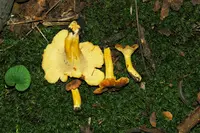
Cantharellus appalachiensis is a wild mushroom species, not a typical houseplant. It forms funnel-shaped, yellow to orange fruiting bodies with shallow ridges instead of true gills. This chanterelle grows on forest floors in the Appalachian region of eastern North America, often in mixed hardwood woods.

It is mycorrhizal, meaning it forms a symbiotic relationship with tree roots, which makes it difficult to cultivate in gardens or containers. For anyone exploring how to care for Cantharellus appalachiensis, it is more about conserving suitable woodland habitat than traditional plant-style care. It prefers moist, well-drained, humus-rich forest soils with dappled shade.

Main Plant Requirements

Care Difficulty

Hard Care

Light Preference

Partial Shade

Water Requirements

Keep Soil Moist

Temperature Preference

Cool Climate

Hardiness Zone

5–8

Soil Texture

Loamy, Silty, Organic-rich

Soil pH

Strongly acidic (4.5–5.5), Acidic (5.5–6.5)

Soil Drainage

Moist but well-drained

Fertilization

Minimal (feed rarely)

Get Personalized Care Plan

Scan your plant to receive care tips personalized for your specific plant

Available on iOS and Android

How to Care for the Cantharellus appalachiensis

This woodland chanterelle prefers dappled forest light that mimics its natural habitat under deciduous trees.

  • Aim for bright, filtered light or partial shade, roughly 2–4 hours of gentle morning sun with shade or broken light for the rest of the day.
  • Avoid strong midday and afternoon sun; direct exposure in open sites can dry the substrate, scorch fruiting bodies, and reduce mushroom flushes.
  • In summer, provide more shade or leaf-litter cover, while in early spring and fall slightly more light can help stimulate Cantharellus appalachiensis fruiting.

Moist, aerated, humus-rich soil is critical for supporting the underground mycelium of this chanterelle species.

  • Keep the soil consistently moist but never waterlogged; the upper 2–5 cm should feel damp and springy, not soupy or cracked.
  • Increase supplemental watering during hot, dry spells, using gentle soaking that penetrates the litter layer rather than frequent light sprinkling that only wets the surface.
  • Watch for signs of imbalance: standing water, sour smell, or slimy litter suggests overwatering, while brittle leaf litter and shrinking, cracked soil indicate the need for deeper moisture.

This Appalachian chanterelle thrives in cool to mild woodland temperatures with seasonal variation.

  • Optimal fruiting typically occurs around 60–72°F (16–22°C), with steady soil moisture and moderate humidity supporting reliable flushes.
  • The mycelium often tolerates down to about 25–28°F (-4 to -2°C) in the soil, but hard, prolonged freezes without insulating leaf litter can reduce survival.
  • Sustained heat above 80–85°F (27–29°C), especially with dry soil, slows growth and aborts developing mushrooms, so shade, mulch, and moisture are important in midsummer.

This fungus requires consistently moist, humid forest-floor conditions rather than controlled indoor humidity.

  • Target 70–90% humidity around the fruiting area, mimicking shaded, damp woodland leaf litter.
  • Tolerates only brief drops in humidity; prolonged air below 50% quickly dries substrate and suppresses fruiting.
  • Watch for shriveling caps and cracked, dry edges as signs of low humidity stress and increase moisture with frequent fine misting of the surrounding substrate, not direct soaking.

This mycorrhizal chanterelle depends on a specific forest soil environment rather than conventional potting mixes.

  • Use loose, organic-rich, well-aerated soil mimicking natural oak or beech woodland, with deep leaf litter and decomposing wood fragments.
  • Ensure free drainage with a crumbly, friable structure; water must percolate through without pooling yet leave the profile evenly moist.
  • Aim for slightly acidic conditions around pH 4.5–6.0 by incorporating leaf mold, conifer needles, and aged hardwood chips instead of lime or alkaline materials.
  • Avoid compacted, heavy clay, high-salt fertilizers, and sterile bagged mixes, which disrupt mycorrhizal association and prevent reliable Cantharellus appalachiensis fruiting.

This species is not suited to conventional container growing because it relies on stable mycorrhizal relationships with tree roots in undisturbed forest soil.

This wild mycorrhizal fungus does not need routine fertilization and usually fruits best in nutrient-balanced forest soils.

Pruning is not applicable, as Cantharellus appalachiensis is a forest fungus forming subterranean mycelium rather than a leafy plant.

Transplanting focuses on preserving the natural soil–root–fungus partnership rather than moving an individual mushroom.

  • Attempt transplanting only when moving an associated host tree seedling with its original soil intact.
  • Plan work for cool, moist weather in spring or early fall to reduce stress on roots and fungal mycelium.
  • Keep the root ball large and undisturbed; avoid shaking off native soil where the mycelium lives.
  • Water gently after planting and maintain even moisture so roots and fungal partners re-establish.

Practical home propagation of this ectomycorrhizal chanterelle is difficult and rarely successful without specialized methods.

This native woodland fungus is naturally cold hardy in its range and needs no special winter care in the ground.

Care Tips

Encourage Mycorrhizal Partners

Introduce compatible tree species such as oaks, beeches, or hemlocks and keep their root zones undisturbed, since this fungus depends on stable mycorrhizal relationships with host roots for long-term fruiting.

Maintain Leaf Litter Layer

Allow a 3–8 cm layer of natural leaf litter to accumulate and decompose on the soil surface, which helps retain moisture, moderates temperature, and supports the soil microfauna that benefit chanterelle mycelium.

Avoid Soil Disturbance

Do not till, rake deeply, or compact the soil in productive patches; instead, keep foot traffic low and use stepping stones or defined paths to prevent damage to the mycelial network.

Gentle Harvest Technique

Harvest by cutting or gently twisting the mushroom at the base rather than pulling out clumps of soil, and avoid damaging nearby pins (small developing mushrooms) to support consistent yields when growing Cantharellus appalachiensis.

Monitor Seasonal Moisture

During extended dry periods in late spring to summer, provide light, infrequent irrigation to the broader tree root zone rather than directly onto visible mushrooms, which supports the fungus without creating waterlogged or anaerobic conditions.

Common Pests and Diseases

Mycophagous springtails

These insects feed on developing chanterelle tissue and associated fungi in the soil, sometimes tunneling into young fruiting bodies. Symptoms include small pits, surface scarring, or deformed caps on emerging mushrooms.

Solution

Reduce excess surface moisture by improving drainage and avoiding continuous waterlogging, and gently disturb the upper leaf-litter layer to reduce hiding spots. For cultivation beds, use fine mesh or insect netting over fruiting areas and, if needed, apply targeted beneficial nematodes to the soil to lower springtail populations without harming the mycorrhizal fungus.

Fungus gnat larvae

This pest lives in moist organic layers and can chew on primordia and young fruiting bodies, leading to aborted or misshapen mushrooms. Symptoms include soft, water-soaked spots at the base and small entrance holes where larvae have burrowed.

Solution

Allow the top organic layer to dry slightly between irrigation while keeping the deeper root zone moist, and avoid standing water in cultivation areas. Use yellow sticky traps for adult gnats and, where appropriate, apply Bacillus thuringiensis israelensis (Bti) to the substrate to specifically target larvae without disrupting Cantharellus appalachiensis care.

Slugs and snails

These pests rasp away the soft fruiting tissue, leaving large irregular holes, slime trails, and sometimes only stems remaining. Symptoms include missing caps overnight and shiny mucus residues on nearby leaf litter or soil.

Solution

Hand-pick slugs and snails in the evening or early morning and remove surrounding debris that offers cool, damp shelter. In outdoor patches, place copper tape barriers, rough diatomaceous earth rings, or iron phosphate slug baits around, but not directly on, the fruiting zone to protect mushrooms while minimizing soil disturbance.

Mycoparasitic fungi

This disease involves other fungi that parasitize the chanterelle mycelium or fruiting bodies, sometimes causing deformed, stunted, or discolored mushrooms with cottony or moldy overgrowth. Symptoms include patchy areas where chanterelles fail to develop despite suitable weather and visible competing fungal mats in the same soil zone.

Solution

Remove and discard any obviously parasitized or mold-covered fruiting bodies to limit local spread, and avoid walking or compacting the soil around affected patches. Maintain a stable, undisturbed forest-floor environment with moderate moisture rather than constant saturation, since excessive disturbance and chronic wetness favor aggressive parasitic fungi.

Interesting Facts

Narrow Appalachian range

This chanterelle is native to eastern North America and is strongly associated with the Appalachian region, where it occurs in mixed hardwood forests rather than having a broad continental distribution.

Distinctive pale coloration

Compared with many other chanterelles, it often shows a paler, yellow to yellow-orange cap and lighter false gills, helping field mycologists distinguish it from deeper orange relatives when identifying and caring for Cantharellus appalachiensis in habitat studies.

Ectomycorrhizal specialist

The species forms ectomycorrhizal partnerships with trees such as oaks and other hardwoods, exchanging mineral nutrients and water from the soil for carbohydrates produced by the host tree.

FAQs about Cantharellus appalachiensis

This chanterelle is considered an edible wild mushroom when correctly identified. It is important to confirm identification with an expert, avoid polluted areas, and always cook thoroughly, since raw wild fungi can cause digestive discomfort.

Grow Healthy Plants with Botan Care

Keep your plants happy and healthy with plant identification, disease detection, and easy care guidance.

Botan plant care app — identify plants on mobile

Explore More Plants