Mulch Root Zone
Apply a 5–8 cm layer of composted bark or wood chips over the root zone, keeping it 5–10 cm away from the trunk, to stabilize soil moisture and protect the shallow roots from heat and mechanical damage.

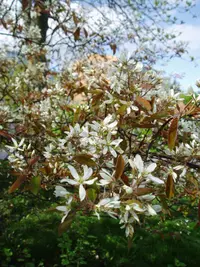
Juneberry, Amelanchier × lamarckii, is a small deciduous tree or large shrub valued for its early spring flowers, edible berries, and good autumn color. It typically forms a multi-stemmed, airy crown with fine branches and smooth gray bark.
In nature it occurs in woodland edges, thickets, and open slopes, especially in temperate regions with cool to mild climates. It is generally considered easy to grow, as it tolerates a range of soils and copes with moderate cold.
Good light, steady moisture, and well-drained, slightly acidic soil support healthy growth and simplify basic care for juneberry.

Care Difficulty
Easy Care

Light Preference
Full Sun

Water Requirements
Moderate Water

Temperature Preference
Cold Hardy

Hardiness Zone
4–9

Soil Texture
Loamy, Sandy, Clay

Soil pH
Acidic (5.5–6.5), Slightly acidic (6.5–7.0)

Soil Drainage
Moist but well-drained

Fertilization
Minimal (feed rarely)
Scan your plant to receive care tips personalized for your specific plant
Available on iOS and Android
Amelanchier × lamarckii grows best in sites with bright, direct light but some protection from harsh afternoon sun.
This shrub prefers evenly moist, well-drained soil and reacts poorly to both drought and waterlogging.
This species is a hardy, temperate-climate shrub that tolerates cold winters and mild to warm summers.
Humidity is not a significant factor for outdoor Amelanchier × lamarckii, which copes well with typical ambient conditions.
Amelanchier × lamarckii prefers moisture-retentive yet well-drained, slightly acidic to neutral soil.
This species can be grown in large outdoor containers if the pot supports its eventual size and root system.
This shrub performs well in average garden soil, so juneberry benefits from modest, not heavy, fertilization.
Pruning Amelanchier × lamarckii is mainly about maintaining structure and plant health rather than frequent reshaping.
This species is usually grown in the ground, so care focuses on planting and occasional transplanting rather than container repotting.
Reproducing this plant is possible but more specialized, so it is not a common home propagation project.
This shrub is cold hardy in much of the US and generally needs minimal winter care once established.

Plant Health Check
Not sure what's wrong with your plant? Check your plant's health inside the app.
This shrub is a naturally occurring hybrid between North American serviceberries, and it has become widely established in Europe, particularly in the Netherlands and the UK, where it is commonly planted in urban and suburban landscapes.
It is valued as a multi-season ornamental shrub, with white star-shaped flowers in early spring, bronze to coppery young leaves that turn green in summer, then orange-red fall color, followed by dark, persistent bark structure in winter.
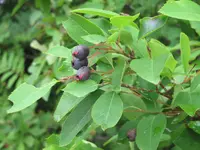
The dark purple, berry-like pomes are produced in early summer, are edible for humans, and are especially attractive to birds such as thrushes and blackbirds, which often strip the plant of fruit within a short period.
In parts of northwestern Europe, especially the Netherlands, this species has escaped cultivation and now forms extensive naturalized stands along roadsides, dikes, and woodland edges, where it can significantly alter the structure and light conditions of native shrub layers.
The berries are edible and usually safe when fully ripe. They taste similar to blueberries with a hint of almond. Fruits are commonly used fresh, in jams, pies, and baking, and also attract wildlife such as birds.
Keep your plants happy and healthy with plant identification, disease detection, and easy care guidance.