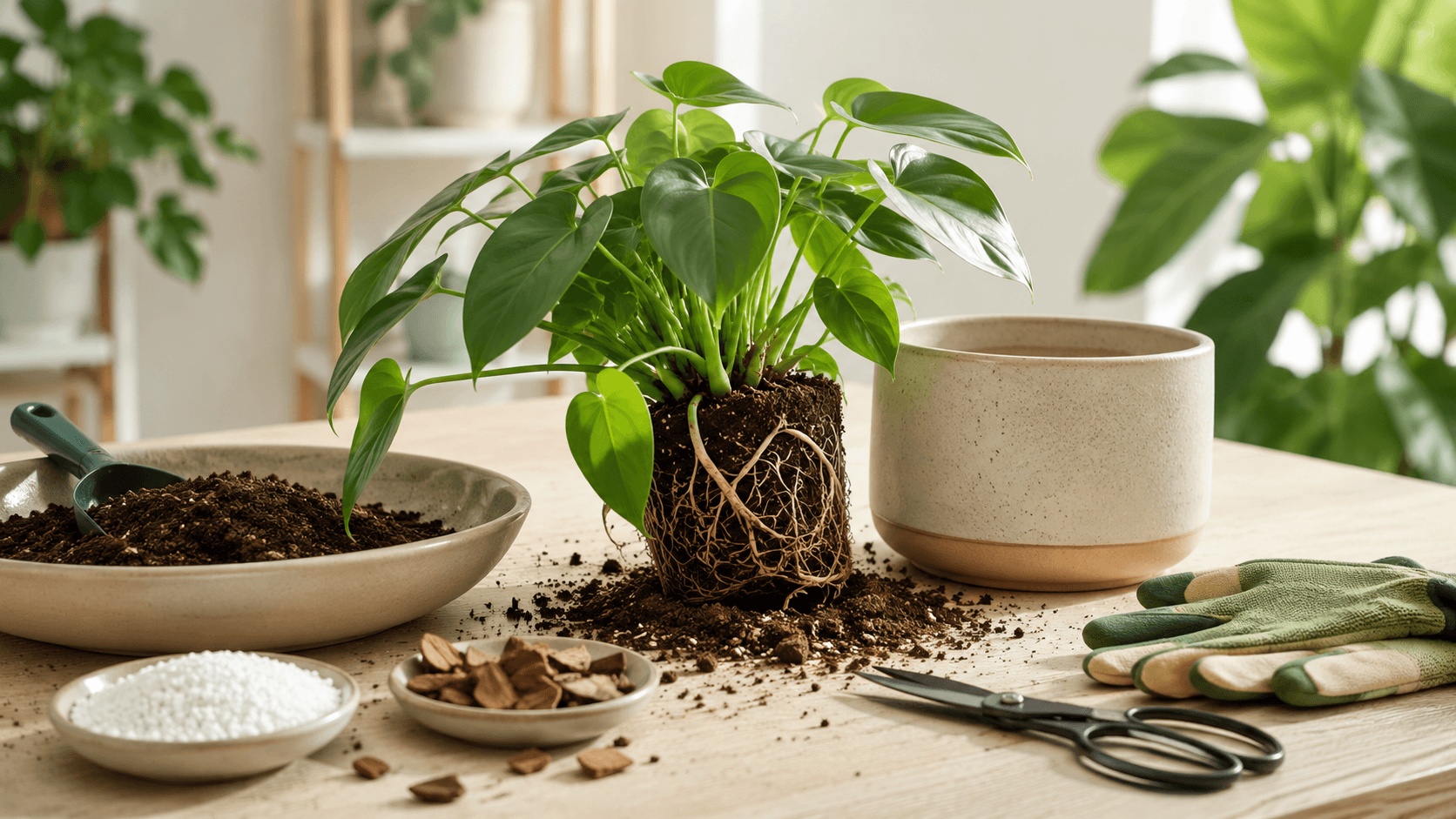


juneberry Identification (Amelanchier × lamarckii)

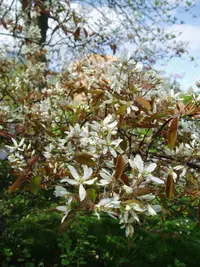
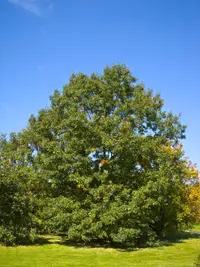
To recognize Amelanchier × lamarckii, look for a multi-stemmed small tree or large shrub with an upright, open crown, oval to elliptic leaves set alternately on the stems, and clusters of five-petaled white flowers held on short side shoots.

Mature plants typically form several trunks rather than one main stem.

Amelanchier × lamarckii Identification

Identify a Plant by Photo

Upload a clear photo to check your plant identification with Botan.

Clear images work best. Avoid photos taken too close or too far away

Check the overall form and a few clear structures before deciding on Amelanchier × lamarckii.

  • Usually a large multi-stem shrub or small tree with an upright, open crown.
  • Leaves are simple, oval to elliptic, about 2-4 inches (5-10 cm) long, with fine toothed edges.
  • Leaf undersides often look softly hairy, especially along the veins and margins.
  • Flowers are starry and white, with 5 narrow petals held in loose clusters.
  • Fruits are small, round, and dark purple to black when visible.

Use several of these traits together, especially the leaf shape, flower form, and multi-stem habit.

Amelanchier × lamarckii shows clear visual shifts in habit, flowering, and fruit display with age.

  • Young plant: Usually a slender, upright shrub with several thin stems; leaves are smaller and the branching is still open and sparse.
  • Mature plant: Develops into a broad, layered large shrub or small tree, often 10–20 feet (3–6 m) tall, with a denser crown and stronger main stems.
  • Flowering stage: Bare or lightly leafing branches carry drooping clusters of narrow-petaled white flowers, making the plant look airier than in later leafy stages.
  • Fruiting stage: Small round pomes replace the flowers in hanging clusters, shifting the outline from pale and filigreed to dotted with darker, obvious fruit.

In spring, bronze-tinted young leaves open with clusters of white, starry flowers, making Amelanchier × lamarckii especially distinctive. By early summer, the flowers give way to small berries that ripen from red to deep purple-black. Fall brings one of the clearest clues: foliage turns vivid orange, red, and copper before leaf drop. In winter, the fine branching and smooth gray bark are easier to see.

Several small flowering trees can be mistaken for juneberry.

downy serviceberry(Amelanchier arborea)

Often confused because both have white spring flowers and edible dark fruits. A. arborea is usually more tree-like, often with a single trunk, while Amelanchier × lamarckii commonly forms a multi-stem clump. Its leaves also tend to be broader and less distinctly bronze when young.

Allegheny serviceberry(Amelanchier laevis)

Similar in flower and fruit, and both may show bronzy new growth. A. laevis usually has smoother, less hairy leaves and flower stalks, while Amelanchier × lamarckii is more noticeably downy, especially on young leaves. Leaf undersides are a quick check.

Confirm It from a Photo

Use Botan to compare your photo and confirm the plant before you label it or make decisions based on the ID.

FAQ

Yes. In spring, it shows clusters of white 5-petaled flowers and young bronze-tinted leaves. Summer brings purple-black berries. Fall often adds orange to red leaf color, which helps with identifying juneberry.

More Plant Identification Guides

Find the Plant. Get the Details.

Identify it from a photo with Botan, then review plant details, care information, and common problems for that species.

Botan app identifying a plant from a photo
Planting Grass Seed in Summer – What Works and What Fails

7 min read · 6 Aug 2026

Planting Grass Seed in Summer – What Works and What Fails

Summer seeding succeeds when the grass type suits the season, and the soil stays moist. Find out how to prepare the seedbed and choose a safe window for planting.

Plant Care
Planting Grass Seed in Summer – What Works and What Fails
20 Funny Plant Names That Make You Laugh

8 min read · 16 Oct 2026

20 Funny Plant Names That Make You Laugh

Some plants carry names that sound like jokes. This guide explains the origins of 20 funny plant names. You will also see which of these plants you can grow at home.

Plant Recommendations
20 Funny Plant Names That Make You Laugh
How to Repot a Plant: A Step-by-Step Guide

7 min read · 28 May 2026

How to Repot a Plant: A Step-by-Step Guide

In spring, many plants need repotting—an essential part of care. To avoid stress, consider the plant’s type and size. This article offers a step-by-step guide for repotting indoors or outdoors and shows how to check plant health and get care tips using the Botan app.

Plant Care
How to Repot a Plant: A Step-by-Step Guide