


Bermuda grass Identification (Cynodon dactylon)

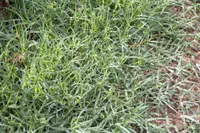
To recognize Bermuda grass, look for fine, narrow leaf blades on low, creeping stems that root at the nodes and form dense mats.

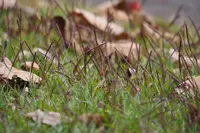
Its seedheads are especially distinctive: usually 3 to 7 slender finger-like spikes radiate from one point at the stem tip.

Cynodon dactylon Identification

Check Your Plant ID

Use a clear photo to confirm what plant you have.

Clear images work best. Avoid photos taken too close or too far away

Check the plant’s low, spreading grass form first.

  • Stems creep along the surface and root at the nodes, forming a dense mat.
  • Leaf blades are narrow, flat, and usually 2-6 inches (5-15 cm) long, with pointed tips.
  • Upright seedheads have 3-7 thin finger-like spikes radiating from one point.
  • Leaves appear alternately along the stem, with short sheaths clasping the stem base.

The radiating seedhead and creeping, rooting stems are especially useful visual clues.

Cynodon dactylon shows clear visual shifts from small seedlings to flowering, spreading turf.

  • Seedling: Seedlings appear as a few narrow, upright blades from a single base, without the obvious creeping runners seen later.
  • Young plant: Young plants begin forming slender stolons, or aboveground runners, that root at nodes and start creating a low, spreading mat.
  • Mature plant: Mature plants form a dense, wiry carpet with both stolons and underground rhizomes; leafy shoots commonly stand 4-12 inches (10-30 cm) tall.
  • Flowering stage: Flowering shoots rise above the foliage and end in a star-like cluster of 3-7 fingerlike spikes, a distinct change from purely leafy stems.

Bermuda grass is easiest to spot in warm months, when slim flowering stems rise above the turf and carry several finger-like spikes at the tip, usually from late spring through fall. After frost, the dense mat often turns tan or straw-colored as the plant goes dormant, then greens up again in spring. That winter browning can help separate it from lawns that stay green year-round.

Several warm-season grasses are often mistaken for Bermuda grass.

Crabgrass(Digitaria sanguinalis)

Both spread low and root at nodes. Crabgrass is usually hairier, with broader blades, and its seedheads have 3-13 fingerlike spikes instead of the typically 3-7 in Cynodon dactylon.

Goosegrass(Eleusine indica)

Both can form flat mats in lawns. Goosegrass grows from a whitish, flattened center and has thicker, wider leaves; its seedheads are stiffer and more zipper-like.

Zoysiagrass(Zoysia japonica)

Both make dense turf and spread by stolons. Zoysiagrass has stiffer, narrower leaves with pointed tips and forms a tighter, slower-growing mat than Cynodon dactylon.

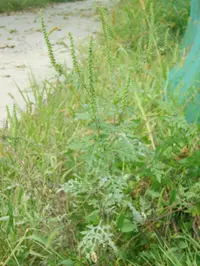
Cynodon dactylon is widely considered native across parts of Africa, southern Europe, temperate and tropical Asia, and Australia, though its long history of spread can blur exact limits. It naturally occurs in open, sunny places such as grassland, disturbed ground, roadsides, coastal flats, and riverbanks. Seeing it in exposed, trampled, or seasonally dry sites helps separate it from turf grasses more typical of shaded lawns or wetter marsh habitats.

Confirm It from a Photo

Use Botan to identify or verify the plant in your photo so you can rule out similar species more confidently.

FAQ

The quickest clue is the seedhead: usually 3 to 7 slender spikes radiate from one point like a small star. For how to identify Bermuda grass, also check for creeping runners that root at the nodes.

Everything About Bermudagrass

More Plant Identification Guides

Identify Your Plant and Learn More

Use Botan to identify it from a photo, then get plant details, care information, and common problems for that species.

Botan app identifying a plant from a photo
12 Best Landscaping Trees for Your Garden

8 min read · 6 Oct 2026

12 Best Landscaping Trees for Your Garden

Choosing the landscape tree depends on what your garden needs most. These 12 options include compact flowering specimens, colorful deciduous trees, shade varieties, and evergreens suitable for screening and year-round structure.

Plant Recommendations

12 Best Landscaping Trees for Your Garden
How Fast Does Bamboo Grow Per Day, Month, and Year

10 min read · 7 Jul 2026

How Fast Does Bamboo Grow Per Day, Month, and Year

Bamboo grows extremely fast: some species can reach 5-6 m in just 3-4 months under the right conditions. This guide explains how much bamboo can grow per day, week, and year, and what affects its growth rate.

Plant Recommendations
How Fast Does Bamboo Grow Per Day, Month, and Year
How to Tell if a Plant Is Dead

6 min read · 19 Aug 2026

How to Tell if a Plant Is Dead

A plant can lose its leaves, stop growing, or collapse and still remain alive. A closer look at the stems, roots, bulbs, and tubers can show whether the plant still has a chance to recover.

Beginner Guides
How to Tell if a Plant Is Dead