

smooth brome Identification (Bromus inermis)

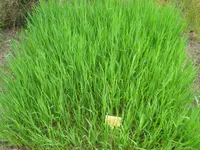
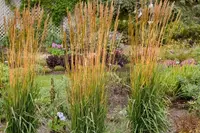
Recognize smooth brome by its broad, flat leaf blades, smooth stems, and open, branched seed heads with drooping spikelets.

It usually forms dense, spreading patches from creeping underground rhizomes. Leaves are often about 1/4 to 1/2 inch (6 to 12 mm) wide, broader than many pasture grasses.

Bromus inermis Identification

Identify a Plant by Photo

Not sure about your plant ID? Upload a photo and check it with Botan.

Clear images work best. Avoid photos taken too close or too far away

  • 1 free identification
  • No sign-up
  • 30,000+ plants in database

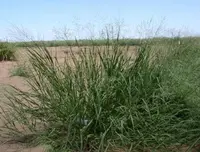
Check the grass form, leaves, and seed head of Bromus inermis.

  • Plants grow in dense, spreading patches, with upright stems often 2-4 feet (0.6-1.2 m) tall.
  • Leaves are flat and soft-looking, usually about 1/4-1/2 inch (6-12 mm) wide, with a smooth surface.
  • Leaf blades often show a narrowed, slightly twisted tip rather than ending stiff and straight.
  • The seed head is an open, branched panicle with many drooping spikelets, giving a loose, nodding look.

A broad, open seed head plus wide, flat blades is the quickest visual combination to check.

Bromus inermis shows clear visual shifts from narrow shoots to open, branched seed heads.

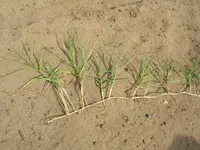
  • Seedling: The first leaves are narrow and flat, arising in a small tuft. Early shoots stay low, with no flowering stem or open branching.
  • Young plant: Vegetative clumps become denser, with broader leaves and upright leafy stems. Rhizomes, underground spreading stems, help patches expand beyond the original tuft.
  • Flowering stage: Stems rise to about 2-4 feet (0.6-1.2 m), ending in a loose, open panicle, a branched flower cluster, with many drooping branchlets.
  • Fruiting stage: After flowering, the panicle remains open but carries flattened spikelets packed with mature grains, giving the seed head a heavier, more pendant look.

In spring, Bromus inermis forms fresh, flat green leaves and dense patches that stand out before many warm-season grasses begin active growth. By late spring to early summer, open flowering panicles rise above the leaves and often show a slight drooping shape. As summer advances, the seedheads turn paler tan, and dormant patches can look straw-colored.

A few cool-season pasture grasses are often mistaken for smooth brome.

meadow brome(Bromus biebersteinii)

Often confused because both are tall, rhizomatous brome grasses with open panicles. Meadow brome usually has short hairs on leaf blades or sheaths; smooth brome is typically hairless, especially on the leaves.

orchardgrass(Dactylis glomerata)

Can look similar in hayfields from its coarse leaves and tufted clumps. Orchardgrass has a denser, one-sided panicle and strongly flattened stems; Bromus inermis has a more open, even panicle and rounder stems.

Bromus inermis is native to temperate Eurasia, from central and eastern Europe across Russia into parts of Central Asia. That range matters because plants found wild in North America are usually introduced rather than part of the native flora. It is most often associated with open grasslands, meadow edges, roadsides, field margins, and other disturbed, sunny sites. Seeing it in broad, open lowland habitats helps narrow identification, especially where a rhizomatous pasture grass is expected.

Confirm the Species with Botan

Upload a photo to compare key features and help verify the plant before labeling it or looking up more information.

FAQ

Fruits are visible after flowering, usually from late spring into summer. The plant forms drooping panicles with flattened spikelets, and the mature grains develop inside them. This timing helps when identifying smooth brome in the field.

More Plant Identification Guides

Identify First. Learn What Comes Next.

Use Botan to identify a plant from a photo, then see plant details, care information, and common problems.

Botan app identifying a plant from a photo
How To Revive a Dying Plant: 6 Steps To Bring A Plant Back To Life

6 min read · 1 Sept 2026

How To Revive a Dying Plant: 6 Steps To Bring A Plant Back To Life

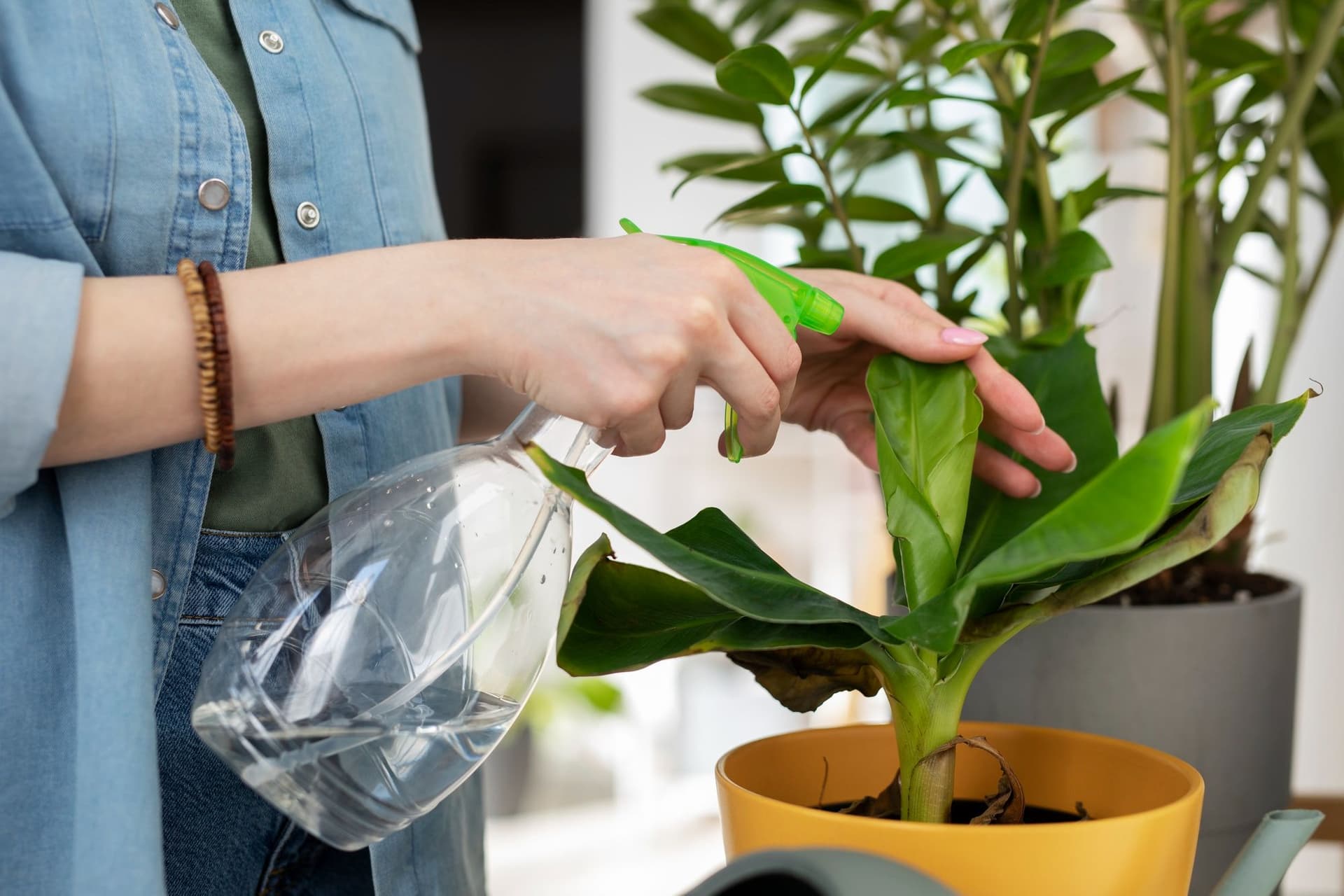
Drooping leaves and brown tips don't always mean the end, and a weakened plant can often recover with a little help. These six simple steps will help you revive a dying plant and restore its health.

Plant Care
How To Revive a Dying Plant: 6 Steps To Bring A Plant Back To Life
How to Mist Plants – Proper Technique and Common Mistakes

7 min read · 30 Jul 2026

How to Mist Plants – Proper Technique and Common Mistakes

Find out when misting works well and when to avoid it. Here, you’ll find detailed information about compatible and incompatible species, tips on how often to mist plants and do it correctly, and some great alternatives for raising humidity.

Beginner Guides
How to Mist Plants – Proper Technique and Common Mistakes
12 Best Cold-Hardy Vegetables for Cold Weather

7 min read · 13 Oct 2026

12 Best Cold-Hardy Vegetables for Cold Weather

Cold-hardy vegetables can keep a garden productive through chilly fall, winter, and early spring weather. This guide covers 12 reliable crops, their frost tolerance, and practical growing tips for better cold-season harvests.

Plant Recommendations
12 Best Cold-Hardy Vegetables for Cold Weather