
torpedo grass Identification (Panicum repens)

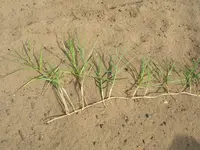
Recognize torpedo grass by its stiff, flat blades about 1/4 inch (6 mm) wide, upright stems, and long creeping rhizomes with pointed, torpedo-like tips.

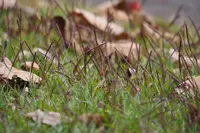
Its flowering head is a narrow, open panicle with many small spikelets spaced along fine branches.

Panicum repens Identification

Identify a Plant by Photo

Check your plant ID by uploading a clear photo to Botan.

Clear images work best. Avoid photos taken too close or too far away

Use these fast visual checks for Panicum repens.

  • Forms dense, spreading patches from long, thick, creeping rhizomes that often show at the soil surface.
  • Leaf blades are narrow, flat, and pointed, usually about 4-12 inches (10-30 cm) long.
  • Stems are upright to leaning, jointed, and commonly branch from lower nodes, giving a layered grass clump.
  • Flower heads are open, airy panicles with many small spikelets held on fine side branches.

Visible rhizomes plus narrow pointed leaves and open panicles are the quickest field clues.

Panicum repens shows useful visual shifts as shoots elongate, branch, and form seed heads.

  • Young plant: New shoots rise singly from creeping rhizomes, with narrow flat blades and few side branches, so the plant appears sparse and upright rather than forming a dense patch.
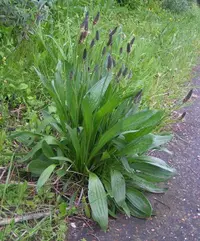
  • Mature plant: Established clumps spread into broad colonies by stout rhizomes, producing many erect to arching culms about 1-3 feet (30-90 cm) tall with longer blades along the stems.
  • Flowering stage: At flowering, stems end in an open, branched panicle, a loose many-branched seed head, which stands above the leaves and changes the outline from leafy to airy.

In warm months, Panicum repens is easiest to spot when open, pale tan flower clusters rise above the leaves, usually from summer into fall. After cold weather or frost, top growth often turns straw-colored or dies back, leaving coarse mats and upright dry stems that still suggest the plant’s dense, spreading habit.

A few creeping marsh grasses are regularly mistaken for torpedo grass.

johnsongrass(Sorghum halepense)

Both are coarse rhizomatous grasses with long flat blades. Johnsongrass is usually taller, often 3-8 feet (0.9-2.4 m), and has open, airy flower clusters. Panicum repens stays lower and spreads in dense mats with narrower, more compact seedheads.

maidencane(Panicum hemitomon)

Both form colonies in wet ground and have similar narrow leaves. Maidencane has broader leaf blades and a more upright cane-like habit. Torpedo grass typically shows stiffer pointed rhizome tips and a lower, more sprawling growth form.

Panicum repens is native to parts of Africa, southern Europe, Asia, and Australia. In the field, that broad native range matters less than habitat: it is most often found in wetlands, ditches, canal margins, marshes, and other seasonally or permanently wet ground. That setting helps narrow identification because this grass commonly forms spreading stands in low, saturated places, including brackish coastal sites. Seeing it rooted in shallow water or muddy banks is a useful clue.

Check Your Plant ID

Upload a photo to Botan to identify the plant or confirm your result before making decisions based on the name.

FAQ

The best clue is its stout, creeping rhizomes with sharply pointed tips that give the species its common name. For torpedo grass identification, check for these underground stems along with flat grass blades and an open panicle.

More Plant Identification Guides

Identify Your Plant with Botan

Use a photo to identify it, then see plant details, care information, and common problems for that species.

Botan app identifying a plant from a photo
Rice Water for Plants – Which Plants Love It and How to Make It

8 min read · 14 Jul 2026

Rice Water for Plants – Which Plants Love It and How to Make It

Rice water can be an ideal DIY solution for orchids, roses, or fruiting plants. It supports growth, leaf count, and height. We’ll share how to make and apply it correctly for your plant.

Plant Care

Rice Water for Plants – Which Plants Love It and How to Make It
12 Best Landscaping Trees for Your Garden

8 min read · 6 Oct 2026

12 Best Landscaping Trees for Your Garden

Choosing the landscape tree depends on what your garden needs most. These 12 options include compact flowering specimens, colorful deciduous trees, shade varieties, and evergreens suitable for screening and year-round structure.

Plant Recommendations
12 Best Landscaping Trees for Your Garden
Plant Pot Sizes: How to Choose the Right Plant Container

7 min read · 20 Aug 2026

Plant Pot Sizes: How to Choose the Right Plant Container

Plant pot sizes can be confusing because the number on the label only tells you part of the required information. A container may look spacious but actually be too shallow. So, how to choose pot size for plant species?

Beginner Guides
Plant Pot Sizes: How to Choose the Right Plant Container