

Buffel grass Identification (Cenchrus ciliaris)

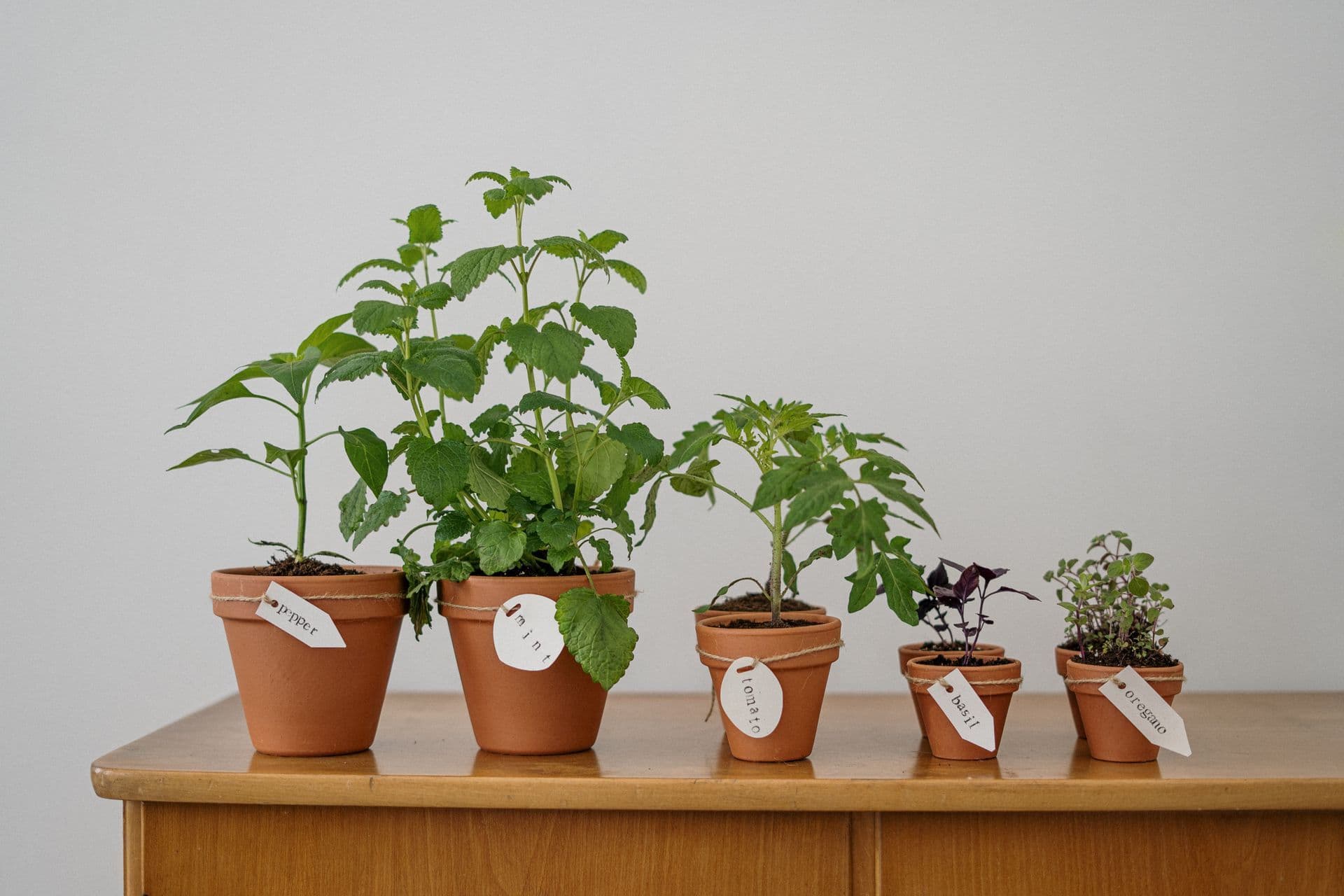
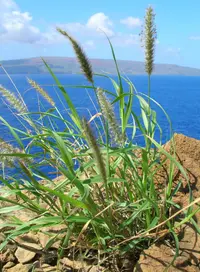
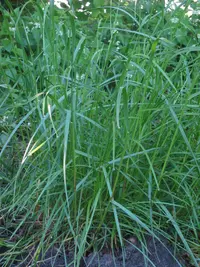
Recognize Buffel grass by its dense bunching form, narrow flat leaf blades, and upright stems topped by a short, cylindrical, bristly flower head. Mature clumps usually reach about 1-5 feet (0.3-1.5 m) tall.

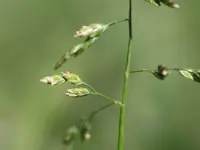
A close look shows the flower head is packed with bristled spikelets, giving it a soft bottlebrush outline.

Cenchrus ciliaris Identification

Scan to Confirm Buffel grass

Take a photo and use Botan to confirm your plant identification.

Clear images work best. Avoid photos taken too close or too far away

Check the plant’s clumping form, leaves, and bristly seed heads.

  • Grows as a dense bunchgrass, usually 1-4 feet (30-120 cm) tall, with many stems from the base.
  • Leaves are narrow, flat to folded, about 4-12 inches (10-30 cm) long, arising mostly from the lower part of the plant.
  • Flower and seed heads are dense, cylindrical spikes, roughly 1-6 inches (2.5-15 cm) long, held above the leaves.
  • Each spike looks soft-bristly or fuzzy because many short bristles surround the seeds.

Look for the bristly, bottlebrush-like heads above a basal clump.

Buffel grass shows clear visual shifts from low tufts to prominent bristly seed heads.

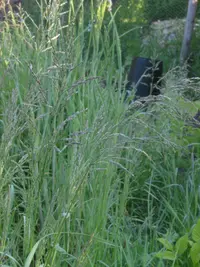
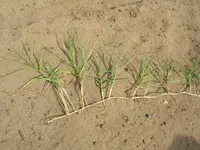
  • Seedling: Seedlings appear as a few narrow, flat grass blades arising from the base, without the dense tufted clump or tall flowering stems seen later.
  • Young plant: Young plants form a small basal tuft of arching leaves, while stems remain short and the crown has not yet produced obvious flowering stalks.
  • Mature plant: Mature plants become dense perennial tussocks, often 1-4 feet (0.3-1.2 m) tall, with many slender stems and a rounded to spreading clump outline.
  • Flowering stage: Flowering stems rise above the leaves and end in short, dense, cylindrical, bristly heads, giving Cenchrus ciliaris a softer bottlebrush-like silhouette.

After seasonal rain, Buffel grass quickly shifts from a dry, straw-colored tuft to fresh green growth. The change is obvious in clumps that were partly dormant and pale beforehand. Flowering stems become most noticeable in the warmer growing season, when narrow, bristly, often purplish seed heads rise above the leaves. In dry periods, plants often fade back to tan and the seed heads dry to a pale buff color.

Several tufted pasture grasses can be mistaken for Buffel grass.

fountain grass(Cenchrus setaceus)

Confusion comes from the dense, bristly flower spikes and arching clumps. Fountain grass has longer, softer-looking pink to purple plumes, often 4-12 inches (10-30 cm) long. Buffel grass usually has shorter, thicker tan to purple burr-like heads.

guinea grass(Megathyrsus maximus)

Both are bunchgrasses used in pastures and roadsides. Guinea grass grows much taller, often 3-10 feet (0.9-3 m), with broad leaves and large open branched seed heads. Buffel grass stays lower and has compact, cylindrical bristly heads.

Cenchrus ciliaris is native across much of Africa, the Middle East, and the Indian subcontinent. It is most often found in dry grasslands, open savannas, disturbed ground, and seasonally dry scrub. That setting helps with identification because this grass is far more likely in hot, open, low-rainfall landscapes than in shaded woodland or wetland habitats. In the field, a dense stand in arid or semi-arid pasture can be a useful clue.

  • Sharp burrs: The bristly seed heads can scratch skin on contact in humans and pets. The burrs may also catch in fur, ears, or between toes, causing local irritation.
  • Seed head hazard: Detached burr-like seed heads can be harmful if mouthed or swallowed by pets because the stiff bristles may irritate the mouth or digestive tract. This is a mechanical injury risk, not a toxin issue.

Does Your Plant Match?

Use Botan to compare a photo and help identify or confirm the plant before you label it.

FAQ

A quick Buffel grass identification clue is the dense, cylindrical seed head that looks soft or bristly, often with a purplish to tan cast, on upright stems arising from a tufted perennial grass clump.

More Plant Identification Guides

Know What Plant You Have

Identify a plant from a photo with Botan, then review its profile, care information, and common problems.

Botan app identifying a plant from a photo
What Plants Don't Like Epsom Salt?

11 min read · 29 Jul 2026

What Plants Don't Like Epsom Salt?

Learn which plants can be seriously damaged by Epsom salt and which will thrive on it. We’ll explain when and how to use it properly, provide tips for indoor & outdoor plants — read on and enjoy a healthy garden.

Plant Care
What Plants Don't Like Epsom Salt?
How to Mist Plants – Proper Technique and Common Mistakes

7 min read · 30 Jul 2026

How to Mist Plants – Proper Technique and Common Mistakes

Find out when misting works well and when to avoid it. Here, you’ll find detailed information about compatible and incompatible species, tips on how often to mist plants and do it correctly, and some great alternatives for raising humidity.

Beginner Guides
How to Mist Plants – Proper Technique and Common Mistakes
Plant Pot Sizes: How to Choose the Right Plant Container

7 min read · 20 Aug 2026

Plant Pot Sizes: How to Choose the Right Plant Container

Plant pot sizes can be confusing because the number on the label only tells you part of the required information. A container may look spacious but actually be too shallow. So, how to choose pot size for plant species?

Beginner Guides
Plant Pot Sizes: How to Choose the Right Plant Container