How to Mist Plants – Proper Technique and Common Mistakes
Find out when misting works well and when to avoid it. Here, you’ll find detailed information about compatible and incompatible species, tips on how often to mist plants and do it correctly, and some great alternatives for raising humidity.

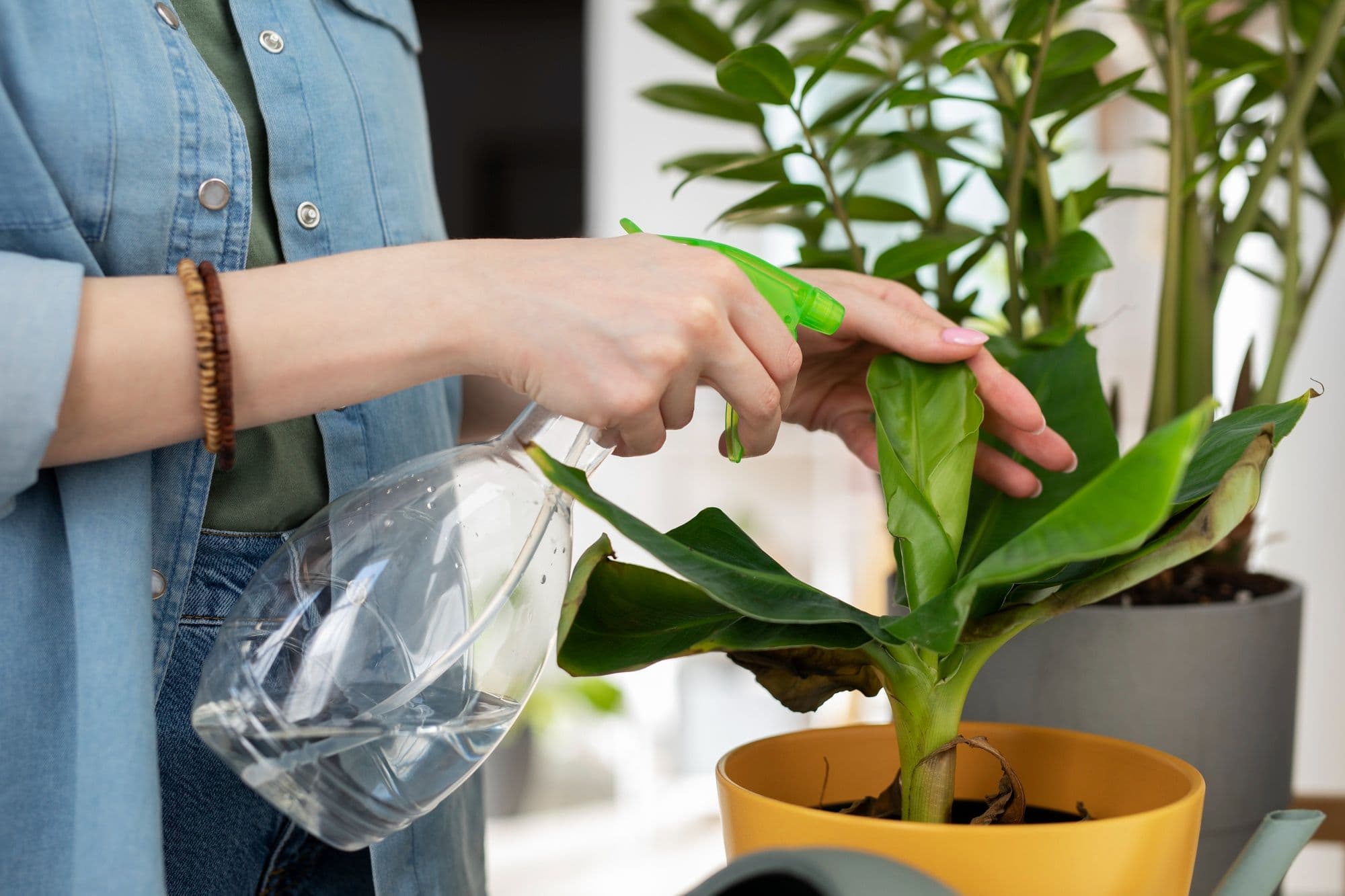
Misting isn’t a panacea, but it can have positive effects on certain species. It can temporarily cool down the leaves, remove dust, and prevent pests. However, you should know how to mist plants correctly. Also, you need to be 100% sure that your specific plant will respond well to it.
Learn when and how often to spray plants, and when to avoid misting completely — we share all the insights and the proper technique below.
Misting Plants – How to Do It Properly
Here’s how to mist plants to do more good and no harm:
- Stick to the right technique. Spray from 7-12 inches (20-30 cm) away from the plant. Use a micro-mist nozzle with room-temperature rainwater, distilled water, or filtered water. Tap water is safe, especially if it's soft, but not as good as the options listed above.
- Spray both tops and undersides. Leaf pores are mainly concentrated on the underside.
- Mist in the morning. Ideally, do it at 7-9 am, so leaves can dry fully during the day. If that’s not possible, you can do it in the early evening, but ensure they dry out before nightfall. Avoid spraying water in direct sun — it may cause leaf burn.
- Stop at the right time. The result should look like light dew rather than heavy droplets.
When done right, misting temporarily increases humidity, softens the leaf surface, and cools the plant.

How Often to Mist Plants
So, how often should you mist plants? There’s no single answer to this question. Frequency directly depends on the type of plant.
For example, you can mist thin-leaved tropical species (e.g., ferns, begonias, air plants) every 1-2 days. For broad-leaved tropical and understory species (e.g., monsteras, philodendrons, peace lilies, etc.) and orchids, a 2-3-day interval is best. For common, easy-care species, once a week is enough. For succulents and cacti, misting is not recommended.
Also, you can mist more often if the airflow is good, the temperature is high, and the AC or heating is turned on. If the airflow is poor and the temperature is low, mist less often.
Consider this and try to make an optimal schedule. Stick to it for a few weeks. If your plants respond well, that’s your perfect frequency.

Identify Your Plant’s Problem
Scan with Botan for an instant diagnosis — 98%+ accuracy
When to Mist Plants
Misting plants can be helpful in the following cases:
- New leaves that struggle to unfurl. Moisture softens the dry tissue, making the leaf open.
- The weather is unusually hot. Evaporation provides a temporary cooling effect. Misting helps reduce overall heat stress and slows rapid moisture loss.
- Leaves regularly get dusty. Dirt and dust are gently washed away, so they no longer reduce photosynthesis.
- You want to prevent pests. Moisture can keep away pests such as spider mites, aphids, and mealybugs.
- You propagate from cuttings. They have no roots, so spraying some water on the leaves will keep them hydrated.
- A plant is going through transplant shock. When the plant is repotted, it struggles to absorb enough water from the soil. In this case, misting 2-3 times a day can help it recover quickly.
As you can see, raising general humidity isn’t on the list. The thing is, the effect of spraying is just too temporary, and we’ll explain it below.
10 Plants That Need Misting
Here are the species that can benefit from misting the most:
- Mosses
- Air plants
- Ferns
- Nerve plants
- Calatheas
- Prayer plants
- Never-never plant
- Orchids
- Monsteras
- Philodendrons
These species generally benefit from regular misting, but the right frequency still depends on your indoor humidity, temperature, and the time of year.
Also, you can identify tropical plants using Botan to see whether your plant belongs to the category of species that love misting, and learn how often it actually needs it.

When Not to Mist Plants
In some cases, plant misting can have negative consequences:
When to Avoid Misting | Explanation |
With desert or drought-adapted species (e.g., succulents, cacti) | Such species thrive in dry conditions; misting increases the risk of root rot, infections, and stress |
With plants having hairy or fuzzy leaves (e.g., violets, some begonias, cyclamen) | Moisture is trapped between hairs and doesn’t evaporate, causing brown spots and fungal rot |
When the plant is sick | High humidity creates a perfect environment for fungi & bacteria, while droplets keep spreading the disease |
When the airflow is poor | Water will sit on leaves much longer, increasing the risk of diseases and attracting pests like fungus gnats |
When temperatures are low | Moisture evaporates more slowly and stays on leaves for hours, also increasing the risk of disease |
When the space is already humid | If it’s already higher than 60%, misting will also lead to prolonged wetness and higher risks of fungal infections |
Some say misting does more harm than good. It’s not exactly true.
If you know how often to mist plants, don’t mist the wrong species, and avoid the situations listed above, it might be quite helpful — and a nice ritual overall.
What Misting Does for Plants
There’s a specific mechanism behind simple spraying. Here’s exactly what happens when you spray water on foliage:
- The loss of moisture is temporarily reduced.
- The leaf temperature drops for a while, which slows further water loss.
- Some moisture is absorbed through the foliage's pores.
- The stiff tissue slightly softens, and pressure is reduced in new, unfurling leaves.
So, it has a small cooling and moisturizing effect, and can reduce stress and help the plant absorb some extra moisture (it will never replace watering through the roots, though).
Still, misting doesn’t significantly increase humidity around the plant. The impact is very temporary and can last from 30 seconds to a few minutes. A long-lasting effect only occurs if you mist in a greenhouse every 10-20 minutes.

3 Risks of Over-Misting
First, it puts a plant under stress, but that’s not the biggest issue. Some of the most common and serious risks include:
- Fungal & bacterial diseases. Those are directly connected to the excessively high moisture levels. It’s an ideal breeding environment for most pathogens, which can cause diseases such as powdery mildew, bacterial leaf spot, and gray mold.
- Leaf & root rot. Excess moisture negatively affects both foliage (often collected in the crown or center) and roots, as it can also reach the soil.
- Pest infestation. Not all pests thrive in wet environments, but some do. Most frequently, excessive humidity attracts fungus gnats.
Remember that this can happen not only to succulents or cacti. For example, it’s quite easy to over-mist a baby rubberplant — on the one hand, it’s a tropical species, but it still doesn’t need that much moisture due to its fleshy leaves.
If you are not sure whether your plant belongs to the list of species that love or hate misting, consider using Botan for instant ID and misting advice.
Alternative Ways to Boost Humidity for Plants
Spraying water doesn’t keep humidity up for long, but these methods can easily increase humidity by 10-30%:
- Humidifier. That’s the only method that easily increases humidity and holds it at 50-60% for hours for all your houseplants. Modern models also have a built-in hydrometer. Still, they are not free, and the result will depend on the model’s capacity.
- Group plants together. With less space between plants, you create a humid microclimate for your entire indoor garden. You can also place a dish of water between them. The method is free and passive, but it requires having many plants in the same room and cannot solve a serious humidity deficit.
- Create pebble trays. Fill shallow trays with stones and water. This also won’t cost much and will work passively. But it increases humidity only by a few percent.
So, if you’re looking for a game-changer, a humidifier will be the best choice.
FAQ
Not always. Do it only with tropical species (especially thin-leaved) if the temperature is high, the moisture on the leaves dries quickly, and the airflow in your space is good enough. Avoid spraying too frequently if the humidity level is already high.
Dariia Plaksina
Botanist
5 years of botanical research experience
Dariia Plaksina is a biologist, botanist, and writer of informational articles with over 5 years of experience exploring the world of plants, nature, and biology. She studied at Taras Shevchenko National University of Kyiv, Educational and Scientific Center “Institute of Biology and Medicine,” where she built a strong scientific foundation for her future work.
For Dariia, writing is a hobby, a calling, and a way to make reliable knowledge easier to understand. Her articles focus on plant care, plant health, and natural processes, helping readers learn more about the living world through clear, accessible, and science-based explanations.
Related Articles
.jpg&w=2880&q=75)
8 min read · 10 Sept 2026
10 Easy Garden Flowers to Grow
Discover 10 garden flowers that require minimal care. Learn which characteristics make plants easy to grow and follow tips on how to create a beautiful corner from beginner-friendly blooms on your property.
5 min read · 4 Sept 2026
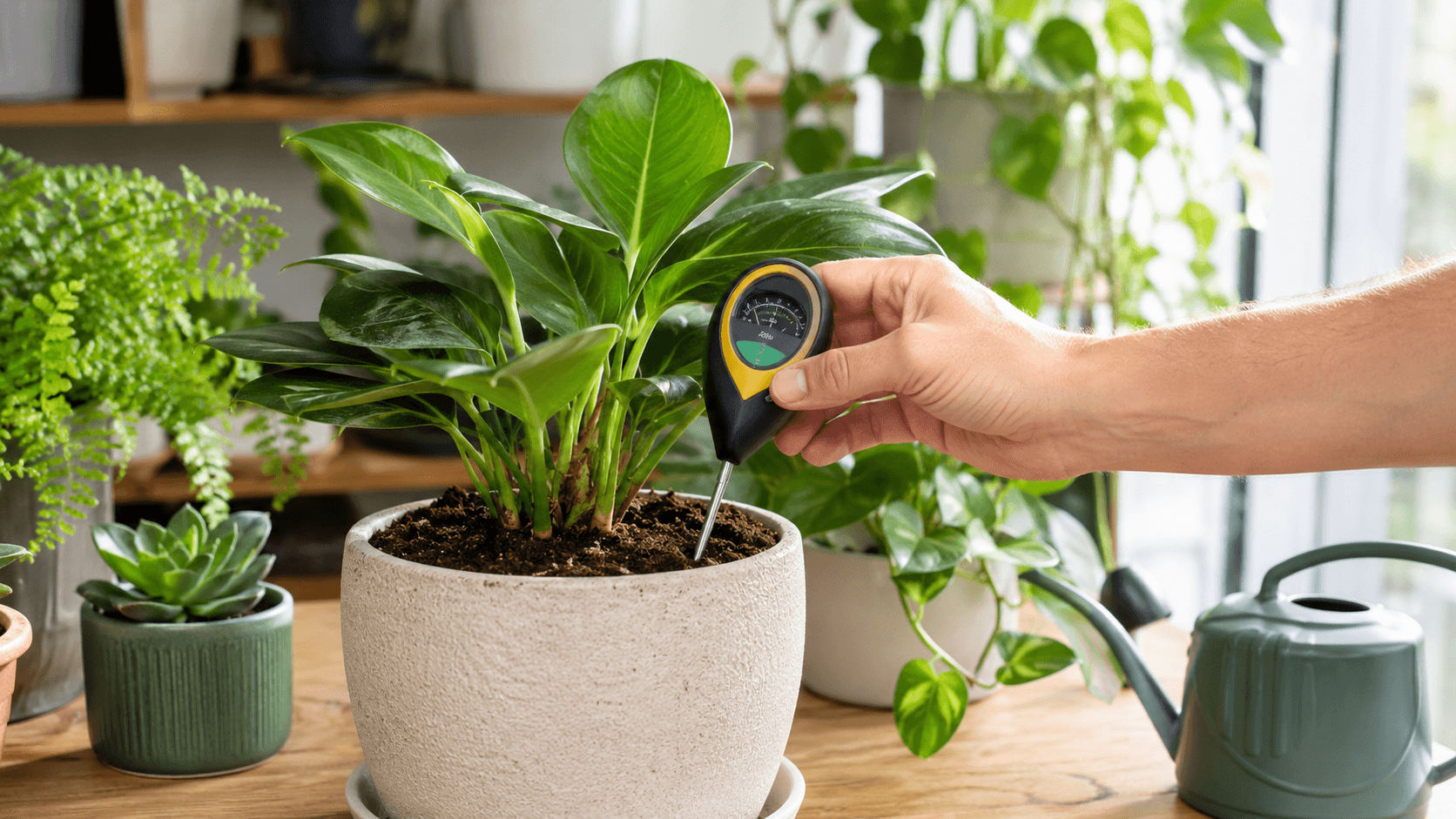
How to Use a Moisture Meter for Plants
Watering by feel kills plenty of houseplants. A moisture meter checks the soil for you, and takes the guesswork out of it. This guide will show you how to use it correctly, from the first touch to the final reading.
7 min read · 20 Aug 2026
Plant Pot Sizes: How to Choose the Right Plant Container
Plant pot sizes can be confusing because the number on the label only tells you part of the required information. A container may look spacious but actually be too shallow. So, how to choose pot size for plant species?
Explore Plants by Care Needs




Identify the plant and problem. Help your plant recover
Identify plant problems early, understand what's wrong, and get clear care guidance. Botan helps you turn guesswork into confident plant care