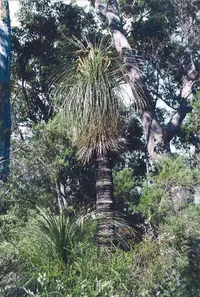
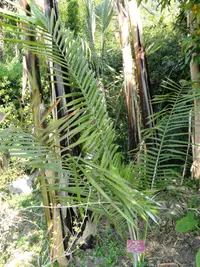
Windmill palm Care (Trachycarpus fortunei)

Also known as: Chinese windmill palm, Chinese fan palm, Windmill Palm
Windmill palm

About Windmill palm

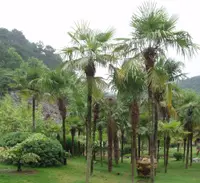
Windmill palm, Trachycarpus fortunei, is a hardy evergreen palm grown for its fan-shaped leaves and narrow, fibrous trunk. It develops a single upright stem with a rounded crown of divided, glossy green fronds.

This species is native to mountainous regions of China and parts of East Asia, where it tolerates cooler conditions than many other palms. Its good cold tolerance and moderate growth rate make it one of the easier palms for temperate gardens.

Windmill palm adapts to a range of soils if drainage is good and prefers consistent moisture without waterlogging. In mild climates, it suits small urban gardens, courtyards, and sheltered patios, and many guides describe how to care for Windmill palm in cooler regions.

Main Plant Requirements

Care Difficulty

Easy Care

Light Preference

Full Sun

Water Requirements

Moderate Water

Temperature Preference

Cold Hardy

Hardiness Zone

7–11

Soil Texture

Sandy, Loamy, Clay

Soil pH

Slightly acidic (6.5–7.0), Neutral (7.0)

Soil Drainage

Well-drained

Fertilization

Minimal (feed rarely)

Get Personalized Care Plan

Scan your plant to receive care tips personalized for your specific plant

Available on iOS and Android

How to Care for the Windmill palm

This palm prefers bright outdoor conditions with some protection from intense afternoon sun.

  • Provide 4–6 hours of direct morning sun plus bright light the rest of the day for best growth of Windmill palm.
  • Plant in a spot with partial shade in hot climates; harsh afternoon sun can scorch fronds, especially on young plants.
  • In areas with low winter sun, choose the brightest, most open site, since prolonged deep shade leads to sparse, stretched foliage.

This species prefers evenly moist but not waterlogged soil, especially during its establishment period.

  • Water when the top 3–5 cm of soil feels dry, applying enough to moisten the root zone without leaving standing water.
  • Increase watering in hot, dry weather and reduce it in cool or rainy seasons to avoid root rot in Trachycarpus fortunei.
  • Watch for browning and crisping of older fronds as a sign of underwatering, and yellowing with soft crown tissue as a sign of overwatering or poor drainage.

This hardy palm tolerates significant cold but grows best in moderate, temperate conditions.

  • Active growth occurs around 65–80°F (18–27°C), with slower growth but good tolerance down to about 50°F (10°C).
  • Mature plants can survive brief drops to about 5–10°F (-15 to -12°C) if kept dry and sheltered from cold winds, while young plants need more protection.
  • In hot regions above 90°F (32°C), provide mulch and soil moisture to reduce heat stress, and avoid heat pockets near reflective walls.

This species handles a wide humidity range and usually does not need special humidity management.

  • Target 40–60% humidity; it tolerates drier air better than many tropical palms.
  • Windmill palm shows humidity stress as browning or crisping tips combined with very fast soil drying.
  • If indoor air is extremely dry, group plants and use a wide, watered pebble tray to slightly raise local humidity.

This palm prefers sharply draining, moderately fertile soil that does not stay waterlogged.

  • Use a gritty loam with 40–60% mineral content, such as a mix of garden loam, coarse sand, and fine bark or compost.
  • Ensure rapid drainage; soil should drain within a few minutes after deep watering and never remain soggy for more than 12–24 hours.
  • Aim for slightly acidic to neutral pH (6.0–7.2), where Trachycarpus fortunei roots absorb nutrients efficiently.
  • Improve heavy clay by incorporating coarse sand or fine gravel and chunky organic matter to increase aeration and prevent root rot.

This species is suitable for long-term container growing when the pot is stable and drains very efficiently.

  • Choose a pot wider than it is tall, or with a weighted base, to reduce tipping as the crown becomes top-heavy.
  • Select a thick-walled terracotta or concrete container if outdoor, which adds weight and reduces wind rock around the root zone.
  • Elevate the pot slightly on feet or pavers so drainage holes stay clear and water does not pool under the container.

This palm benefits from modest, consistent feeding during the growing season for steady, healthy growth.

  • Apply a balanced slow-release fertilizer (around 10-10-10 or similar NPK) once in spring and again mid-summer.
  • Use label-directed rates; for containers, apply at 1/2 strength to avoid salt buildup in the limited root zone.
  • Supplement with a thin layer of compost over the root area to improve soil structure and micronutrients.
  • Stop feeding Windmill palm in late summer so new tissue hardens before cold weather.

Pruning focuses on hygiene and safety rather than reshaping Trachycarpus fortunei.

  • Best time is late winter to early spring, before strong new growth begins.
  • Remove only dead, brown, or badly damaged fronds and flower stalks, cutting close to the trunk without nicking it.
  • Avoid removing green fronds, since they supply energy and help maintain trunk strength and cold resilience.
  • Use clean, sharp loppers or a pruning saw, disinfected between plants to limit disease spread.

This palm is usually grown in the ground, but container plants or young specimens may need occasional transplanting.

  • Look for roots circling the pot drainage holes, soil drying very fast, or slowed growth as signs it needs a larger container.
  • Plan repotting or transplanting in late spring when soil is warming and active root growth resumes.
  • Move up only 1 pot size, keeping the root ball intact to limit shock, and backfill with free-draining, gritty mix.
  • Water thoroughly, keep out of harsh sun and strong wind for 1–2 weeks, and avoid fertilizing until new growth resumes.

Trachycarpus fortunei is propagated almost exclusively from seed, which is slow but reliable under the right conditions.

  • Collect ripe black fruits, remove pulp, and clean seeds to reduce fungal problems.
  • Sow in late winter to spring in a warm area with bottom heat around 75–85°F for better germination.
  • Use a sterile, very well-drained mix, such as equal parts perlite and fine bark or coarse sand.
  • Keep evenly moist but not waterlogged, and plan for germination to take several weeks to many months.

This species is relatively cold hardy but benefits from some winter care in colder or exposed sites.

  • Mature plants tolerate short drops near 5–10°F, but young specimens are more vulnerable to freeze damage.
  • Apply 5–10 cm of mulch around the root zone in late fall, keeping it away from direct trunk contact.
  • In very cold snaps, loosely wrap the crown and trunk with breathable fabric to limit desiccating wind and ice.
  • Move container-grown plants into a cool, bright, frost-free area when sustained temperatures fall below about 20°F.

Care Tips

Trunk protection

In zones colder than 7, wrap the trunk and crown with breathable frost cloth or burlap before severe freezes, and remove it promptly once temperatures stabilize above freezing to prevent rotting of the spear.

Spearch pull check

After winter or storms, gently tug the central spear; if it pulls out, remove the soft tissue, apply a copper-based fungicide to the crown, and keep the area slightly drier until new growth resumes.

Wind management

In very windy sites, stake young plants with 2–3 sturdy posts and soft ties for the first 1–2 years to reduce root rocking and help the palm establish a stable, deep root system.

Basal cleanup

Once old fronds are fully brown and dry, cut them off close to the trunk and optionally remove dried leaf bases by slicing carefully with a sharp knife to reduce pest hiding spots and improve air movement around the crown.

Salt and splash control

In coastal or roadside plantings, occasionally hose off the foliage with fresh water to remove salt or de-icing residues that can burn the leaf tips and slow growing Windmill palm specimens.

Common Pests and Diseases

Palm leaf spot

This disease causes brown to black spots or streaks on the fronds, often with yellow halos and occasional tissue collapse along the lesions. Symptoms include premature browning and shedding of older leaves, especially in damp, shaded conditions.

Solution

Remove and dispose of heavily spotted fronds to reduce inoculum, keep the canopy as dry as possible by watering at soil level, and improve spacing and airflow around the plant. In persistent, wet climates, a copper-based fungicide labeled for palms can be applied according to label directions as part of broader Trachycarpus fortunei care.

Fusarium wilt

This disease leads to one-sided yellowing and browning of fronds, slow decline, and eventual death of the crown, often starting on a single side of the plant. Symptoms include discolored vascular tissue inside the petioles when cut open.

Solution

Promptly remove and destroy severely affected fronds and avoid using contaminated pruning tools on healthy palms; always disinfect blades with 70% alcohol or a 10% bleach solution between cuts. There is no reliable cure once the trunk is extensively infected, so focus on prevention by sourcing disease-free plants and avoiding planting in poorly drained, stressed sites.

Scale insects

These insects appear as small, rounded or oval bumps on leaf undersides and petioles, often producing sticky honeydew that can lead to sooty mold. This pest weakens the palm over time by sucking sap, causing yellowing and a dull, unhealthy look to the fronds.

Solution

Wipe accessible fronds with a cloth dipped in mild soapy water, then rinse with clean water to remove loosened scale and honeydew. For heavier infestations, use a horticultural oil or insecticidal soap labeled for palms, applied thoroughly to both sides of the foliage on calm, mild days.

Palm aphids

These insects are soft-bodied and cluster along leaf bases and young fronds, excreting honeydew that can attract ants and foster sooty mold. This pest targets tender growth and can cause curling, distortion, and reduced vigor in young or container-grown windmill palms.

Solution

Spray colonies off with a strong stream of water, repeating every few days until numbers stay low, and prune out heavily infested, easily replaced foliage. If needed, apply insecticidal soap or a light horticultural oil, ensuring coverage of the leaf bases and undersides where aphids hide.

Ganoderma trunk rot

This disease is caused by a wood-decaying fungus that attacks the lower trunk, leading to gradual decline, reduced frond production, and structural weakness. Symptoms include shelf-like, reddish-brown conks (fruiting bodies) forming near the base of the trunk and a general loss of vigor over time.

Solution

Remove and destroy affected palms promptly once conks appear, as the structural integrity is compromised and the fungus persists in the soil. Avoid trunk wounding, do not leave old palm stumps in the ground, and choose planting sites with good drainage to reduce future risk when planning how to take care of Windmill palm.

Interesting Facts

Natural Himalayan origins

This species is native to parts of central and eastern China and the Himalayan foothills, where it grows on cool, forested mountain slopes rather than in hot lowland tropics, which explains its preference for cooler summers compared to many palms.

Remarkable cold tolerance

It is one of the most cold-hardy arborescent palms, surviving winter temperatures that kill most other palm species, which has allowed it to naturalize and be used as an ornamental tree in temperate regions of Europe and North America.

Fibrous trunk armor

The trunk is wrapped in dense, coarse fibers derived from old leaf bases, forming a natural insulation that helps protect the growing point from cold and mechanical damage and has historically been used as a rough textile material in its native range.

Botan icon

Did you know?

This palm is typically dioecious, meaning individual plants are either male or female, and in cultivation male plants are often favored in ornamental plantings because their large, showy clusters of yellow flowers are considered more decorative than the fruiting structures of female plants.

FAQs about Windmill palm

Brown tips or edges usually result from drought stress, excess fertilizer salts, low humidity, or wind and cold damage. Check soil moisture, flush the soil occasionally, protect from harsh winds, and remove only fully dead fronds.

Grow Healthy Plants with Botan Care

Keep your plants happy and healthy with plant identification, disease detection, and easy care guidance.

Botan plant care app — identify plants on mobile

Explore More Plants