Salt tolerance management
If irrigating with slightly saline water, leach the soil thoroughly with fresh water 2–3 times per year to flush accumulated salts away from the root zone and reduce leaf tip burn.

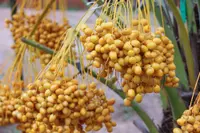
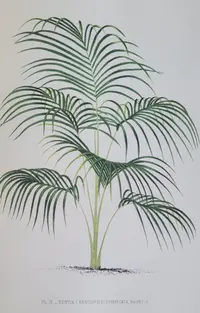
The date palm, Phoenix dactylifera, is a long-lived palm tree valued for its sweet, edible fruits and graceful, feather-like fronds. It forms a tall, single trunk crowned with a dense canopy of arching leaves.
This species originates from arid regions of the Middle East and North Africa, where it has been cultivated for thousands of years. In suitable climates it is often grown in groves or as a striking landscape specimen.
Phoenix dactylifera is relatively demanding outdoors, as it needs warmth, strong light, and well-drained soil. For home gardeners learning how to care for date palm, space, bright sun, and protection from prolonged cold are the main considerations.

Care Difficulty
Moderate Care

Light Preference
Full Sun

Water Requirements
Low Water

Temperature Preference
Warm Climate

Hardiness Zone
9–11

Soil Texture
Sandy, Loamy

Soil pH
Slightly acidic (6.5–7.0), Slightly alkaline (7.0–7.5)

Soil Drainage
Well-drained

Fertilization
Minimal (feed rarely)
Scan your plant to receive care tips personalized for your specific plant
Available on iOS and Android
This species needs strong sun from an early age to form a sturdy trunk and dense crown.
Watering should support deep rooting while avoiding chronic soil saturation.
This palm prefers warm to hot climates and reacts poorly to freezing conditions.
Phoenix dactylifera tolerates a wide humidity range and rarely needs special humidity management indoors.
Phoenix dactylifera prefers sharply drained, mineral-rich soil that does not stay wet around the roots.
This species can be grown in large containers when managed for strong drainage and stability.
Phoenix dactylifera responds well to moderate, balanced nutrition during active growth.
Pruning Phoenix dactylifera focuses on safety, health, and maintaining a clean canopy rather than reshaping the trunk.
Phoenix dactylifera is usually grown in-ground, but young or indoor plants may need occasional repotting or careful transplanting.
Propagation of Phoenix dactylifera is most reliable from offshoots, with seed used mainly for non-identical seedlings.
Phoenix dactylifera is somewhat cold tolerant but benefits from targeted winter protection in cooler regions.

Plant Health Check
Not sure what's wrong with your plant? Check your plant's health inside the app.
This species is one of the oldest documented cultivated fruit trees, with archaeological evidence of intentional date palm farming in Mesopotamia and the Arabian Peninsula going back several thousand years.
Date palms are dioecious, meaning individual plants are either male or female, so fruit production in orchards depends on careful pollination using pollen from selected male trees.
Date fruits develop and ripen under extremely hot, dry conditions typical of desert oases, and their high sugar content and low moisture at full ripeness help protect the seeds and allow long-term storage.

Commercial date production today relies heavily on a small number of long-cultivated clonal varieties, such as 'Medjool' and 'Deglet Noor', which are propagated vegetatively so that orchards around the world share genetically identical or very similar female trees descended from a limited set of original palms.
Leaf tips usually brown from low humidity, salt buildup, or chronic underwatering. Older fronds naturally brown as they age. Check for spider mites, scale, or root issues and trim only completely dead fronds at the base.
Keep your plants happy and healthy with plant identification, disease detection, and easy care guidance.