European fan palm Care (Chamaerops humilis)

Also known as: European fan palm, dwarf fan palm, hair palm
European fan palm

About European fan palm

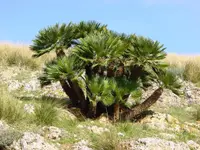
The European fan palm, Chamaerops humilis, is a compact, clumping palm with multiple trunks and rounded, fan-shaped leaves. It stays relatively small, which suits containers and smaller gardens.

This species is native to the western Mediterranean, where it grows in rocky, dry habitats and tolerates wind, sun, and occasional drought. Its slow growth and strong structure make it a durable ornamental palm.

It prefers bright light, well-drained soil, and moderate moisture, but adapts to a range of conditions. These traits mean care for European fan palm is manageable for most plant owners.

Main Plant Requirements

Care Difficulty

Easy Care

Light Preference

Full Sun

Water Requirements

Low Water

Temperature Preference

Cold Hardy

Hardiness Zone

8–11

Soil Texture

Sandy, Loamy, Rocky

Soil pH

Slightly acidic (6.5–7.0), Slightly alkaline (7.0–7.5)

Soil Drainage

Well-drained

Fertilization

Minimal (feed rarely)

Get Personalized Care Plan

Scan your plant to receive care tips personalized for your specific plant

Available on iOS and Android

How to Care for the European fan palm

This sun-tolerant Mediterranean palm prefers bright outdoor exposure with some protection in very hot climates.

  • Provide 6–8 hours of direct sun daily; morning sun with light afternoon shade suits most sites, especially in hot inland areas.
  • European fan palm tolerates partial shade (around 3–4 hours of direct sun), but growth becomes slower and more open with fewer leaves.
  • In intense summer sun, monitor for leaf scorch or bleaching; in winter, avoid deep shade from buildings or evergreens to maintain compact growth.

This drought-tolerant palm prefers thorough but infrequent watering once established.

  • Water when the top 3–5 cm of soil feels dry; soak the root zone deeply, then allow excess to drain away completely.
  • Ensure sharply draining soil; yellowing, soft bases and a sour smell indicate overwatering, while crisp brown tips and folding leaflets suggest underwatering.
  • Reduce watering in cool seasons, especially below 55°F (13°C), as growth slows and consistently wet soil around Chamaerops humilis increases root-rot risk.

This hardy palm tolerates a wide temperature range but grows best in mild, warm conditions.

  • Optimal growth occurs around 65–80°F (18–27°C), with steady warmth promoting compact leaves and stronger clumps.
  • Mature plants can survive short drops near 15°F (−9°C) with some leaf damage; protect crowns from prolonged freeze and wet cold.
  • Tolerates dry heat up to about 100°F (38°C) if soil is not bone-dry; offer some afternoon shade and extra water during extended heatwaves.

This palm tolerates a wide humidity range and usually does well in typical home air.

  • Aim for 30–60% humidity; no special humidification is usually needed.
  • Dry indoor air may cause brown leaflet tips and increased spider mite activity.
  • Increase humidity slightly by grouping plants or placing the container on a pebble tray with water below the pot base.

Chamaerops humilis prefers sharply draining, mineral-rich soil that prevents waterlogging around the roots.

  • Use a sandy or gritty loam with 30–50% inorganic material such as coarse sand, pumice, or perlite.
  • Aim for slightly acidic to neutral pH, around 6.0–7.0, to support balanced nutrient uptake.
  • Blend a modest amount of compost or fine bark into the mix for structure without making it heavy or water-retentive.
  • Avoid dense clay, peat-heavy mixes, or any soil that stays wet longer than 2–3 days after watering.

This species suits container growing well when provided with a stable, well-drained setup.

  • Choose a wide, heavy pot to counterbalance the multi-stemmed, top-heavy crown and reduce tipping in wind or on balconies.
  • Select a container material that matches your climate, such as thicker ceramic to slow moisture loss in hot, dry areas.
  • Raise the pot slightly on feet or bricks so drainage holes release water freely and salts do not accumulate at the base.

Chamaerops humilis benefits from modest, consistent nutrition during active growth in spring and summer.

  • Use a balanced slow-release NPK fertilizer or well-rotted compost mixed into the topsoil at the start of spring.
  • Feed container plants every 6–8 weeks in the growing season with a half-strength balanced liquid fertilizer.
  • Avoid feeding in late fall and winter when growth slows, especially in cooler climates.
  • Water before and after applying fertilizer to reduce root burn and support even nutrient uptake.

Pruning Chamaerops humilis focuses on removing old foliage and maintaining a tidy, safe clump.

  • Carry out main pruning in late winter or early spring before strong new growth starts.
  • Remove only dead, yellowing, diseased, or rubbing fronds; leave healthy green fronds for photosynthesis.
  • Cut fronds close to the trunk without damaging the stem, using clean, sharp bypass loppers or a pruning saw.
  • Limit crown thinning to preserve the natural fan shape and avoid weakening the palm.

European fan palm grows slowly but may need repotting or transplanting when root-bound or outgrowing its site.

  • Check for roots circling the pot, emerging from drainage holes, or noticeably slowed growth as signals to repot.
  • Plan repotting or transplanting in late spring to early summer, once frost risk has passed and soil is warming.
  • Move container plants only every 3–5 years, stepping up just 1 pot size with a very well-drained, gritty mix.
  • Handle the root ball gently, keep roots shaded and moist, then water deeply after planting to settle soil and limit stress.

Chamaerops humilis is most often propagated by seeds or by carefully separating basal suckers.

  • Harvest ripe seeds, clean them, and sow in a warm medium at 75–85°F with constant, light moisture and good air flow.
  • Expect slow germination; maintain patience and avoid letting the seed mix dry out completely.
  • For division, detach well-rooted suckers in late spring or early summer using a clean, sharp knife or saw.
  • Pot divisions into a free-draining mix, keep shaded and evenly moist until new growth confirms establishment.

Chamaerops humilis is among the more cold-hardy palms but still benefits from simple winter precautions in colder regions.

  • Mature plants often tolerate brief drops near 10–15°F, though young or potted specimens are less hardy.
  • Apply a 5–10 cm mulch layer around the root zone, keeping it slightly away from the trunk to reduce rot risk.
  • In areas with severe freezes, loosely wrap the crown and trunk with breathable frost cloth or burlap.
  • Move container-grown plants into a bright, cool, frost-free location and water sparingly during winter.

Care Tips

Multi-stem selection

When the plant is young, selectively remove the weakest or most crowded suckers at the base so 3–5 strong trunks can develop good spacing and airflow.

Low-trunk protection

Wrap the lower trunks with breathable frost cloth or burlap during hard freezes, as the growing point sits low and is more vulnerable to cold damage than the leaves.

Controlled clump expansion

Every few years, spade around the outer edge of the clump and remove unwanted offsets, which helps keep the plant within its space and allows more light into the center.

Mechanical pest removal

For scale or spider mites clustered in the leaf bases, use a soft brush or a strong water spray directed into the crown before turning to chemical controls.

Salt and wind management

In coastal or windy sites, use windbreak fencing or nearby shrubs and apply a light fresh-water hose-down of the foliage every few weeks to reduce salt buildup when growing European fan palm outdoors.

Common Pests and Diseases

Red palm weevil

This pest bores into the trunk and leaf bases, causing hidden internal damage that often shows as wilting, yellowing, or collapsing fronds. Symptoms include oozing sap, fermenting smell, or holes at the leaf bases.

Solution

Remove and destroy heavily infested plants or severely damaged stems, as larvae hide deep inside and are hard to reach. For valuable specimens, use preventative systemic insecticides labeled for palm borers and regularly inspect the crown and leaf bases, cutting away and disposing of any soft, rotting tissue to slow spread.

Palm borer beetles

These insects lay eggs in the trunk or petiole bases; the larvae tunnel inside, weakening the plant and causing distorted growth or sudden collapse of fronds. Symptoms include frass (sawdust-like material), entry holes, and structurally weak stems.

Solution

Prune and dispose of affected fronds and any visibly damaged tissue to reduce larval populations and entry points. Keep the plant in good vigor with appropriate watering and nutrition, and in areas where borers are common, use targeted systemic insect treatments and physical monitoring (checking for new holes or frass) as part of Chamaerops humilis care.

Scale insects

These insects attach to leaf surfaces and petioles, sucking sap and causing yellowing, sticky honeydew, and sooty mold growth. Infestations can weaken the palm over time, especially in warm, sheltered conditions or indoors.

Solution

Manually remove scales from small plants with a soft cloth or cotton swab dipped in diluted alcohol, then wash leaves with lukewarm soapy water. For persistent infestations, use repeated applications of horticultural oil or insecticidal soap, making sure to coat the undersides of fronds and the bases where scales hide.

Fusarium wilt

This disease is caused by a soil-borne fungus that blocks the water-conducting tissues, leading to one-sided yellowing, browning, and death of fronds, often starting on a single side of the crown. Symptoms include progressive decline despite correct watering and nutrition.

Solution

Remove and destroy affected fronds using sterilized tools, and avoid overhead watering that keeps foliage wet. Severely affected plants are usually not curable, so avoid planting new palms in the same spot, do not share tools or soil between palms, and buy nursery stock from reputable sources to reduce introduction of the pathogen.

Leaf spot

This disease produces small to medium brown or black spots on fronds, sometimes with yellow halos, which can merge and cause sections of the leaf to die. Symptoms include cosmetic damage and, in severe cases, gradual thinning of the canopy.

Solution

Remove and discard heavily spotted or dead fronds to reduce fungal spores, and avoid wetting foliage in the evening. Improve spacing and airflow around the plant, and if the problem progresses, apply a fungicide labeled for palm leaf spots, following label directions carefully as part of broader European fan palm care instructions.

Interesting Facts

Naturally clumping growth

Unlike most palms that grow a single trunk, this species forms dense multi-stemmed clumps as it produces new shoots from the base, creating thickets in its native habitats.

Native to Mediterranean coasts

It is one of the very few palms native to continental Europe, naturally occurring along western and central Mediterranean coasts from Spain and France to parts of Italy and North Africa.

Remarkable cold tolerance

For a palm species, it tolerates unusually low temperatures and can survive brief frosts, which helps explain why growing European fan palm outdoors is possible in cooler Mediterranean-type climates.

Botan icon

Did you know?

Its extremely sharp, rigid leaf spines historically led to the use of its leaves for making durable brooms and brushes in traditional Mediterranean crafts, since the stiff fibers withstand heavy, repeated use.

FAQs about European fan palm

Brown tips usually result from low humidity, salt buildup, or irregular watering. Use non-softened water, flush the soil occasionally, and maintain consistent moisture without keeping the root zone soggy to reduce browning over time.

Grow Healthy Plants with Botan Care

Keep your plants happy and healthy with plant identification, disease detection, and easy care guidance.


Botan plant care app — identify plants on mobile

Explore More Plants