Wind acclimation
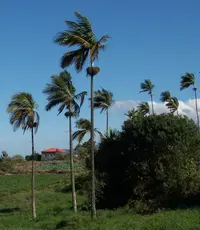
If planting in a windy site, stake the young palm loosely for the first 1–2 years and gradually reduce support so the trunk strengthens rather than relying on permanent ties.

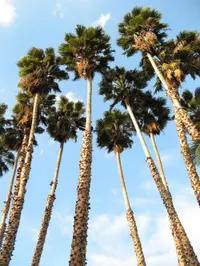
The Mexican fan palm, Washingtonia robusta, is a tall, fast-growing palm tree valued for its dramatic, upright trunk and large, fan-shaped fronds. It is commonly used in warm-climate streetscapes and large gardens. Native to northwestern Mexico, it thrives in hot, dry regions but also tolerates coastal conditions and urban pollution. Its speed of growth and general toughness make it relatively easy to establish outdoors in suitable climates. However, its eventual size, falling fronds, and need for strong light make it less practical indoors and in small spaces. Understanding how to care for Mexican fan palm starts with recognizing its preference for full sun, well-drained soil, and moderate watering.

Care Difficulty
Moderate Care

Light Preference
Full Sun

Water Requirements
Moderate Water

Temperature Preference
Warm Climate

Hardiness Zone
9–11

Soil Texture
Sandy, Loamy, Rocky

Soil pH
Slightly acidic (6.5–7.0), Slightly alkaline (7.0–7.5)

Soil Drainage
Well-drained

Fertilization
Minimal (feed rarely)
Scan your plant to receive care tips personalized for your specific plant
Available on iOS and Android
Washingtonia robusta thrives in strong, direct sun and develops its best form with long daily exposure.
This palm prefers deep, infrequent watering that allows the soil surface to dry slightly between soakings.
This species grows best in warm to hot conditions and tolerates brief cold, but not prolonged hard frost.
This palm tolerates a wide humidity range and rarely needs special humidity management indoors.
Washingtonia robusta prefers sharply draining, mineral-rich soil that does not stay waterlogged.
This species can be grown in large containers for several years if managed carefully.
This fast-growing palm benefits from moderate feeding to support strong trunk and frond development.
Pruning Washingtonia robusta focuses on safety and appearance rather than controlling size.
Transplanting is more common than repotting, since this palm is usually grown in the ground.
Propagation of this palm is done almost exclusively from seed, not from cuttings or division.
Winter care is important in climates colder than this palm’s preferred warm, frost-light conditions.

Plant Health Check
Not sure what's wrong with your plant? Check your plant's health inside the app.
This species is native to the Baja California Peninsula in Mexico, where it grows in arid canyons and oases with a strong dependence on groundwater rather than regular rainfall.
In natural and unmanaged settings, old fronds often remain attached for many years and form a dense skirt that provides shelter and nesting sites for birds, bats, and insects, but also increases fire risk in urban areas.
This palm has become a dominant street and skyline tree in warm cities such as Los Angeles because it tolerates high heat, reflected radiation from pavement, and intermittent drought better than many other ornamental palms.

Genetic and field studies suggest that this species has hybridized with the closely related Washingtonia filifera in some regions, creating intermediate forms that blur the distinction between the two palms in urban and ornamental plantings.
Brown tips or fronds usually come from low humidity, underwatering, salt buildup, or normal aging of lower leaves. Check soil moisture, flush salts occasionally, and remove only fully brown, dry fronds to prevent trunk damage.
Keep your plants happy and healthy with plant identification, disease detection, and easy care guidance.