white willow Care (Salix alba)

Also known as: golden willow
white willow

About white willow

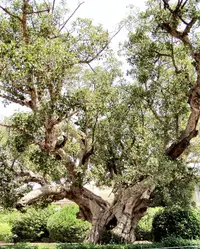
White willow, Salix alba, is a fast-growing deciduous tree known for its slender, flexible branches and narrow, silvery-green leaves. It typically develops a tall, graceful crown that moves easily in the wind. Native to Europe and western Asia, it often grows along rivers, lakes, and wetlands where soils stay consistently moist. This preference for damp ground and its vigorous root system makes it better suited to larger outdoor spaces than to small gardens or containers. It is generally uncomplicated to establish if it receives ample moisture and light, so learning how to care for white willow mainly means matching its need for sun and reliably damp, well-drained soil.

Main Plant Requirements

Care Difficulty

Moderate Care

Light Preference

Full Sun

Water Requirements

Keep Soil Moist

Temperature Preference

Cold Hardy

Hardiness Zone

4–8

Soil Texture

Sandy, Loamy, Clay

Soil pH

Slightly acidic (6.5–7.0), Neutral (7.0)

Soil Drainage

Waterlogged tolerant

Fertilization

Minimal (feed rarely)

Get Personalized Care Plan

Scan your plant to receive care tips personalized for your specific plant

Available on iOS and Android

How to Care for the white willow

This fast-growing tree thrives in open, bright locations with long daily sun exposure.

  • Provide 6–8 hours of direct sun daily; morning and midday sun support strong growth and dense branching in white willow.
  • Allow light partial shade in hot summer climates, especially during late afternoon, to limit leaf scorch and excessive water loss.
  • In cooler regions, choose a full-sun site with unshaded southern exposure so low winter sun and early-spring light reach the canopy.

This species is adapted to moist sites and benefits from consistently damp but not stagnant soil.

  • Aim for evenly moist soil, especially during the first 2–3 growing seasons, so the top 2–5 cm never fully dry out between soakings.
  • In summer heat, increase watering when leaves start to droop slightly or new shoots lose turgor, signs the root zone is drying too quickly.
  • Use deep, infrequent soakings on well-drained or sloped sites, watching for yellowing leaves, dieback, or foul smells that suggest waterlogging and poor drainage in Salix alba.

This hardy tree tolerates a wide temperature range but grows best in moderate conditions.

  • Optimal growth occurs around 60–75°F (16–24°C), with fastest shoot extension in cool to mild spring and early summer weather.
  • Mature trees tolerate winter lows near -20°F (-29°C), but young saplings benefit from protection from drying winds and rapid freeze–thaw cycles.
  • In hot regions with summer highs above 90°F (32°C), ensure ample soil moisture and some afternoon shade to reduce heat stress and leaf scorch risk.

This species tolerates a broad humidity range and does not usually need special humidity management outdoors.

  • Prefers ambient outdoor humidity around 40–80% but remains healthy in drier air if soil moisture is consistent.
  • Shows low-humidity stress through browning or crisping leaf edges combined with dry soil rather than air dryness alone.
  • If grown in a very arid site, reduce stress by maintaining evenly moist soil and using mulch to limit surface evaporation.

Salix alba grows best in consistently moist, deep, well-structured mineral soils.

  • Use a loamy or clay-loam soil with high organic matter that holds moisture yet does not stay stagnant or foul-smelling.
  • Aim for a slightly acidic to neutral pH around 6.0–7.5, avoiding strongly alkaline or saline conditions that restrict nutrient uptake.
  • Mix in compost or well-rotted manure to increase water-holding capacity, and coarse sand or fine grit only if drainage is excessively slow and water pools for days.
  • Avoid very shallow, compacted, or pure sand substrates, which cause root stress, poor anchoring, and rapid drying of the root zone.

This species can be grown in containers short term, but it quickly outgrows them and requires careful management.

  • Choose a heavy, wide-based container to counterbalance the fast, top-heavy canopy and reduce wind tipping.
  • Provide a soil depth of at least 45–60 cm so vigorous structural roots can develop without circling tightly near the surface.
  • Use a moisture-retentive yet structured mix, such as 2 parts loam, 1 part compost, and 1 part fine bark, to slow drying while preventing waterlogging at the base.

Mature Salix alba in the ground often needs little feeding, but young or container trees respond well to modest nutrition.

  • Use a balanced NPK fertilizer (e.g., 10-10-10) or well-rotted compost as a light top-dressing in early spring.
  • Feed young or potted white willow every 4–6 weeks during spring–summer with a half-strength liquid or slow-release product.
  • Avoid high-nitrogen lawn fertilizers around the root zone to reduce weak, overly fast shoot growth.
  • Stop fertilizing in late summer so new growth hardens before winter dormancy.

Salix alba benefits from thoughtful pruning to maintain structure, safety, and healthy new growth.

  • Carry out main pruning in late winter or very early spring before bud break, when branch structure is visible.
  • Remove dead, diseased, or storm-damaged wood first, then thin crowded, crossing branches to improve light and airflow.
  • Use clean, sharp bypass pruners or a pruning saw, making smooth cuts just outside the branch collar.
  • Formative pruning in early years guides trunk height and crown shape, reducing future breakage and maintenance.

Transplanting Salix alba is more common than long-term container culture due to its fast, extensive root system.

  • Look for roots circling the pot, slow growth, or frequent wilting as cues a young tree has outgrown its container.
  • Plan transplanting for late fall or early spring, when the tree is dormant and soil is workable but not waterlogged.
  • Move up only 1–2 pot sizes or plant into open ground, spreading roots outward and trimming broken ones cleanly.
  • Water deeply after transplanting, keep soil evenly moist, and apply a 5–8 cm mulch ring to limit stress and encourage new roots.

Salix alba is commonly propagated from cuttings, which root fast in the right moisture conditions.

  • Take hardwood cuttings in late winter from pencil-thick, 20–30 cm one-year shoots, cutting just below a node.
  • Insert cuttings into moist, free-draining soil or sand-based mix, burying at least half their length upright.
  • Keep the rooting medium consistently moist and in bright, indirect light until strong new shoots and roots form.
  • Softwood or semi-ripe cuttings in late spring–early summer also root well under high humidity and gentle shade.

Established Salix alba is cold hardy in much of the US and needs minimal winter care in the ground.

  • Apply a 5–8 cm mulch layer around the root zone in late fall, keeping it a few cm away from the trunk.
  • Young or newly planted trees benefit from wind exposure reduction and stable soil moisture going into winter.
  • For container-grown specimens, move pots to a sheltered, unheated space or insulate containers to prevent root freezing.

Care Tips

Establishing windbreaks

In open or exposed sites, plant a temporary shrub or fence windbreak on the prevailing wind side to reduce trunk flexing and root rock while the young tree anchors itself.


Root-zone mulching

Apply a 5–8 cm ring of coarse wood chip mulch from 15–30 cm away from the trunk out to the drip line to buffer soil moisture, moderate soil temperature, and reduce mower or string-trimmer damage to shallow roots.

Storm damage management

After heavy storms, promptly remove torn or hanging branches with clean cuts back to a lateral branch to prevent bark stripping and reduce the risk of wood-decay fungi entering the canopy.

Water-edge planting

When planting near ponds, streams, or drainage swales, set the root flare just above typical high-water level and armor the immediate bank with stones or deep-rooted grasses to prevent erosion around the base.

Monitoring for borers

Inspect the lower trunk and main scaffold branches 2–3 times per year for sawdust-like frass, oozing sap, or small exit holes, and if found, remove and destroy affected branches to interrupt borer lifecycles when growing white willow.

Common Pests and Diseases

Willow leaf beetle

This pest feeds heavily on young willow leaves, creating shot holes, skeletonizing foliage, and sometimes defoliating branches in summer.

Solution

Prune and destroy heavily infested shoots, then shake branches over a sheet or tarp to remove adults and larvae. For ongoing issues, use a targeted insecticide with spinosad or pyrethrins according to label directions, focusing sprays on the undersides of leaves in late spring when new larvae appear.

Willow aphids

These insects cluster on young shoots and leaf undersides, sucking sap and producing sticky honeydew that can lead to sooty mold on foliage and nearby surfaces.

Solution

Spray colonies off with a firm stream of water, repeating every few days during peak activity. For persistent infestations, apply insecticidal soap or horticultural oil thoroughly to shoots and leaf undersides, and encourage natural predators such as lady beetles by avoiding broad-spectrum chemicals.

Willow scab

This disease causes olive to black spots on leaves and blight of young shoots, often leading to dieback of current-season growth in wet spring weather.

Solution

Promptly prune and destroy infected twigs and fallen leaves to reduce spore sources, making clean cuts into healthy wood. Improve air flow through the canopy by thinning crowded branches, and in high-value trees consider a registered fungicide at bud break in regions where willow scab is common as part of Salix alba care instructions.

Black canker

This disease forms dark, elongated cankers on stems and branches, often following earlier scab infection, and can girdle shoots, causing dieback.

Solution

Remove and burn or dispose of all cankered branches, cutting at least 15–20 cm below visible damage and disinfecting tools between cuts. Maintain good vigor with proper watering and avoid wounding bark, and where both scab and black canker recur, coordinate pruning with any fungicide program recommended for local willow diseases.

Rust

This disease produces orange to rust-brown pustules on leaf undersides, sometimes causing yellowing, premature leaf drop, and reduced vigor in damp conditions.

Solution

Rake and discard fallen leaves and thin dense growth to improve light and air penetration through the canopy. In areas with frequent rust outbreaks, apply a labeled fungicide early in the season at the first sign of pustules, and avoid overhead irrigation that keeps foliage wet for long periods.

Interesting Facts

Source of salicin

White willow bark is a classic natural source of salicin, a compound that led to the development of modern aspirin when chemists learned to synthesize related molecules.

Bank stabilizing roots

This species is widely planted along rivers in Europe and parts of North America because its dense, fibrous root system helps bind soil and reduce erosion on unstable banks.

Flexible, useful wood

Its pale, lightweight wood is flexible yet tough, making it suitable for items like cricket bats, basketry, and traditional rural tools where shock-absorption and light weight are important.

Botan icon

Did you know?

Historical records from ancient Greece and later European herbal texts describe white willow as one of the earliest documented trees associated with pain-relief remedies, centuries before the active salicin compounds were isolated and studied chemically.

FAQs about white willow

This species is considered fast-growing, often adding 60–120 cm per year in suitable conditions. Growth is quickest in deep, moist soil with full exposure and ample space for roots, which is important when growing white willow near structures.

Grow Healthy Plants with Botan Care

Keep your plants happy and healthy with plant identification, disease detection, and easy care guidance.

Botan plant care app — identify plants on mobile

Explore More Plants