Taproot-friendly pots
Use tall, deep containers with straight sides for young plants so the strong taproot can extend downward without circling, and up-pot only when roots reach the bottom to avoid transplant shock.

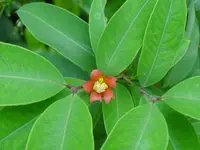
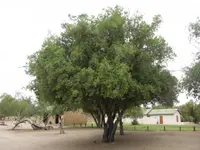
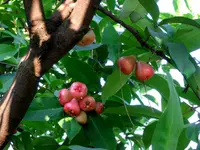
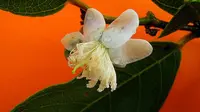
Garcinia cochinchinensis is a tropical evergreen tree from Southeast Asia, related to mangosteen and valued mainly for its sour, edible fruit and rind. It forms a dense, rounded canopy with glossy, dark green leaves and small, yellowish flowers that develop into orange to red fruits.
In nature it grows in warm, humid lowland forests, often as part of mixed tropical woodland. It tends to be slow to moderate in growth and prefers consistently warm temperatures, which can make it challenging outside true tropical or subtropical climates.
Gardeners who want to care for Garcinia cochinchinensis should provide bright light, protection from cold, evenly moist conditions, and well-drained, slightly acidic soil.

Care Difficulty
Moderate Care

Light Preference
Partial Shade

Water Requirements
Regular Water

Temperature Preference
Tropical / Frost Sensitive

Hardiness Zone
11–12

Soil Texture
Loamy, Sandy, Organic-rich

Soil pH
Acidic (5.5–6.5), Slightly acidic (6.5–7.0)

Soil Drainage
Moist but well-drained

Fertilization
Minimal (feed rarely)
Scan your plant to receive care tips personalized for your specific plant
Available on iOS and Android
This tropical fruit tree needs bright, gentle light to grow compact and fruit well.
This species prefers evenly moist, well-drained soil and reacts poorly to extremes in soil moisture.
This tropical tree thrives in warm, stable temperatures with no frost exposure.
This species benefits from moderately high, stable humidity to support healthy foliage and fruiting.
This species prefers deep, moisture-retentive yet free-draining soil with high organic content.
This species can be grown in containers, especially during its juvenile stage or in cooler regions.
This slow-growing tropical fruit tree benefits from light, consistent feeding rather than heavy fertilizer doses.
Pruning is mainly used to maintain structure and remove problem growth rather than to control size aggressively in Garcinia cochinchinensis.
Young plants in containers or nursery bags benefit from timely transplanting to support steady, healthy growth.
Propagation of this species is usually done by seed and can be slow and variable in success.
This tropical tree is frost-sensitive and requires thoughtful winter care in climates with cool or cold seasons.

Plant Health Check
Not sure what's wrong with your plant? Check your plant's health inside the app.
When cut, this species exudes a yellow, resinous latex in its bark and fruit rind, typical of the genus but especially noted in this species for its intensity and staining properties.
The small pumpkin‑shaped fruits have a thick, intensely sour rind that has been traditionally used as an acidifying ingredient in regional cooking in parts of Southeast Asia.
This evergreen tree is naturally adapted to humid, monsoon‑influenced forests of mainland Southeast Asia, where it tolerates seasonal heavy rains combined with high heat and filtered light.

The species name cochinchinensis refers to historical Cochinchina, a region in southern Vietnam, reflecting where the plant was first scientifically described and recognized by early botanists.
This species grows slowly to moderately. Young trees often add about 15–30 cm per year, increasing to 30–60 cm in ideal tropical conditions. Growth slows in cool climates, poor soil, or when container‑bound.
Keep your plants happy and healthy with plant identification, disease detection, and easy care guidance.