udo Care (Aralia cordata)

udo

About udo

Udo, Aralia cordata, is a hardy herbaceous perennial grown mainly for its bold, architectural foliage and edible young shoots. It forms large clumps with thick, upright stems and broad, divided leaves that create a lush, tropical look in temperate gardens.

This species is native to East Asia, especially Japan, where it grows in woodland edges and light shade. It prefers moist, fertile, well-drained soil and protection from harsh, direct sun.

For gardeners who want to care for udo successfully, the key traits are its strong cold tolerance, fast seasonal growth, and need for consistent moisture, balanced by good drainage.

Main Plant Requirements

Care Difficulty

Moderate Care

Light Preference

Partial Shade

Water Requirements

Regular Water

Temperature Preference

Cold Hardy

Hardiness Zone

4–9

Soil Texture

Loamy, Silty, Organic-rich

Soil pH

Acidic (5.5–6.5), Slightly acidic (6.5–7.0)

Soil Drainage

Moist but well-drained

Fertilization

Minimal (feed rarely)

Get Personalized Care Plan

Scan your plant to receive care tips personalized for your specific plant

Available on iOS and Android

How to Care for the udo

This perennial prefers bright, gentle light with some protection from harsh sun.

  • Provide 3–5 hours of morning sun with light or dappled shade in the afternoon to prevent leaf scorch on udo.
  • Grow in partial shade where it receives filtered light under taller plants or trees, especially in hotter regions.
  • In cooler climates, choose a site with more direct sun, but watch for pale, leggy growth as a sign of insufficient light.

This woodland perennial prefers consistently moist but not waterlogged soil.

  • Water when the top 2–4 cm of soil feels slightly dry, aiming for evenly damp soil through the root zone.
  • Use deep, infrequent watering rather than light splashes, and ensure soil drains well to avoid standing water and root rot in Aralia cordata.
  • Increase watering during hot, dry summer periods and reduce once foliage dies back in autumn, watching for wilting or crisp edges as underwatering signs.

This hardy perennial handles cool climates but grows best in moderate temperatures.

  • Optimal growth occurs around 60–75°F (16–24°C), with strong foliage development during mild spring and early summer.
  • Dormant crowns usually survive down to about 0°F (−18°C) in the ground if soil is well drained and mulched in colder regions.
  • Plants tolerate brief heat up to about 85–90°F (29–32°C) if soil stays moist, but prolonged extreme heat or repeated hard frosts can damage young shoots.

This species prefers moderately moist air but usually adapts to typical household humidity.

  • Aim for 40–60% humidity to keep foliage firm and reduce leaf-edge browning.
  • It tolerates short dry-air periods, but prolonged RH below 35% can cause curling tips and dry margins.
  • If air is very dry, group plants, place the container on a pebble tray with water below the pot base, or run a small humidifier near udo.

This woodland perennial prefers deep, moist, well-aerated soil with steady drainage.

  • Use a loamy, organic-rich mix made from roughly 2 parts compost, 1 part garden soil, and 1 part coarse material such as perlite or grit.
  • Ensure water drains within a few minutes after watering; standing water encourages root rot and weak, pale stems.
  • Maintain soil pH around 6.0–7.0, adding lime only if a test shows strong acidity below this range.
  • For Aralia cordata, loosen the planting area 25–30 cm deep and mix in coarse compost or leaf mold to increase aeration while retaining moisture.

This species can be grown in containers if the pot is large, stable, and drains efficiently.

  • Select a deep, heavy container to anchor the tall, leafy stems and prevent tipping in wind or on balconies.
  • Use a slightly raised pot stand so drainage holes clear the surface, allowing water to escape quickly after rain or irrigation.
  • Choose a thick-walled clay or concrete pot outdoors to moderate root temperature swings and slow water loss in hot weather.

Aralia cordata benefits from moderate feeding during its active growing season in spring and summer.

  • Apply a balanced, slow-release fertilizer (for example 10-10-10) once in early spring as new growth appears.
  • Supplement with a light application of compost or leaf mold around the root zone 1–2 times per season.
  • Use liquid balanced NPK at 1/2 strength every 4–6 weeks for container-grown udo only if growth appears weak.
  • Stop feeding in late summer and avoid fertilizing during fall and winter dormancy to prevent soft, frost-prone growth.

Pruning Aralia cordata is mainly done to maintain shape and remove weak growth.

  • Cut back dead, damaged, or diseased stems at ground level in late winter or very early spring before new shoots emerge.
  • Thin out crowded or crossing stems to improve air flow and light penetration, keeping a natural, open clump form.
  • Remove spent flower stalks and yellowing foliage after flowering to keep the plant tidy without reducing next year’s growth.
  • Use clean, sharp hand pruners or loppers and disinfect blades when moving between diseased and healthy material.

Aralia cordata is usually grown in the ground and only occasionally kept in containers, so focus on careful site transplanting.

  • Transplant in early spring or early fall when temperatures are mild and soil is workable, reducing stress on roots.
  • Move plants when growth slows, crowns become crowded, or roots circle the container and emerge from drainage holes.
  • Dig a wide planting hole, keep as much of the root ball intact as possible, and plant at the same soil depth.
  • Water thoroughly after transplanting, then keep soil evenly moist and use a light mulch to reduce evaporation and root stress.

Aralia cordata is most often propagated by division or seed under controlled conditions.

  • Divide established clumps in early spring just as new buds swell, keeping several buds and healthy roots per division.
  • Sow fresh seeds in fall outdoors or use cold stratification at 35–40°F for 6–8 weeks before spring sowing.
  • Provide moist, humus-rich soil and bright, indirect light for divisions or seedlings, avoiding waterlogging.
  • Label new plants clearly and grow them on in a sheltered nursery bed or pots until root systems are well developed.

Aralia cordata is a hardy, herbaceous perennial that dies back in winter and usually needs only light care.

  • Tolerates typical winter frosts in many temperate regions once established, with underground crowns surviving low temperatures.
  • After the first hard frost, cut back collapsed stems to just above ground level to reduce disease carryover.
  • Apply a 5–8 cm layer of organic mulch over the root zone in colder areas, keeping it slightly away from the crown.
  • For container plants in very cold climates, move pots to an unheated garage or cold frame to prevent root freezing.

Care Tips

Spring shoot management

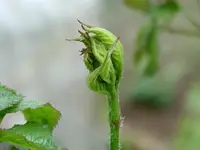
Mark and thin crowded new shoots in early spring, leaving 15–20 cm between strong stems so the plant puts energy into fewer, thicker edible shoots and remains structurally stable.

Staking tall stems

Install sturdy stakes or a low ring support as stems reach 60–80 cm to prevent wind snap and lodging, especially in exposed beds or fertile soils where growth is vigorous.

Mulch for cool roots

Apply 5–8 cm of organic mulch around, but not touching, the crown to keep roots cool, suppress weeds, and maintain the consistently moist conditions this woodland species prefers.

Edible harvest hygiene

When harvesting young shoots, use clean, sharp tools and cut above a few emerging buds so the plant can re-sprout, and avoid removing more than 30–40% of shoots in one season to keep the clump long-lived.

Winter crown protection

In colder regions, mound loose mulch or compost 5–10 cm over the dormant crown in late fall, then pull it back in early spring to protect buds from freeze–thaw damage while still allowing new growth to emerge.

Common Pests and Diseases

Slugs and snails

This pest is especially attracted to the tender spring shoots and leaves, often leaving large ragged holes and slime trails on udo stems and foliage. Symptoms include missing leaf tissue, shredded edges, and damage concentrated near ground level.

Solution

Hand-pick slugs and snails in the evening, use beer traps or iron phosphate pellets around plants, and remove mulch or debris that provides daytime hiding places. Copper tape around raised beds or containers and keeping the area slightly drier on the soil surface reduce future damage when growing udo.

Root-knot nematodes

These microscopic worms attack the underground parts of the plant, causing galled or knobbly roots and a general decline in vigor. Symptoms include stunted growth, yellowing leaves, and poor response to normal watering and fertilizing.

Solution

Remove and discard severely affected plants and avoid replanting udo in the same spot for several years. Improve soil with organic matter, grow resistant cover crops like marigold between seasons, and encourage soil health, as this helps suppress nematode populations over time.

Leaf spot

This disease causes brown to dark purple spots on leaves, sometimes with a yellow halo, and can lead to premature leaf drop in warm, humid weather. Symptoms include scattered lesions that may merge into larger dead patches on older foliage.

Solution

Remove and dispose of affected leaves to reduce spore spread and avoid overhead watering so foliage dries quickly. Improve spacing and airflow, water at the base, and in persistent cases use a labeled copper or chlorothalonil fungicide according to directions.

Powdery mildew

This disease appears as white, powdery patches on the upper surfaces of leaves and stems, often late in the season. Symptoms include distorted growth and gradual yellowing or browning of affected tissue if the infection is heavy.

Solution

Increase airflow by thinning crowded stems and avoid excessive nitrogen fertilization that promotes very soft growth. Remove badly affected leaves and, if conditions remain humid, apply a labeled sulfur or potassium bicarbonate fungicide, making sure to coat both leaf surfaces.

Aphids

These insects cluster on tender shoot tips and the undersides of leaves, sucking sap and excreting sticky honeydew that can lead to sooty mold. Symptoms include curled or distorted new growth and the presence of ants farming the honeydew on stems.

Solution

Wash colonies off with a strong stream of water, then monitor and repeat as needed. If populations remain high, use insecticidal soap or neem oil applied in the early morning or evening, ensuring thorough coverage of new growth and leaf undersides.

Interesting Facts

Edible spring shoots

Young shoots of Aralia cordata, known as udo in Japan, are traditionally harvested in spring as a seasonal vegetable with a mild aromatic flavor and crisp texture when lightly cooked.

Shade woodland native

This species is naturally found in cool, moist, deciduous woodlands of East Asia, where it grows as an herbaceous perennial that dies back to the ground in winter and resprouts vigorously each spring.

Large compound foliage

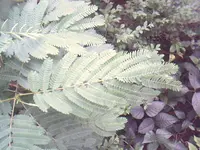
The plant forms tall, upright stems bearing large bipinnate leaves, which means each leaf is divided into many smaller leaflets, creating a bold, architectural clump up to human height in favorable conditions.

Botan icon

Did you know?

Aralia cordata produces large umbels of small, pale flowers that are highly attractive to a wide range of pollinating insects, and later forms dark berries that provide a seasonal food source for birds in its native woodland habitats.

FAQs about udo

Young shoots, peeled stems, and blanched leaf stalks are edible and commonly used in East Asian cuisine. Only harvest fresh, firm growth, and avoid older, fibrous stems, which become tough and lose culinary quality.

Grow Healthy Plants with Botan Care

Keep your plants happy and healthy with plant identification, disease detection, and easy care guidance.

Botan plant care app — identify plants on mobile

Explore More Plants