Low edging control
Use light string line or small stakes to guide the mat-forming stems and keep them from spilling into paths or lawn areas, trimming only the wayward runners instead of cutting the whole patch back at once.

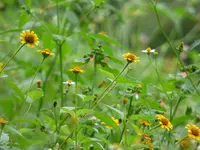
Oppositeleaf spotflower (Acmella repens) is a low, spreading herb often used as a small-scale groundcover in warm climates. It forms dense mats of green foliage dotted with small, button-like flower heads. Native to the southeastern United States and parts of the Caribbean and Central America, it typically grows in moist, open habitats such as fields, roadsides, and wet meadows. The plant tends to be fast growing and can self-seed, which makes it easy to establish but sometimes a bit weedy. It generally prefers sun to light shade, consistently moist soil, and mild temperatures, which guides how to care for Oppositeleaf Spotflower in gardens or naturalized areas.

Care Difficulty
Easy Care

Light Preference
Full Sun

Water Requirements
Regular Water

Temperature Preference
Warm Climate

Hardiness Zone
8–11

Soil Texture
Sandy, Loamy, Silty

Soil pH
Acidic (5.5–6.5), Slightly acidic (6.5–7.0)

Soil Drainage
Moist but well-drained

Fertilization
Minimal (feed rarely)
Scan your plant to receive care tips personalized for your specific plant
Available on iOS and Android
This low-growing species prefers consistent sun but tolerates some shade, especially in hotter climates.
This species prefers evenly moist, not saturated, soil with good drainage.
This warm-season plant grows best in mild to warm conditions without frost exposure.
This species handles a wide humidity range but grows best with moderately moist air.
This plant prefers loose, moist, well-drained soil that does not stay waterlogged.
This species grows well in containers when given adequate root space and steady moisture.
Acmella repens is a modest feeder but responds well to light, consistent nutrition in the growing season.
Pruning Acmella repens helps maintain a compact form and supports steady flowering.
Transplanting Acmella repens is straightforward when done during active growth and with minimal root disturbance.
Acmella repens is commonly propagated from seeds and short stem cuttings under warm conditions.
In mild climates, Acmella repens needs little winter care, but plants in colder regions benefit from simple protection.

Plant Health Check
Not sure what's wrong with your plant? Check your plant's health inside the app.
Acmella repens naturally forms low, creeping mats along the margins of ponds, ditches, and swampy ground in the southeastern United States and parts of Central and South America, helping stabilize wet soils and reduce erosion.
This species tolerates periodic flooding and waterlogged conditions, often rooting at stem nodes that touch saturated soil or shallow water, which allows it to spread efficiently in marshy habitats.
Its small, button-like flower heads are composed almost entirely of disk florets with no showy ray petals, a structure that still attracts a range of small pollinating insects in wetland environments.
Poor flowering often comes from too little light, depleted soil nutrients, or plants that are rootbound. Deadhead spent flower heads, provide a balanced, low-phosphorus fertilizer, and avoid heavy pruning in late spring when buds are forming.
Keep your plants happy and healthy with plant identification, disease detection, and easy care guidance.