Sturdy staking
Install slender stakes or low grow-through hoops in late spring before stems reach 30–40 cm, so the tall flowering shoots stay upright and do not lodge in wind or rain.

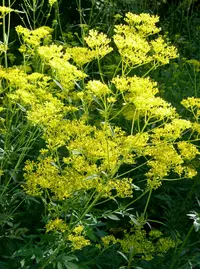
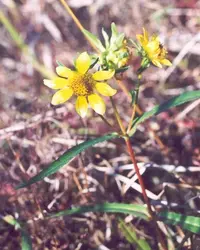
Eastern valerian (Patrinia scabiosifolia) is a hardy herbaceous perennial grown mainly for its airy clusters of small yellow flowers. It forms upright stems with divided, somewhat fern-like foliage and a light, open look that suits naturalistic borders and meadow-style plantings.
The species is native to East Asia, where it occurs in grasslands, open slopes, and woodland edges. It typically grows easily in temperate climates when given sun, consistent moisture, and reasonably well-drained soil.
Gardeners who learn how to care for eastern valerian often value its long flowering period and strong, vertical structure. Once established, it tends to be resilient and low maintenance under stable garden conditions.

Care Difficulty
Easy Care

Light Preference
Full Sun

Water Requirements
Moderate Water

Temperature Preference
Cold Hardy

Hardiness Zone
4–8

Soil Texture
Sandy, Loamy, Organic-rich

Soil pH
Acidic (5.5–6.5), Slightly acidic (6.5–7.0)

Soil Drainage
Moist but well-drained

Fertilization
Minimal (feed rarely)
Scan your plant to receive care tips personalized for your specific plant
Available on iOS and Android
This perennial prefers bright conditions but tolerates some shade in warm climates, which is key when growing eastern valerian outdoors.
This species prefers evenly moist, well-drained soil rather than extremes of dryness or saturation.
This hardy perennial handles a wide temperature range but performs best with moderate seasonal conditions.
Patrinia scabiosifolia handles a wide humidity range and rarely needs special humidity management outdoors.
This species prefers moderately moist, well-aerated ground with reliable drainage.
This perennial can adapt to container growing if given enough root depth and stable moisture.
Patrinia scabiosifolia grows well in modest soils and only needs light feeding to support flowering.
Pruning helps maintain healthy, upright growth and prolongs flowering in Patrinia scabiosifolia.
This species is most often grown in garden beds, so transplanting is more relevant than container repotting.
Patrinia scabiosifolia is commonly propagated by division or seed in garden settings.
This hardy perennial needs minimal winter care once established in temperate climates.

Plant Health Check
Not sure what's wrong with your plant? Check your plant's health inside the app.
This species flowers from late summer into early autumn, providing nectar and pollen for bees, hoverflies, and other pollinators when many other meadow plants have finished blooming.
Its leaves resemble those of scabious species (genus Scabiosa), which is reflected in the species epithet scabiosifolia, meaning scabious-leaved.
The plant is naturally distributed in open grasslands, sunny slopes, and forest edges across eastern Asia, including China, Korea, Japan, and parts of the Russian Far East, where it contributes to late-season meadow color and structure.

In traditional Japanese gardening, this species has been used in naturalistic plantings and wildflower-style borders to create soft yellow accents that blend visually with ornamental grasses and late-blooming perennials, reflecting an aesthetic that values subtle, seasonal change.
The flat-topped yellow flower clusters produce ample nectar and pollen, attracting many bees, hoverflies, and small butterflies. Planting several together creates a reliable summer food source that supports beneficial pollinators in mixed borders or meadow-style plantings.
Keep your plants happy and healthy with plant identification, disease detection, and easy care guidance.