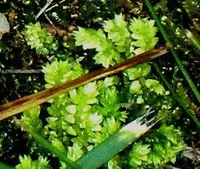
Water-margin placement
Plant along pond, stream, or rain garden edges where soil stays consistently moist but not deeply submerged, as this mimics its natural habitat and stabilizes banks with its dense root system.

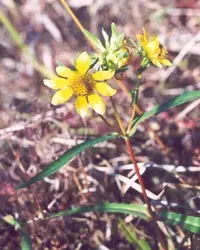
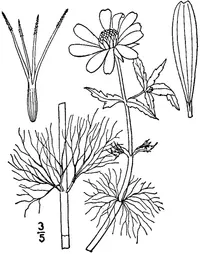
Smooth beggartick (Bidens laevis) is a North American native wildflower in the aster family, most common along ponds, streams, marshes, and ditches. It is typically grown as a robust perennial in warm regions and an annual in colder areas.
The plant forms upright clumps with branching stems and bright yellow, daisy-like flowers that attract bees and butterflies. Its preference for consistently moist to wet soils makes it well suited to rain gardens and naturalized water edges.
For gardeners who want to care for smooth beggartick, it is considered easy if moisture needs are met and the site offers full sun and nutrient-rich, organic soil.

Care Difficulty
Easy Care

Light Preference
Full Sun

Water Requirements
Aquatic

Temperature Preference
Warm Climate

Hardiness Zone
5–10

Soil Texture
Loamy, Clay, Organic-rich

Soil pH
Acidic (5.5–6.5), Slightly acidic (6.5–7.0)

Soil Drainage
Waterlogged tolerant

Fertilization
Minimal (feed rarely)
Scan your plant to receive care tips personalized for your specific plant
Available on iOS and Android
This sun-loving wetland perennial needs strong light to flower and stay compact.
This species is adapted to consistently moist to wet soils and does poorly if allowed to dry out.
This perennial tolerates a wide outdoor temperature range but has clear limits for growth and survival.
Humidity is rarely a concern for Bidens laevis in typical outdoor conditions.
Bidens laevis prefers moist, fertile, well-structured soil that does not stay stagnant or airless.
This species can be grown in containers if moisture and stability are managed carefully.
Bidens laevis grows best in reasonably fertile, moist soil but usually needs only modest feeding.
Pruning helps maintain shape and flowering performance in Bidens laevis.
This species is most often grown in the ground, so focus on transplanting rather than container repotting.
Bidens laevis is most commonly propagated from seed, with division used for established garden clumps.
In much of its range, smooth beggartick behaves as a hardy perennial that needs only light winter care.

Plant Health Check
Not sure what's wrong with your plant? Check your plant's health inside the app.
This species is naturally restricted to wet habitats such as marshes, pond margins, and slow-moving streams in the southeastern and south-central United States, where it forms part of seasonally flooded plant communities.
Its bright yellow, daisy-like flower heads offer both nectar and accessible pollen, attracting a mix of bees, butterflies, and other insects that support pollination in late summer and fall when some other native flowers have finished.
The seeds develop barbed, somewhat flattened achenes that can both cling to animal fur and float on water, allowing the plant to spread efficiently along waterways and between wetland patches.

Bidens laevis often colonizes the shallow edges of constructed or restored wetlands and stormwater ponds, and it is used in ecological restoration projects because it tolerates periodic flooding while helping stabilize soft, silty soils at the waterline.
This species spreads readily by seed and short rhizomes in wet soils, forming dense patches over time. In managed gardens, deadhead spent flowers and remove unwanted seedlings to prevent excessive self-seeding and keep populations under control.
Keep your plants happy and healthy with plant identification, disease detection, and easy care guidance.