Rhizome Division Timing
Lift and divide rhizomes every 2–3 years in late winter or early spring, cutting out old, woody sections and replanting only firm, healthy pieces with at least 1–2 visible buds to maintain vigorous flowering clumps.

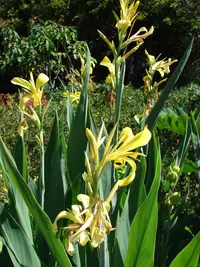
Maraca amarilla, botanically known as Canna glauca, is a rhizomatous perennial often grown for its tall, reed-like stems and soft yellow flowers. It naturally occurs in wetland and riverside habitats in tropical and subtropical regions of the Americas.
The plant forms clumps with narrow, often bluish-green leaves and showy blooms that attract pollinators. Its vigorous growth and tolerance of standing water make it suitable for ponds, rain gardens, and moist borders.
This species is generally easy to grow if given warmth, consistent moisture, and fertile, well-drained soil. Understanding how to care for maraca amarilla mainly involves providing sun, regular water, and protection from frost.

Care Difficulty
Moderate Care

Light Preference
Full Sun

Water Requirements
Aquatic

Temperature Preference
Tropical / Frost Sensitive

Hardiness Zone
8–11

Soil Texture
Loamy, Silty, Organic-rich

Soil pH
Acidic (5.5–6.5), Slightly acidic (6.5–7.0)

Soil Drainage
Waterlogged tolerant

Fertilization
Moderate (every 2–4 weeks)
Scan your plant to receive care tips personalized for your specific plant
Available on iOS and Android
This aquatic canna thrives in strong light and performs best in open, sun-exposed sites.
This species prefers consistently moist to wet conditions and tolerates shallow standing water.
This canna is a warm-season plant that grows fastest in consistently mild to hot conditions.
Canna glauca prefers moderately humid air but tolerates a broad range if soil moisture is stable.
Canna glauca thrives in consistently moist, airy soil with high organic content.
This species adapts well to container growing when given stable moisture and room for its rhizomes.
Canna glauca responds well to consistent, moderate nutrition during its active growing season.
Pruning Canna glauca is mainly about keeping plants tidy and supporting continued flowering.
Transplanting and dividing Canna glauca focuses on managing crowded rhizomes and maintaining vigorous clumps.
Canna glauca is most commonly propagated by division of rhizomes, with seed raising used for breeding or larger numbers.
Cold sensitivity means Canna glauca needs tailored winter care in cooler climates.

Plant Health Check
Not sure what's wrong with your plant? Check your plant's health inside the app.
This species naturally grows in shallow water and along lake or river margins, with rhizomes and stems adapted to tolerate prolonged flooding and low-oxygen substrates.
Among cultivated cannas, this species is notable for its relatively narrow, lance-like bluish-green leaves, which differ from the broader foliage typical of many other Canna species and hybrids.
C. glauca has been used extensively in breeding water-tolerant ornamental cannas, contributing genes for both its aquatic tolerance and its soft yellow flowers.

In constructed wetland systems, Canna glauca is sometimes used as an ornamental component while its extensive rhizome and root system helps stabilize soil and support microbial communities that process nutrients in the water.
Lack of flowers is usually linked to insufficient light, nutrient imbalance, or the plant being too young. Excess nitrogen encourages leaves instead of blooms. Crowded rhizomes or stress from recent division can also reduce flowering temporarily.
Keep your plants happy and healthy with plant identification, disease detection, and easy care guidance.