Coral Bells Care (Heuchera 'Obsidian')

About Coral Bells

Heuchera 'Obsidian' is a compact, clump-forming perennial grown mainly for its dark, glossy foliage rather than its small flowers. It belongs to the coral bells group, valued in gardens for long-lasting color and tidy mounding growth.

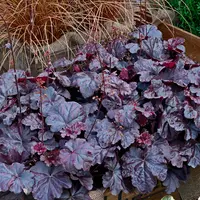
This cultivar typically shows deep burgundy to nearly black leaves with a smooth surface, making a strong contrast against green plants. It originates from breeding work based on North American woodland species that naturally grow in rocky, well-drained sites.

Its shade tolerance, moderate growth rate, and general toughness make it relatively simple to care for Coral Bells in typical garden conditions. It usually prefers partial shade, consistent but not waterlogged moisture, and soil that drains well.

Main Plant Requirements

Care Difficulty

Moderate Care

Light Preference

Partial Shade

Water Requirements

Moderate Water

Temperature Preference

Cold Hardy

Hardiness Zone

4–9

Soil Texture

Loamy, Sandy, Organic-rich

Soil pH

Acidic (5.5–6.5), Slightly acidic (6.5–7.0)

Soil Drainage

Moist but well-drained

Fertilization

Light (every 4–6 weeks)

Get Personalized Care Plan

Scan your plant to receive care tips personalized for your specific plant

Available on iOS and Android

How to Care for the Coral Bells

Heuchera 'Obsidian' prefers bright conditions with gentle sun exposure to keep foliage color rich without scorch.

  • Provide 3–5 hours of morning sun with afternoon shade; dappled or filtered light under open trees suits Coral Bells well.
  • In hotter climates, avoid harsh sun from 12–4 p.m. to prevent leaf scorch and crispy edges, especially in dry or reflective sites.
  • In cooler or northern regions, it tolerates more direct sun, but monitor leaves; pale, stretched growth indicates too much shade.

Heuchera 'Obsidian' needs evenly moist, well-drained soil rather than frequent, heavy watering.

  • Water when the top 3–5 cm of soil feels dry, aiming for moist but not soggy soil around the root zone.
  • Use soil rich in organic matter with good drainage; puddling or a sour smell indicates poor drainage and risk of root rot.
  • In summer dry spells, check moisture every few days; wilting or crisp leaf edges suggest thirst, while yellowing, mushy crowns suggest overwatering.

This plant handles a wide temperature range but grows best in moderate, stable conditions.

  • Active growth is strongest around 60–75°F (16–24°C), with foliage holding color well in these mild temperatures.
  • Established plants tolerate winter lows near -20°F (-29°C) in the ground with mulch protection, though freeze–thaw cycles can heave roots.
  • In summer, it endures up to about 85–90°F (29–32°C) if soil stays slightly moist and the plant receives afternoon shade to limit heat stress.

This cultivar grows well in typical outdoor humidity and usually does not need special humidity management.

Heuchera 'Obsidian' prefers loose, humus-rich soil that drains freely but does not dry out immediately.

  • Use a loamy mix with 40–60% compost or leaf mold blended with native garden soil for moisture retention and nutrients.
  • Ensure sharp drainage by incorporating coarse sand or fine grit, especially in clay-heavy sites that stay wet after rain.
  • Aim for slightly acidic to neutral pH around 6.0–7.0, avoiding strongly alkaline or salty soils that limit nutrient uptake.
  • Raise beds or plant on a low mound in areas with heavy soil to keep the crown from sitting in standing water.

This plant is well suited to container growing outdoors on patios, balconies, or shaded entrances.

  • Choose a wide, shallow to medium-depth pot to accommodate its fibrous, spreading roots without excessive unused depth that stays wet.
  • Select a heavier material such as ceramic when placing containers in windy spots so the foliage mass does not tip the pot.
  • Elevate pots on risers or feet so drainage holes stay clear and water cannot pool under the container after rain or irrigation.

Heuchera 'Obsidian' benefits from modest, balanced feeding to support foliage color and steady growth.

  • Use a balanced, slow-release granular fertilizer (around 10-10-10) or light compost top-dressing in early spring.
  • Feed once in spring and, in poor soil, once again in midsummer; avoid frequent high-nitrogen products when caring for Coral Bells.
  • Apply at half the label rate for perennials and water in well to prevent root burn.
  • Stop feeding 6–8 weeks before expected frost and do not fertilize during winter dormancy.

Light pruning keeps Heuchera 'Obsidian' dense, healthy, and attractive.

  • In early spring, trim away dead, damaged, or winter-burned leaves with clean hand pruners or scissors.
  • After flowering, remove spent flower stalks at the base to tidy the plant and conserve energy for foliage.
  • Thin crowded, overlapping leaves to improve air circulation and reduce fungal problems.
  • Every few years, cut back and replant the younger outer shoots to refresh shape and vigor.

This perennial is usually grown in the ground, with transplanting or occasional container upsizing done only when needed.

  • Transplant or repot in early spring or early fall, when temperatures are mild and soil stays evenly moist.
  • Look for signs such as roots circling the pot, slow growth, or a woody, raised crown as cues to lift and replant.
  • Divide and replant clumps every 3–4 years, setting the crown at soil level in well-drained, organic-rich soil.
  • Water thoroughly after moving, then keep soil lightly moist and shade the plant for a few days to limit transplant shock.

Heuchera 'Obsidian' is commonly propagated by division to maintain the exact foliage color and vigor.

  • Divide mature clumps in early spring or early fall, when temperatures are cool and soil is workable.
  • Lift the plant, gently tease apart crowns, and keep several buds and healthy roots on each division.
  • Replant divisions at the same depth in well-drained soil, spacing 25–30 cm apart for good airflow.
  • Water in firmly and keep soil evenly moist, not waterlogged, until strong new growth appears.

This heuchera is fairly cold hardy but benefits from simple winter preparation, especially in colder climates.

  • In late fall, apply a 5–7 cm layer of mulch around the crown to insulate roots, keeping mulch off the foliage.
  • Leave most healthy leaves in place over winter to shield the crown, removing only mushy or diseased tissue.
  • In zones with freeze–thaw cycles, check for frost heaving and gently press lifted crowns back into the soil.
  • Move container-grown plants into a sheltered, frost-free but cool spot, keeping soil just slightly moist.

Care Tips

Crown protection

Plant so the woody crown sits just at or slightly above soil level and top it with 2–3 cm of fine gravel or grit to prevent crown rot from wet mulch or soil splashing onto the foliage.

Winter heave control

In cold climates, check plants after freeze–thaw cycles and gently firm any lifted clumps back into the soil, then add a loose mulch ring around (not over) the crown to reduce further frost heaving.

Leaf cleanup routine

Remove tattered or soggy leaves at the base every few weeks during the growing season to improve air circulation and reduce fungal spotting on the glossy foliage.

Flower stalk management

Deadhead spent flower spikes down to the basal foliage to keep the plant compact, or leave a few to set seed if you want naturalized seedlings with variable foliage nearby.

Container rotation

If grown in pots, rotate the container a quarter turn every 2–3 weeks so all sides receive similar light, which keeps the mound evenly colored and more symmetrical when growing Coral Bells.

Everything About Coral Bells

Common Pests and Diseases

Vine weevils

This pest chews irregular notches in the leaf edges, while the larvae feed on the roots and crown, causing sudden wilting or collapse.

Solution

Hand-pick adult beetles at night, inspect soil around the crown for white, C-shaped larvae, and destroy any that are found. For persistent problems, use a targeted biological control with nematodes labeled for vine weevils and avoid keeping the soil overly wet, which helps larvae thrive.

Rust

This disease causes small, orange-brown pustules on the undersides of leaves, often with pale or yellow spotting on the upper leaf surface.

Solution

Remove and dispose of affected leaves promptly and avoid overhead watering to keep foliage dry. Improve air circulation, thin crowded clumps, and if rust is recurring, apply a sulfur or copper-based fungicide according to label directions as part of broader Heuchera 'Obsidian' care instructions.

Powdery mildew

This disease appears as a white or gray powdery coating on leaves, which may become distorted or discolored over time.

Solution

Increase air movement around plants, water at the base, and avoid late-day overhead irrigation to reduce leaf wetness. Remove heavily affected foliage and, if needed, apply a labeled fungicide such as potassium bicarbonate or horticultural oil at the first signs of infection.

Leaf spot

Symptoms include small, water-soaked or dark lesions on leaves that can enlarge and merge, leading to tattered, unsightly foliage.

Solution

Cut off and discard infected leaves, disinfecting pruners between cuts, and avoid splashing water onto the foliage. Space plants to improve airflow and, in severe cases, use a broad-spectrum fungicide labeled for ornamental perennials, following all timing and safety instructions.

Crown and root crown rot

This disease leads to a soft, mushy crown, stunted growth, and wilting or collapse, often in poorly drained or waterlogged soil.

Solution

Dig up and discard severely affected plants and do not replant in the same spot unless drainage is improved with raised beds or amended soil. For remaining plants, reduce watering, ensure sharp drainage around the crown, and avoid burying the crown too deeply to limit future infection risk.

Interesting Facts

Naturally darkest foliage

This cultivar was selected for its unusually dark, almost black foliage that maintains color even in comparatively low light, unlike many other Heuchera cultivars that fade to bronze or green.

Compact clump former

It forms tight, low, mound-shaped clumps typically around 20–25 cm tall, which stay neat without aggressive spreading or self-seeding, making it predictable in mixed borders and containers.

Stable leaf coloration

The foliage color remains relatively stable from spring through autumn with only subtle seasonal shifts, rather than the strong multicolor phase changes seen in many other Heuchera hybrids.

FAQs about Coral Bells

Brown leaf edges usually result from drought stress, excess heat, fertilizer burn, or winter wind desiccation. Check soil moisture, reduce strong afternoon sun exposure, avoid overfertilizing, and apply mulch to keep roots insulated and moisture more stable.

Grow Healthy Plants with Botan Care

Keep your plants happy and healthy with plant identification, disease detection, and easy care guidance.

Botan plant care app — identify plants on mobile

Explore More Plants