Mikoikoi Care (Libertia grandiflora)

Also known as: New Zealand Iris
Mikoikoi

About Mikoikoi

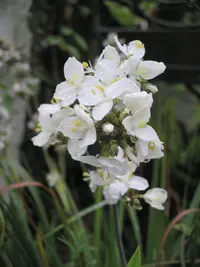
Libertia grandiflora, often called New Zealand iris, is a clump-forming evergreen perennial grown mainly for its tidy, architectural foliage. It forms narrow, upright, sword-like leaves that create dense fans, with sprays of small white flowers held above the foliage in the flowering season.

This species is native to New Zealand, where it grows in open, often moist habitats. In gardens, it is valued for structure, subtle flowers, and decorative seed capsules that follow.

Libertia grandiflora is generally considered moderately easy to grow, provided it receives good light, free-draining soil, and steady moisture without waterlogging. Understanding how to care for Libertia grandiflora starts with matching these natural conditions as closely as possible.

Main Plant Requirements

Care Difficulty

Moderate Care

Light Preference

Full Sun

Water Requirements

Moderate Water

Temperature Preference

Cool Climate

Hardiness Zone

8–10

Soil Texture

Sandy, Loamy, Organic-rich

Soil pH

Acidic (5.5–6.5), Slightly acidic (6.5–7.0)

Soil Drainage

Moist but well-drained

Fertilization

Minimal (feed rarely)

Get Personalized Care Plan

Scan your plant to receive care tips personalized for your specific plant

Available on iOS and Android

How to Care for the Mikoikoi

This clump-forming perennial prefers bright outdoor conditions with moderate direct sun for strong growth.

  • Provide 4–6 hours of direct sun daily, ideally morning to early afternoon, with light shade during the hottest mid-afternoon in summer.
  • Tolerates partial shade, but flowering of Libertia grandiflora is best in open, bright positions; dense shade leads to weak, floppy foliage and fewer blooms.
  • In hot, inland climates, use dappled or filtered light in summer to reduce leaf scorch, while in cooler or coastal areas it can handle near full sun.

This plant prefers steadily moist but not saturated soil, especially during active growth and flowering.

  • Water when the top 3–5 cm of soil feel dry, allowing moisture to reach the full root zone while avoiding standing water or puddling around the crown.
  • During spring and summer, increase watering in dry spells, then reduce frequency in fall and winter, letting the soil surface stay dry slightly longer between waterings.
  • Yellowing, limp leaves and sour-smelling soil suggest overwatering, while browning leaf tips and folding fans in Libertia grandiflora usually indicate prolonged dryness or poor moisture reach.

This species is generally cool- to mild-climate hardy, with good tolerance of outdoor conditions in many temperate regions.

  • Optimal growth occurs around 50–75°F (10–24°C), with strongest foliage and flowering where summers are mild and not excessively humid.
  • Mature plants usually tolerate brief drops to about 15–20°F (-9 to -6°C), but extended hard freezes or unprotected young plants can suffer foliage burn or crown damage.
  • In hot regions, sustained heat above 90°F (32°C) can stress plants; provide mulch and some afternoon shade to keep roots cooler and reduce moisture loss.

This species copes with a wide humidity range and rarely needs special humidity management outdoors or in bright indoor spots.

  • Aim for ambient air around 40–60% humidity, which suits the plant in most homes and mild outdoor climates.
  • It tolerates short dry spells in heated rooms but prolonged very dry air may increase leaf tip browning.
  • If air stays below 30%, group plants together or place a water tray nearby to slightly boost local humidity without wetting foliage.

Libertia grandiflora prefers free-draining, moderately fertile soil that stays moist but never waterlogged.

  • Use a mix based on loam with 20–30% coarse sand or fine gravel plus some compost to balance drainage and nutrient content.
  • Ensure the structure is crumbly, not compacted, so roots receive enough oxygen and excess water can move through quickly.
  • Aim for slightly acidic to neutral pH around 6.0–7.0, avoiding strongly alkaline or chalky sites where growth may weaken.
  • Improve heavy clay by incorporating coarse grit and organic matter, and avoid low-lying spots where water collects after rain.

This species is well suited to container growing when the pot supports its clumping, spreading root system.

  • Choose a pot deeper than it is wide to anchor tall flower stems and reduce the risk of wind rock on exposed patios or balconies.
  • Use a container with sharply draining holes and a raised pot foot or stand to prevent the base from sitting in pooled water after rain.
  • Select heavier materials such as ceramic or stone where wind is an issue, as added weight keeps the plant stable when in full leaf and flower.

This clump-forming perennial benefits from light feeding in lean soils but usually needs only modest nutrition.

  • Apply a balanced slow-release fertilizer (around 10-10-10) in early spring at half the label rate for caring for Libertia grandiflora.
  • In richer garden soil, use a thin layer of compost around the clump once a year instead of granular products.
  • During the main growing season, avoid feeding more than every 6–8 weeks to prevent weak, lush growth.
  • Do not fertilize in late fall or winter, when growth slows, to avoid soft, frost-prone foliage.

This species needs minimal structural pruning, mainly cleanup to maintain tidy foliage and flowering.

  • In late winter or early spring, cut out dead, damaged, or winter-burned leaves at the base with clean hand pruners.
  • After flowering, remove spent flower stems down to the foliage line to keep the plant neat and encourage fresh growth.
  • Thin out any congested or crossing fans to improve air movement and reduce disease risk.
  • Disinfect blades before and after work to limit transmission of fungal or bacterial problems.

Libertia grandiflora is usually grown in the ground, with transplanting focused on congested or poorly placed clumps.

  • Transplant or lift and divide clumps every 3–5 years when flowering declines, centers die out, or growth becomes crowded.
  • Choose early spring or early fall, when temperatures are mild and soil moisture is stable, to limit transplant shock.
  • Dig widely around the clump, keeping as much root mass as possible, and replant at the same depth into well-drained soil.
  • Water thoroughly after moving, then keep soil evenly moist but not waterlogged for several weeks while roots re-establish.

This plant is most reliably propagated by division, with seed used mainly for larger-scale or experimental growing.

  • Divide mature clumps in early spring or early fall, when temperatures are cool and soil is moist.
  • Lift the clump, then split it into sections with 3–5 healthy fans and a solid root mass, trimming damaged roots.
  • Replant divisions immediately at the original depth, spacing them to allow airflow, and water well to settle soil.
  • For seeds, sow fresh in trays of free-draining mix, keep lightly moist, and allow several weeks for variable germination.

This perennial is moderately cold hardy and usually needs only light winter attention in most mild to cool climates.

  • Established plants tolerate light frost, but prolonged freezes below about 20°F can damage foliage and crowns.
  • Apply a 5–8 cm layer of mulch around the root zone in late fall, keeping it just clear of the leaf bases.
  • In very cold or exposed sites, add a loose cover of leaves or frost cloth over the clump during severe cold snaps.
  • Container-grown plants in colder regions can be moved to a cool, bright, frost-free spot until temperatures rise.

Care Tips

Divide crowded clumps

Every 3–4 years, lift and split congested clumps in late winter or early spring, replanting vigorous outer sections at the same depth to maintain strong flowering and prevent the center from dying out.

Mulch for root protection

Apply a thin, 3–5 cm layer of inorganic or fine organic mulch around but not touching the crowns to reduce weed competition, buffer soil temperature, and protect shallow roots from drying out.

Improve drainage on heavy soils

On clay or compacted ground, plant on a slight mound or low raised bed with added grit or coarse sand in the planting hole to keep the rhizomes from sitting in waterlogged soil.

Deadhead for tidiness

After flowering, cut back spent flower stalks close to the base while leaving the evergreen foliage intact so the plant can focus resources on new growth rather than seed production.

Monitor self-seeding

In mild climates, remove unwanted seedlings early or shear back infructescences (seed-bearing stems) before seed drop if a controlled planting is preferred when caring for Libertia grandiflora.

Common Pests and Diseases

Iris leaf spot

This disease causes small tan to brown spots on the leaves that may merge into larger patches, leading to premature leaf dieback. Symptoms include more damage in humid, poorly ventilated sites.

Solution

Remove and discard affected leaves to reduce fungal spores, and avoid overhead watering so foliage stays as dry as possible. Improve air circulation around clumps and, if the problem recurs, apply a labeled ornamental fungicide in early spring as new growth appears, following all product directions.

Rust

This disease shows as yellow to orange powdery pustules on the undersides of leaves, often with pale or yellowing areas on the upper surface. Symptoms include gradual weakening of the plant if infections are heavy and repeated.

Solution

Cut off and dispose of infected foliage and any heavy thatch or dead leaves around the base to remove resting spores. Reduce humidity by spacing plants, watering at soil level, and, in persistent cases, use a rust-specific fungicide labeled for ornamental perennials as a protective spray during warm, moist weather.

Scale insects

These insects appear as small, fixed, shell-like bumps on leaves and stems, sometimes accompanied by sticky honeydew and sooty mold. This pest can sap vigor, causing yellowing and reduced flowering over time.

Solution

Physically remove light infestations by gently scraping or rubbing with a cotton pad dipped in isopropyl alcohol. For larger clumps, use a horticultural oil or insecticidal soap spray directed to both leaf surfaces and stems, repeating at 7–14 day intervals until no new scales are seen; maintaining plant vigor is essential for long-term Libertia grandiflora care instructions.

Slugs and snails

These pests chew irregular holes and ragged edges in leaves, often leaving silvery slime trails, particularly on young or tender growth. Symptoms include most damage appearing overnight or in damp, shaded areas.

Solution

Hand-pick slugs and snails in the evening, and reduce hiding places such as dense debris or boards near the clump. Use iron phosphate slug bait around plant bases as needed and keep mulch layers thin and open so the soil surface dries between waterings.

Interesting Facts

Evergreen iris relative

Libertia grandiflora is an evergreen member of the iris family (Iridaceae) that keeps its narrow, fan-like leaves year-round in mild climates, forming dense clumps up to about 60–90 cm tall in ideal outdoor conditions.

New Zealand streambank specialist

In its native New Zealand, this species often grows along stream margins and damp grasslands, where its fibrous root system helps stabilize soil and tolerate periodic wetness followed by drier spells.

Three-petaled white blooms

The flowers are typically produced in loose, branching clusters and have a characteristic three-petaled structure with three smaller sepals behind them, opening in succession so the plant can appear in bloom over an extended period in late spring and early summer.

Botan icon

Did you know?

Libertia grandiflora has been widely used in New Zealand native planting schemes and ecological restorations because it is both ornamental and useful for binding soil on disturbed or erosion-prone sites, especially on moist banks and coastal slopes.

FAQs about Mikoikoi

This species is evergreen in mild climates, keeping its narrow leaves year-round. In colder regions, foliage may scorch or partially die back in winter but usually resprouts from the base when conditions improve.

Grow Healthy Plants with Botan Care

Keep your plants happy and healthy with plant identification, disease detection, and easy care guidance.

Botan plant care app — identify plants on mobile

Explore More Plants