rampion bellflower Care (Campanula rapunculoides)

Also known as: Creeping Bellflower
rampion bellflower

About rampion bellflower

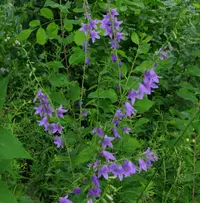
Rampion bellflower, Campanula rapunculoides, is a hardy perennial herb with tall, slender stems and drooping violet-blue bell-shaped flowers along one side of the spike. It forms deep, persistent roots and can spread quickly, often naturalizing in gardens and along roadsides.

This species is native to Europe and parts of western Asia but has become widely established in North America, especially in cooler temperate regions. Its vigorous growth and tough root system make it resilient but also somewhat invasive in fertile, well-drained soils.

Gardeners who care for rampion bellflower should know it thrives in full sun to partial shade and prefers moderately moist conditions, yet tolerates short dry spells once established.

Main Plant Requirements

Care Difficulty

Easy Care

Light Preference

Full Sun

Water Requirements

Moderate Water

Temperature Preference

Cold Hardy

Hardiness Zone

3–9

Soil Texture

Sandy, Loamy, Clay

Soil pH

Acidic (5.5–6.5), Slightly acidic (6.5–7.0)

Soil Drainage

Well-drained

Fertilization

Minimal (feed rarely)

Get Personalized Care Plan

Scan your plant to receive care tips personalized for your specific plant

Available on iOS and Android

How to Care for the rampion bellflower

This species prefers bright, open conditions but tolerates some shade in warmer climates.

  • Provide 4–6 hours of direct sun daily, ideally morning sun with light afternoon shade to reduce stress on rampion bellflower in hot summers.
  • In cooler regions, full sun all day promotes stronger stems and heavier flowering, while in hotter areas, dappled or filtered light after 1–2 pm prevents leaf scorch.
  • Insufficient light leads to weak, floppy growth and fewer blooms; consider a brighter site or light pruning of overhead shade, especially in spring.

This plant prefers evenly moist but not saturated soil, especially during active growth and flowering.

  • Allow the top 3–5 cm of soil to dry before watering again; soil should feel dry at the surface but slightly moist just below when you probe with a finger.
  • Increase watering during late spring and summer if rainfall is low, but in cool or rainy periods rely more on natural precipitation to avoid soggy conditions.
  • Ensure soil drains freely; yellowing, soft stems suggest overwatering and root stress, while limp, drooping leaves that perk up after rain or watering signal underwatering in Campanula rapunculoides.

This hardy perennial tolerates a wide temperature range but grows best in moderate conditions.

  • Optimal growth occurs around 60–75°F (16–24°C) during the growing season, supporting steady foliage and flower development without heat stress.
  • Established plants survive winter cold down to about -20°F (-29°C) in the ground, dying back above soil while the root system and crown overwinter.
  • Short periods above 85°F (29°C) are tolerated if soil moisture is maintained, but prolonged heat with dry soil can stunt growth, so mulch and shade during hot, dry spells in midsummer.

This species handles typical household humidity but benefits from slightly moist air in heated homes.

  • Aim for 40–60% humidity, similar to most living spaces, for steady foliage and flowering.
  • Tolerates short dry spells, but very dry air may cause crisp leaf edges and slower growth in rampion bellflower.
  • Increase humidity locally by clustering pots, using a nearby open tray of water and stones, or placing the pot away from heating vents.

This species prefers loose, moderately fertile, well-drained soil that does not stay soggy.

  • Use a mix of 50–60% loam or standard potting mix, 20–30% compost, and 10–20% coarse sand or perlite for structure and drainage.
  • Aim for slightly acidic to neutral pH, around 6.0–7.0, which supports nutrient availability for Campanula rapunculoides.
  • Include coarse particles such as grit or perlite to keep the profile airy so roots receive enough oxygen and resist rot.
  • Avoid heavy clay, compacted ground, or any site where water pools for more than a few hours after rain.

This species can be grown in containers, but its spreading root system needs thoughtful management.

  • Choose a deep, heavy pot that resists tipping if tall flowering stems catch wind on balconies or patios.
  • Use a container slightly wider than the root ball to limit aggressive spread while still allowing vertical root growth.
  • Line the inner sides with a root barrier fabric if long-term culture is planned, to reduce rhizomes escaping through drainage holes.

This vigorous perennial needs only modest feeding, but some nutrition improves flowering and foliage quality when growing rampion bellflower.

  • Use a balanced, all-purpose fertilizer (for example 10-10-10) or a light layer of compost for in-ground plants.
  • Feed every 4–6 weeks during spring and early summer while growth is active.
  • Dilute liquid fertilizer to 1/2 strength to avoid lush, weak growth and salt buildup.
  • Stop feeding in late summer and do not fertilize during fall and winter dormancy.

Pruning supports tidy growth and sustained flowering in Campanula rapunculoides.

  • Cut spent flower spikes back to a leaf node in mid to late summer to encourage additional blooms.
  • Remove dead, damaged, or diseased stems whenever noticed using clean, sharp hand pruners or scissors.
  • Thin crowded stems at ground level to improve air circulation and limit spreading.
  • Trim back untidy foliage in late fall or early spring to refresh growth and define clumps.

This spreading perennial is usually grown in the ground, so transplanting clumps is more common than container repotting.

  • Plan division and transplanting in early spring or early fall when temperatures are mild.
  • Lift overgrown clumps with a fork and separate sections, keeping several shoots and healthy roots per division.
  • Transplant into well-drained soil at the same depth, water thoroughly, and shade lightly for a few days to reduce stress.
  • For container plants, move to a slightly larger pot only when roots circle the container or growth slows noticeably.

Campanula rapunculoides is commonly multiplied by division, rhizome pieces, and seed, and can spread fast in favorable conditions.

  • Divide mature clumps in early spring or early fall, replanting sections with vigorous shoots and firm roots.
  • Plant rhizome segments horizontally in loose, moist soil and keep evenly damp until new shoots appear.
  • Sow seeds on the surface of a moist, well-drained mix; they need light to germinate and prefer cool conditions.
  • Label and space new plants carefully, since strong spreaders can overtake nearby perennials if crowded.

This cold-hardy perennial needs little winter attention in most temperate climates.

  • Tolerates freezing temperatures and typical winter frosts once established.
  • Allow stems to die back naturally, then cut to ground level in late fall or early spring if desired.
  • Apply a light 2–5 cm mulch in colder zones to stabilize soil temperature and protect roots.
  • Move containers to a sheltered, unheated area to prevent repeated freeze–thaw stress on the root ball.

Care Tips

Rhizome Barrier Management

Install a vertical root barrier 25–30 cm deep around planting areas to prevent aggressive rhizomes from spreading into lawns and beds, and inspect the barrier edge each spring to cut off any creeping shoots that bridge over it.

Timed Deadheading Strategy

Remove spent flower spikes before seed capsules begin to swell, focusing on cutting entire stems at the base rather than individual blooms to reduce reseeding and to direct energy back into the root system.

Targeted Rhizome Lifting

In late fall or very early spring, use a fork to gently lift and tease out peripheral rhizomes around the main clump, following each white rhizome strand through the soil to reduce future unwanted shoots.

Seedling Identification Patrol

Learn to distinguish young seedlings by their narrow, lance-shaped leaves and run a quick monthly check during spring and early summer to hand-pull or hoe out any unwanted volunteers before they establish deep roots.

Dedicated Containment Bed

For easier Campanula rapunculoides plant care, assign a dedicated, contained bed or large in-ground planter ring where spreading is acceptable, and avoid mixing it with slow-growing perennials that can be outcompeted over time.

Common Pests and Diseases

Leaf spot

This disease causes small brown, tan, or black spots on leaves that may merge into larger irregular patches, especially in dense or damp plantings.

Solution

Remove and discard affected leaves, avoid overhead watering, and thin or divide clumps to improve airflow. In persistent cases, apply a copper-based or chlorothalonil fungicide labeled for ornamental perennials, following label directions carefully.

Powdery mildew

This disease produces a white or gray powdery coating on upper leaf surfaces, often during warm days and cool, humid nights.

Solution

Increase spacing and airflow around plants, water at soil level, and remove the most affected foliage. If needed, use a sulfur or potassium bicarbonate fungicide labeled for ornamental plants and begin treatment at the first sign of mildew.

Aphids

These insects cluster on tender stems and buds, sucking sap and causing curling, distortion, and sticky honeydew that can attract sooty mold.

Solution

Spray plants with a strong stream of water to dislodge colonies, then treat remaining populations with insecticidal soap or a light horticultural oil, ensuring thorough coverage of stems and leaf undersides. Encouraging natural predators such as lady beetles in the garden also helps long-term control when you grow Campanula rapunculoides outdoors.

Leafhoppers

These insects feed on leaves, causing pale speckling, small white spots, and sometimes a general yellowing or stunting of growth.

Solution

Reduce grassy weeds and excess thatch near plantings, since these harbor leafhoppers, and use reflective mulches if practical to deter landing. For heavy infestations, apply insecticidal soap or a low-rate pyrethrin product in the evening, aiming for direct contact with the insects.

Slugs and snails

These pests chew irregular holes in leaves and young shoots, often leaving slime trails on or around the plants, especially in moist, shady sites.

Solution

Hand-pick slugs and snails in the evening, reduce heavy mulch and debris around clumps, and use iron phosphate bait placed in shallow dishes or scattered around the planting zone. Copper tape barriers around containers or small beds can also limit their movement onto plants.

Interesting Facts

Aggressive clonal spread

This species spreads not only by seed but also by long, creeping rhizomes that allow it to form dense colonies and outcompete many neighboring plants in gardens and natural habitats.

Nodding bell flowers

Its violet-blue bells are arranged on one side of the stem and hang in a nodding fashion, an adaptation that helps protect pollen from rain and creates a sheltered landing platform for pollinators like bees.

Deep taproot heritage

The plant develops a thick, fleshy taproot that historically was eaten as a vegetable in parts of Europe, which is why the related species Campanula rapunculus was cultivated as a root crop and salad plant.

Botan icon

Did you know?

In several North American regions, this species is considered an invasive garden escape because once established, its rhizomes and abundant seed production make it extremely difficult to eradicate without persistent, multi-year control efforts.

FAQs about rampion bellflower

Yes, this species spreads vigorously through deep, creeping rhizomes and self-seeding. In many regions it is considered invasive. Use root barriers, deadhead spent flowers, and promptly remove unwanted shoots to prevent it from overtaking nearby plantings.

Grow Healthy Plants with Botan Care

Keep your plants happy and healthy with plant identification, disease detection, and easy care guidance.

Botan plant care app — identify plants on mobile

Explore More Plants