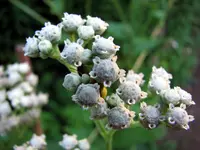
Support Tall Stems
Install low wire fencing or biodegradable twine around young plants in windy or exposed sites so the tall, hollow stems stay upright and are less likely to lodge or snap before flowering.

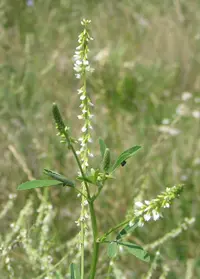
White sweetclover (Melilotus albus) is an erect, bushy biennial legume often found along roadsides, fields, and disturbed ground. It can reach substantial height and develops many small white, fragrant flowers on slender spikes. The plant fixes nitrogen, which means it enriches soil by converting atmospheric nitrogen into a usable form for plants. It has deep roots, tolerates poor soils, and can spread quickly, which makes it hardy but sometimes invasive. In many areas it grows best in full sun, with well-drained soils and moderate moisture. Gardeners who want to care for White Sweetclover should monitor its spread to prevent it from overtaking other plants.

Care Difficulty
Easy Care

Light Preference
Full Sun

Water Requirements
Low Water

Temperature Preference
Cold Hardy

Hardiness Zone
3–9

Soil Texture
Sandy, Loamy, Clay

Soil pH
Neutral (7.0), Slightly alkaline (7.0–7.5)

Soil Drainage
Well-drained

Fertilization
Minimal (feed rarely)
Scan your plant to receive care tips personalized for your specific plant
Available on iOS and Android
This species thrives in open, bright conditions similar to sunny meadows and roadsides.
This plant is drought-tolerant once established and prefers soil that dries between rains or irrigations.
This hardy biennial tolerates a wide temperature range typical of temperate climates.
Melilotus albus tolerates a wide humidity range and usually does not need special humidity management outdoors.
Melilotus albus prefers moderately fertile, well-aerated soil that drains freely yet does not dry out instantly after rain or irrigation.
This species can be grown in containers but requires careful attention to root depth and plant stability.
This nitrogen-fixing legume usually needs little feeding, especially in reasonably fertile soil.
Pruning Melilotus albus focuses on keeping plants safe, tidy, and within bounds rather than detailed shaping.
This species is more often sown or transplanted outdoors than kept long term in containers.
Most propagation of Melilotus albus is done by seed rather than vegetative methods.
This biennial is cold hardy in most temperate climates and generally needs minimal winter care outdoors.

Plant Health Check
Not sure what's wrong with your plant? Check your plant's health inside the app.
This species germinates quickly on disturbed or compacted soils, and its deep taproot helps break up hard layers, which is why it often dominates roadsides, spoil piles, and construction sites in temperate regions.
Like many legumes, it forms root nodules with Rhizobium bacteria that convert atmospheric nitrogen into plant-available forms, enriching poor soils and influencing plant community composition around it.
The foliage and flowers naturally contain coumarin, a fragrant compound that gives dried plants a sweet hay or vanilla-like scent, especially noticeable when the plant material is wilted or cured.

When plant material of this species spoils under damp conditions, some of its coumarin can be converted by fungi into dicoumarol, a potent anticoagulant that historically inspired the development of the first generation of warfarin-type blood-thinning drugs.
This species self-seeds heavily and can spread quickly, especially in disturbed soils, roadsides, and open fields. Regular cutting before seed set, grazing, or targeted pulling is needed to prevent dense stands and limit unwanted expansion.
Keep your plants happy and healthy with plant identification, disease detection, and easy care guidance.